Last Updated on July 1, 2026
Fruit can be incredibly healthy, but not every fruit hits the body the same way. Some fruits are nutrient powerhouses wrapped in fiber and antioxidants. Others are basically nature’s candy with a halo. Cute, delicious, but not always ideal if your goal is better blood sugar, less toxic load, improved metabolism, or a happier liver.
When I think about the healthiest fruits, I’m looking at nutrient density, fiber, sugar content, pesticide exposure, real-life usability, and whether the fruit supports or stresses the systems that help you burn fat and feel good.
Because “eat more fruit” is fine advice, but “eat the right fruit for your body and goals” is much better.
How I Ranked the Healthiest Fruits
To make this list useful, I ranked these fruits by what actually matters when you’re trying to support metabolism, liver health, blood sugar, digestion, and overall wellness.
- Nutrient density: vitamins, minerals, antioxidants, polyphenols, fiber, and healthy fats when applicable.
- Sugar load: not because fruit is bad, but because large amounts of sugar can be harder on blood sugar and the liver.
- Toxin exposure: especially pesticide residue. I use the EWG Shopper’s Guide to Pesticides in Produce as a practical reference for when buying organic matters most.
- Liver support: fiber, antioxidants, hydration, and compounds that support normal detoxification and metabolic processes.
Whole fruit is not the same as soda, candy, or fruit juice. Whole fruit comes with fiber, water, antioxidants, and micronutrients that change how your body handles the sugar. But fruit sugar still counts, especially if you’re eating huge portions, blending six fruits into one smoothie, or dealing with insulin resistance, fatty liver concerns, cravings, or stubborn weight.
So no, I’m not here to steal your berries. I’m here to help you choose smarter.
Top 10 Healthiest Fruits for Nutrients, Sugar, Toxins, and Liver Support
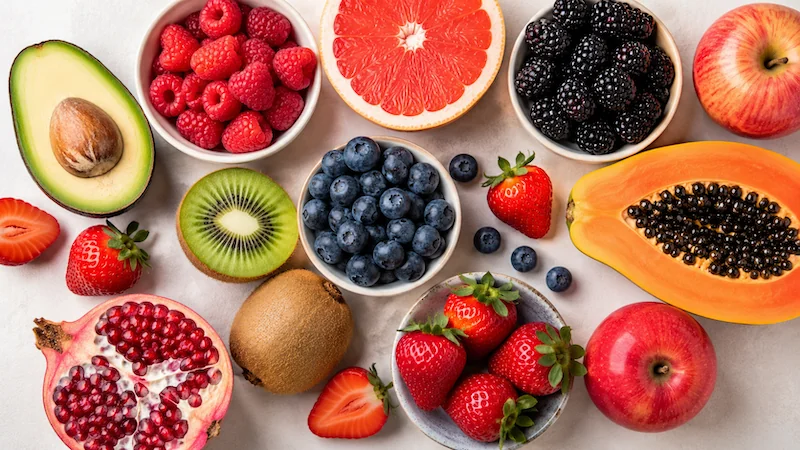
1. Avocado
Yes, avocado is a fruit. And yes, it deserves the top spot. I will die on this hill with guacamole in hand. Avocado is low in sugar, rich in fiber, full of healthy fats, and naturally supportive of blood sugar balance, fullness, hormones, metabolism, and liver-friendly meals.
- Sugar note: very low sugar compared to most fruit.
- Toxin note: conventional is usually fine, but organic is lovely if it fits your budget.
- How I use it: sliced over eggs, blended into smoothies, mashed into guacamole, or added to a big salad with protein.
2. Raspberries
Raspberries are one of my favorite fruits for something sweet without sending blood sugar on a roller coaster ride. They’re high in fiber, lower in sugar than many fruits, and packed with antioxidants that support gut health, cravings, fullness, and healthy elimination.
- Sugar note: low compared to most fruit.
- Toxin note: buy organic when possible because berries can carry more pesticide residue.
- How I use it: with protein-rich yogurt, cottage cheese, chia pudding, or a smoothie with protein and healthy fat.
3. Blackberries
Blackberries are high-fiber, antioxidant-rich, deeply pigmented, and loaded with polyphenols. They’re also relatively low in sugar, which makes them a great fruit for people who feel like fruit makes them hungrier.
- Sugar note: low to moderate.
- Toxin note: organic is ideal.
- How I use it: with unsweetened Greek yogurt, in protein smoothies, or as a sweet bite after dinner.
4. Blueberries
Blueberries are famous for a reason. They’re rich in anthocyanins, the plant compounds that give them their gorgeous blue-purple color, and they’re one of the best fruits for antioxidant support.
- Sugar note: moderate, so portion size matters.
- Toxin note: organic is preferred.
- How I use it: half a cup in a protein smoothie or sprinkled over oatmeal with cinnamon and protein on the side.
5. Strawberries
Strawberries are juicy, sweet, high in vitamin C, and surprisingly low in sugar for how dessert-like they taste. They’re great for skin support, antioxidant intake, and lower-sugar sweet cravings.
- Sugar note: lower than many fruits.
- Toxin note: buy organic whenever possible because strawberries commonly show up on Dirty Dozen lists.
- How I use it: sliced over yogurt, blended into a protein smoothie, or paired with a few squares of dark chocolate.
6. Kiwi
Kiwi is tiny but mighty. It’s rich in vitamin C, fiber, potassium, and digestive-supportive enzymes. It’s especially helpful if digestion is sluggish, and better digestion matters for nutrient absorption, metabolism, and liver support.
- Sugar note: moderate but portion-friendly.
- Toxin note: conventional is usually reasonable, organic is a bonus.
- How I use it: sliced into yogurt bowls, added to smoothies, or eaten with eggs or turkey slices.
7. Grapefruit
Grapefruit is lower in sugar, rich in vitamin C, hydrating, and refreshing. It’s also a great example of why fruit should be personalized because grapefruit can interact with certain medications. If you take medication, check with your pharmacist or doctor before making it a regular thing.
- Sugar note: low to moderate.
- Toxin note: wash the peel before cutting, even if you don’t eat the peel.
- How I use it: half a grapefruit with breakfast, or segments added to a salad with avocado and protein.
8. Papaya
Papaya is one of the healthier tropical fruits because it brings vitamin C, carotenoids, hydration, and digestive enzymes without being as sugar-heavy as some tropical options. It’s not a magic liver cleanse, because no fruit is, but it can support a diet that helps your body digest, eliminate, and function better.
- Sugar note: moderate.
- Toxin note: choose organic or non-GMO if you want to avoid genetically modified varieties.
- How I use it: with lime, in a smoothie with protein, or as a small side with a protein-forward breakfast.
9. Pomegranate
Pomegranate is higher in sugar than berries, but it earns its place because it’s loaded with polyphenols. The key is portion control. A sprinkle of arils gives you flavor, crunch, color, and antioxidants without overdoing sugar.
- Sugar note: moderate to higher, so use smaller portions.
- Toxin note: the thick outer peel helps, but organic is still great when available.
- How I use it: sprinkled over salads, Greek yogurt, roasted vegetables, or chia pudding.
10. Apples
Apples are practical, fiber-rich, portable, and easy to use. The main reason apples make this list is pectin, a soluble fiber that supports gut health, fullness, and healthy elimination. Apple juice, however, is not the same thing. Juice strips away much of the fiber and delivers sugar quickly.
- Sugar note: moderate.
- Toxin note: buy organic when possible.
- How I use it: sliced with almond butter, chopped into a protein oatmeal bowl, or paired with turkey slices.
Fruits I’d Eat Less Often if Liver or Blood Sugar Support Is the Goal
I’m not saying these fruits are bad. I’m saying they’re easier to overdo, especially if your blood sugar, cravings, liver health, or weight loss results feel stuck.
- Grapes: delicious, but higher in sugar and easy to overeat.
- Mango: nutrient-rich but higher in sugar. Great in small portions, not as a giant smoothie base.
- Bananas: convenient, but higher in sugar and starch, especially when very ripe.
- Pineapple: contains enzymes and vitamin C, but it’s higher in sugar, so portion matters.
- Dried fruit: sugar is concentrated, portions get weird fast, and many dried fruits have added sugar or preservatives.
- Fruit juice: treat juice more like a sweet drink than a health food, especially if liver support is the goal.
How to Eat Fruit Without Spiking Blood Sugar
You don’t need to micromanage every blueberry. A few simple strategies can make fruit much more metabolism-friendly.
Pair Fruit With Protein or Healthy Fat – Instead of eating fruit by itself, pair it with protein or fat. Try berries with Greek yogurt, an apple with turkey slices, kiwi with eggs, grapefruit with avocado in a salad, or strawberries with coconut yogurt. This slows digestion, supports fullness, and helps reduce the “I ate fruit and now I’m starving” problem.
Watch Portion Sizes – Yes, fruit can be healthy, but they can also become sugar bombs when you have too much or blend them into juices or smoothies. My rule: use one fruit serving, then add protein, fiber, and healthy fat.
Choose Organic Strategically – You do not have to buy everything organic. I don’t. But when a fruit has thin skin and commonly shows higher pesticide residue, like strawberries, blueberries, blackberries, and apples, organic is worth prioritizing. When a fruit has a thick protective peel, like avocado or papaya, conventional is usually more reasonable. For more, read the Updated Dirty Dozen and What to Always Buy Organic.
Why the Healthiest Fruits Still Need to Match Your Metabolic Type
Here’s the part people miss: just because these are the 10 best fruits for health doesn’t mean every single one is the best match for your body. Different people metabolize and digest foods differently, and fruit is a big one. For some women, certain fruits feel amazing. For others, they can affect bloating, cravings, blood sugar, gut symptoms, liver load, or hormone balance.
That’s why I always come back to eating for your metabolic type. Your body has unique fuel needs, and when you understand them, it becomes much easier to choose the foods that support your metabolism instead of guessing your way through every meal.
If you’re not sure what your body needs, start with my Metabolic Type Quiz. It will help you figure out your unique metabolic needs so you can eat in a way that supports your energy, hormones, digestion, metabolism, skin, and overall health.
Final Thoughts on the Healthiest Fruits
The healthiest fruits are not just the ones with the most vitamins. They’re the ones that give you the most nutrition with the least downside for your body, goals, blood sugar, toxic load, and liver.
If I had to simplify this whole list, I’d say this:
- Prioritize avocado, berries, kiwi, grapefruit, papaya, pomegranate, and organic apples.
- Keep portions reasonable.
- Pair fruit with protein or fat.
- Buy organic strategically.
- Skip juices and all fruit smoothies… And don’t let anyone convince you that a giant smoothie or smoothie bowl is automatically a health food just because it came from the earth.
Fruit is wonderful. You just want to use it wisely and in a way that matches your metabolic needs.
I hope this post helped you understand how to choose the healthiest fruits in a way that supports your metabolism, liver, energy, and real-life goals.
If you liked this post or have questions, let me know in the comments.
Forever rooting for you,
Dr. Christina Carlyle

Metabolic Type Meal Plan Results
Eating Healthy But Not Seeing Results?
The solution is eating for your unique metabolic type - When you eat foods that match your Metabolic Type you can lose weight and feel great 3 times faster. Take the Metabolic Type Quiz to discover your type and the meal plan that's best for you.
TAKE THE QUIZIf you liked this article, you’ll also like these posts
- Is Fruit Good for You?
- Low Glycemic Fruit you Should Eat
- Best Fruits for Weight Loss
- Updated Dirty Dozen and What to Always Buy Organic

Dr. Christina Carlyle is a Doctor of Functional Medicine, FDN-P, Nutritionist, & Trainer who transformed her body and health – getting off 7 medications and losing 40 pounds for good. Now, she helps other women get happy, healthy, and fit – quickly & naturally – without any BS