Last Updated on July 23, 2026
Today I’m sharing 20 of the best hip opener exercises with you… and for good reason!
Tight hips have a sneaky way of showing up everywhere. You may notice stiffness when you stand after sitting, difficulty getting comfortable during squats, reduced range of motion, or extra tension through your lower back after a long day.
I experienced this during a particularly desk-heavy chapter of my life. I was still exercising, so I was doing enough to keep my body mobile. Meanwhile, one hip felt tighter than the other, my squats felt uneven, and my lower back pain was flaring.
I started adding a short sequence of Hip Opener Exercises to my routine instead of forcing myself into aggressive stretches. Within a few weeks, my movements felt smoother, my range of motion was better, stress reduced and getting up from the floor became a lot easier.
These hip opening exercises can help you improve movement during workouts, improve flexibility, and reduce that ‘wound-up’ feeling around your pelvis and spine.
They’re also great exercises to do after cardio or leg day!
You can follow the entire routine or choose the movements that feel best for your body.
But before I dig in let me answer this question…
What Are Hip Opener Exercises?
Hip Opener Exercises are movements that improve mobility through the hip joint and the muscles surrounding it, including the hip flexors, glutes, hamstrings, inner thighs, and deep hip rotators.
Your hips are designed to flex, extend, rotate, and move from side to side. Sitting for long periods, repeating the same workouts, previous injuries, bad posture while sitting or sleeping, stress, trauma, and individual anatomy can all influence how freely those movements feel.
For the best results a hip opener exercise routine should include supported stretches, dynamic movements, and exercises that gently activate the glutes and core…
And that’s exactly what my round-up of 20 hip opening exercises can do for you.
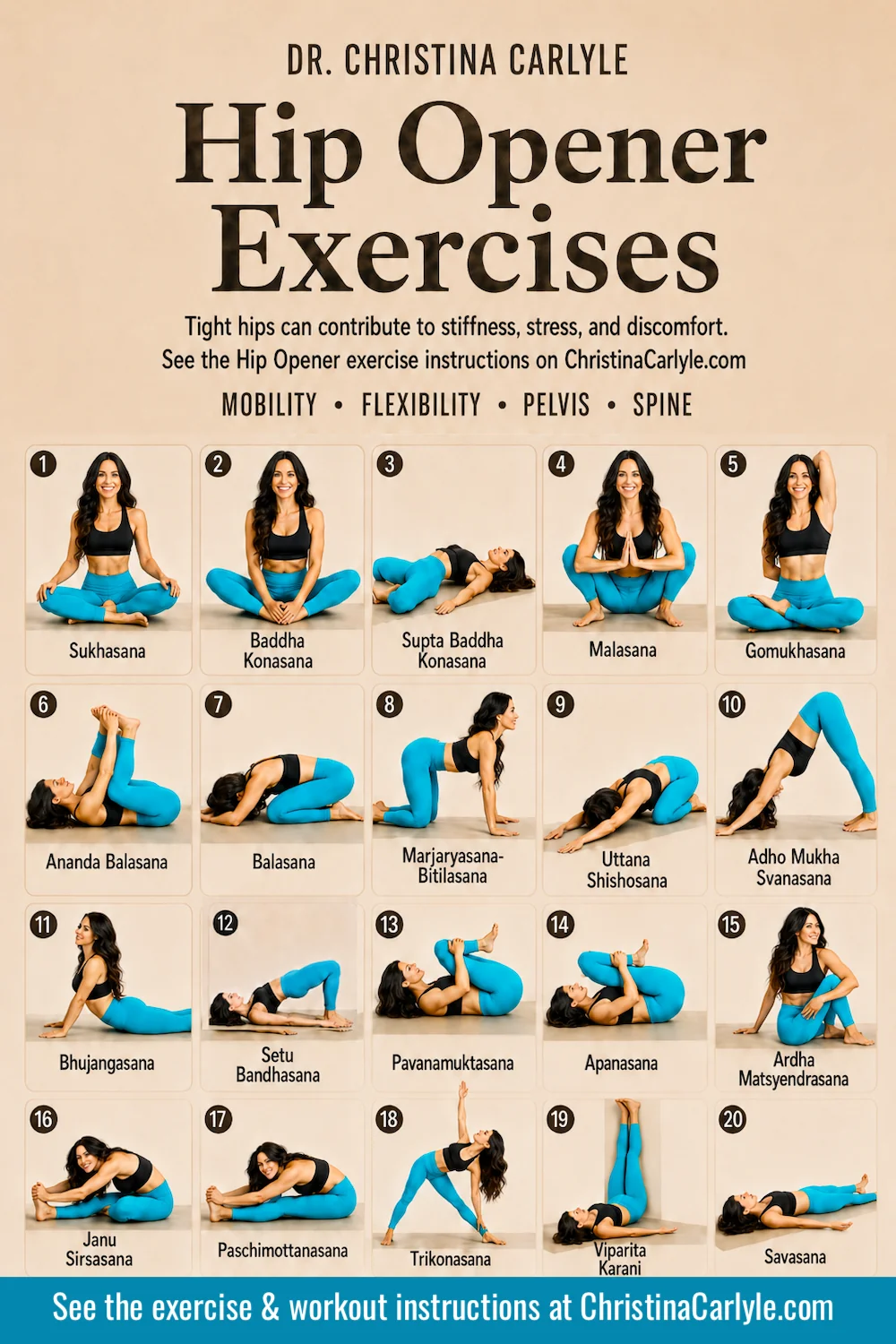
20 Hip Opener Exercises for a 5 to 10 Minute Mobility Reset
1. Sukhasana, or Easy Seated Pose
Sit with your legs crossed and your hands resting on your thighs. Lengthen your spine and relax your knees toward the floor. Take five slow breaths, then switch which leg is in front. Sit on a folded blanket if your lower back rounds.
2. Baddha Konasana, or Bound Angle Pose
Bring the soles of your feet together and allow your knees to open outward. Hold your ankles, sit tall, and gently hinge forward from your hips. Hold for five breaths without pressing your knees toward the floor.
3. Supta Baddha Konasana, or Reclined Bound Angle Pose
Lie on your back, bring the soles of your feet together, and let your knees open. Rest your arms beside you and breathe slowly. Place pillows beneath your thighs if the stretch feels too intense.
4. Malasana, or Yogic Squat
Stand with your feet wider than your hips and turn your toes slightly outward. Lower into a comfortable squat and bring your palms together. Keep your chest lifted and hold a sturdy support if needed.
5. Gomukhasana, or Cow Face Pose
Sit and stack one bent knee over the other, placing your feet near the outside of your hips. Keep both sitting bones grounded and hold for five breaths. Switch sides without forcing the knees to align perfectly.
6. Ananda Balasana, or Happy Baby Pose
Lie on your back and draw your knees toward the sides of your chest. Hold behind your thighs, calves, or feet. Keep your lower back relaxed and gently rock from side to side.
7. Balasana, or Child’s Pose
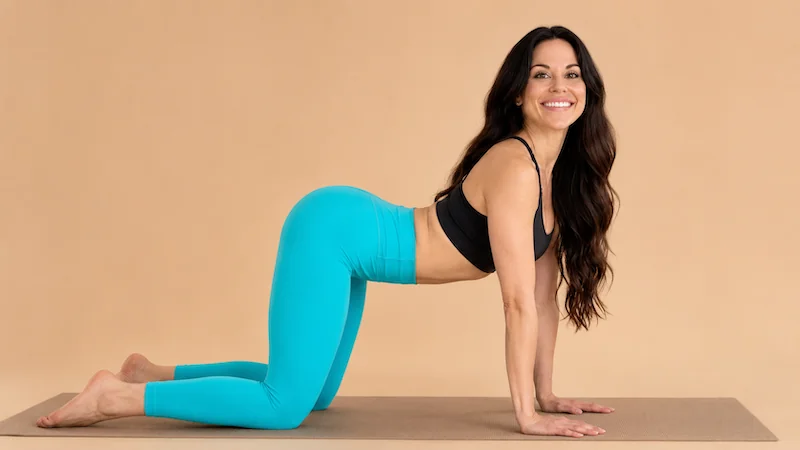
Begin on your hands and knees. Widen your knees, bring your big toes toward each other, and send your hips toward your heels. Extend your arms forward and take five slow breaths.
8. Marjaryasana-Bitilasana, or Cat-Cow Pose
Start on your hands and knees. Inhale as you gently lift your chest and tailbone. Exhale as you round your spine and tuck your pelvis. Repeat six to ten times without forcing your neck.
9. Uttana Shishosana, or Extended Puppy Pose
From hands and knees, keep your hips above your knees as you walk your hands forward. Lower your chest toward the floor and rest your forehead on a block or mat. Hold for three to five breaths.
10. Adho Mukha Svanasana, or Downward-Facing Dog
From hands and knees, tuck your toes and lift your hips up and back. Bend your knees enough to lengthen your spine. Alternate bending one knee and then the other to gently mobilize your hips and legs.
11. Bhujangasana, or Cobra Pose
Lie on your stomach with your hands beneath your shoulders. Press lightly through your palms and lift your chest while keeping your hips grounded. Keep the lift small and avoid compressing your lower back.
12. Setu Bandhasana, or Bridge Pose
Lie on your back with your knees bent and feet planted. Press through your feet, squeeze your glutes, and lift your hips. Pause briefly, then lower with control. Complete eight repetitions.
13. Pavanamuktasana, or Wind-Relieving Pose
Lie on your back and draw one knee toward your chest while keeping the other leg extended or bent. Hold behind your thigh or over your shin. Take five breaths, then switch sides.
14. Apanasana, or Knees-to-Chest Pose
Lie on your back and gently hug both knees toward your chest. Keep your shoulders relaxed and breathe into your lower ribs. Rock slowly from side to side if that feels good.
15. Ardha Matsyendrasana, or Half Lord of the Fishes Pose
Sit with one leg extended. Cross the opposite foot over the extended leg and place it beside your thigh. Sit tall and rotate gently toward the bent knee. Hold for three breaths, then switch sides.
16. Janu Sirsasana, or Head-to-Knee Pose
Sit with one leg extended and the opposite foot resting against your inner thigh. Turn your torso toward the straight leg and hinge forward from your hips. Keep your spine long and avoid pulling on your foot.
17. Paschimottanasana, or Seated Forward Fold
Sit with both legs extended. Bend your knees slightly, lengthen your spine, and tip forward from your hips. Rest your hands on your thighs, shins, or feet and hold for five relaxed breaths.
18. Trikonasana, or Triangle Pose
Stand with your feet wide. Turn one foot outward and extend your arms. Reach over the front leg, then place your hand on your shin or a block. Rotate your chest gently upward and repeat on the other side.
19. Viparita Karani, or Legs-Up-the-Wall Pose
Sit beside a wall, lie back, and extend your legs upward against it. Adjust your distance until your hips feel comfortable. Rest your arms beside you and breathe slowly for one to three minutes.
20. Savasana, or Final Resting Pose
Lie on your back with your legs extended and your arms relaxed. Allow your feet to fall outward and soften your jaw, shoulders, and hips. Stay for five to ten breaths and notice how your body feels.
How to Do these Hip Opener Exercises
Pick 5 or 6 hip opener exercises from the list above.
Move slowly, breathe normally, and stop before any tension becomes pain.
Hold the still poses for three to ten relaxed breaths. For moving exercises, complete six to ten controlled repetitions. Use a cushion, folded towel, wall, or yoga block whenever your body needs additional support.
Warning: You should not feel sharp discomfort, pinching inside the hip, numbness, or tingling… if you do stop! Speak with your healthcare provider or physical therapist before beginning if you have a recent injury, joint replacement, significant pain, balance concerns, or a medical condition that affects movement.
How Often Should You Practice Hip Opener Exercises?
Try this routine three to five times per week or after prolonged periods of sitting, cardio workout days, or leg workout days.
On busy days, choose four or five exercises and move for five minutes. A short routine you repeat consistently will serve you better than an elaborate mobility session you rarely have time to do.
Movements such as Cat-Cow, Downward-Facing Dog, and Bridge Pose work well before exercise.
Longer, relaxed holds are usually more comfortable after a workout or during a separate mobility session.
Don’t judge yourself by how deeply you can stretch… if you feel tight or sore when doing these hip openers, use that as a sign to be more consistent with these exercises to open your hips.
Pay attention to whether walking, squatting, exercising, and getting off the floor begin to feel smoother as you become more consistent with the exercises.
Make Hip Opener Exercises Part of a Complete Wellness Plan
Hip Opener Exercises can help loosen tight hips, improve posture, range of motion, flexibility, and help you move more comfortably, But they’re still one tiny piece of a complete health and fitness program.
These hip opener exercises work best when they’re included in a complete training and nutrition program.
That’s why I created the Program Style Quiz. Take my Program Style Quiz now to discover the program that’s perfect for your body, preferences, lifestyle, and goals.
Final Thoughts About Hip Opener Exercises
You do not need perfect flexibility to benefit from this routine. Start where your body is, use support when you need it, and focus on smooth, pain-free movement. Five mindful minutes can be incredibly useful when you repeat them consistently.
Try the Hip Opener Exercises that feel best for you, save the full routine for later, and share this post with someone who is always complaining about tight hips. You know the one.
I hope this article helped you. If you have any questions, feedback, or thoughts, let me know in the comments.
Forever rooting for you,
Dr. Christina Carlyle
Remember to pin the hip opener exercises to pinterest so you’ll have them forever.

Metabolic Type Meal Plan Results
Eating Healthy But Not Seeing Results?
The solution is eating for your unique metabolic type - When you eat foods that match your Metabolic Type you can lose weight and feel great 3 times faster. Take the Metabolic Type Quiz to discover your type and the meal plan that's best for you.
TAKE THE QUIZIf you liked this article, you’ll also like these posts
- Leg Stretches to Do After a Workout
- Foam Rolling Exercises and Benefits
- Thigh Exercises for Toned Inner and Outer Thighs
- Leg Exercises at Home
- 10-Minute Leg Workout for Women

Dr. Christina Carlyle is a Doctor of Functional Medicine, FDN-P, Nutritionist, & Trainer who transformed her body and health – getting off 7 medications and losing 40 pounds for good. Now, she helps other women get happy, healthy, and fit – quickly & naturally – without any BS