Last Updated on June 9, 2026
If you’d told me back when I was a personal trainer counting macros that I’d one day write an entire article about nails, I probably would’ve laughed. But once I dove deep into functional and holistic health, I learned that your nails are like little health reports growing out of your fingertips… and they reveal so much more than most people realize.
In the functional route, one of the very first things some of my mentors taught me was how to look at someone’s body and assess for nutritional or metabolic deficiencies. And one of the first things we look at are the nails. They tell you things bloodwork often misses – about digestion, detox, hormones, stress, and overall vitality.
Your nails are windows into your circulation, nutrient status, thyroid function, detox capacity, and stress load.
Everything you eat, digest, absorb (or don’t), plus your stress, sleep, hormones, and detox systems – all of it filters through to your nail matrix, your nail bed, your keratin supply. So when your nails start talking (with ridges, spots, weird shapes, odd colors) they’re not being dramatic – they’re giving you a clue. And if you listen, you’ll understand your body better.
Why Your Nails Matter
Your nails are made of keratin which is the same stuff your hair and skin use. But for them to grow well, you need good circulation, ample nutrients (protein, minerals, vitamins), healthy digestion, and a well-tuned metabolic system. When any part of that chain falters, your nails can act up.
In fact, research says: “Virtually every nutritional deficiency can affect nail growth in some manner.” And more specifically, nutrient deficiencies can lead to nails that are soft, brittle, thin, split, or peeling.
So yes… those ridges, those white spots, those weird curves? They mean something.
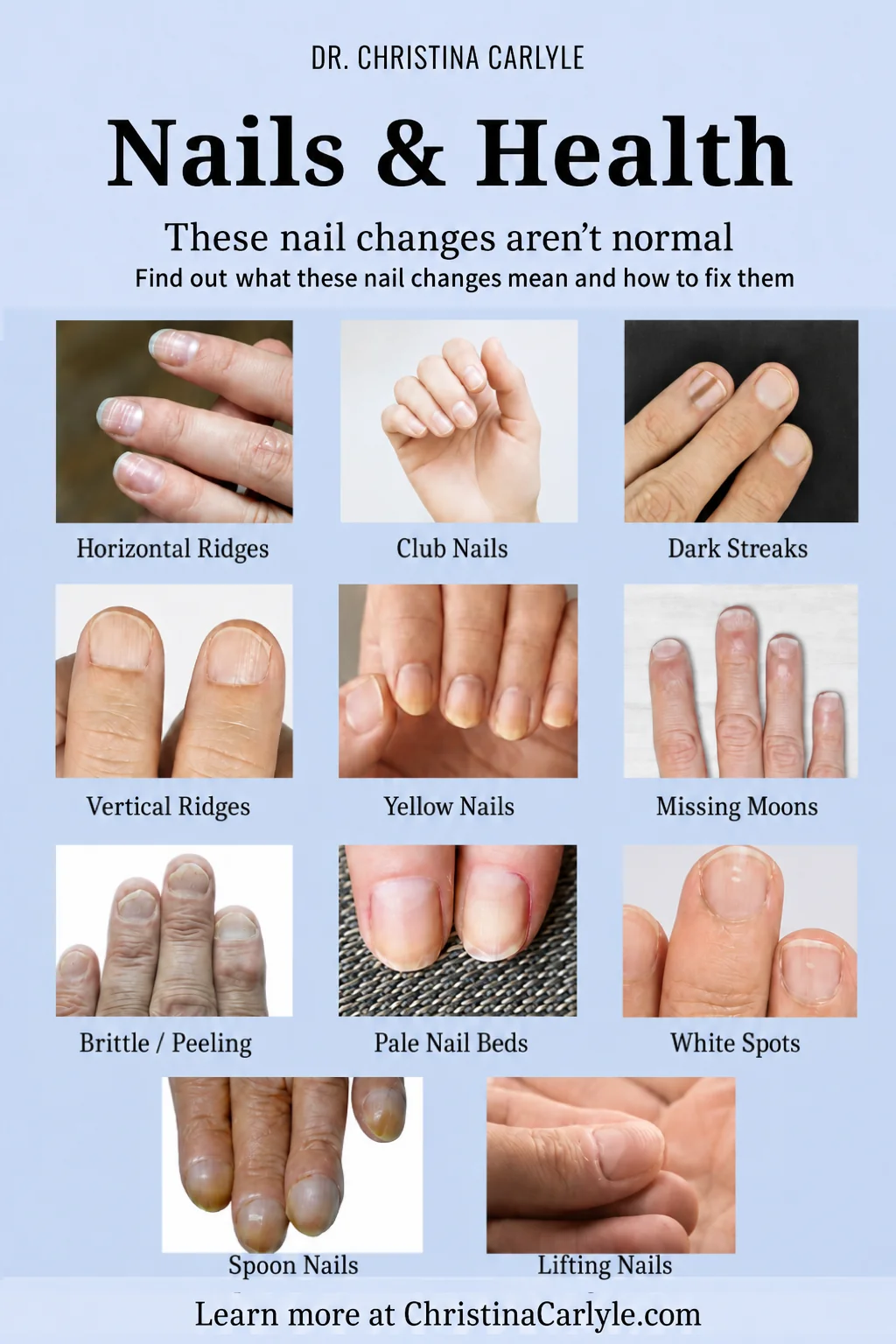
Common Nail Signs and What They Could Mean for your Health
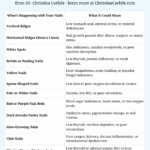
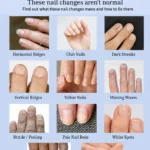
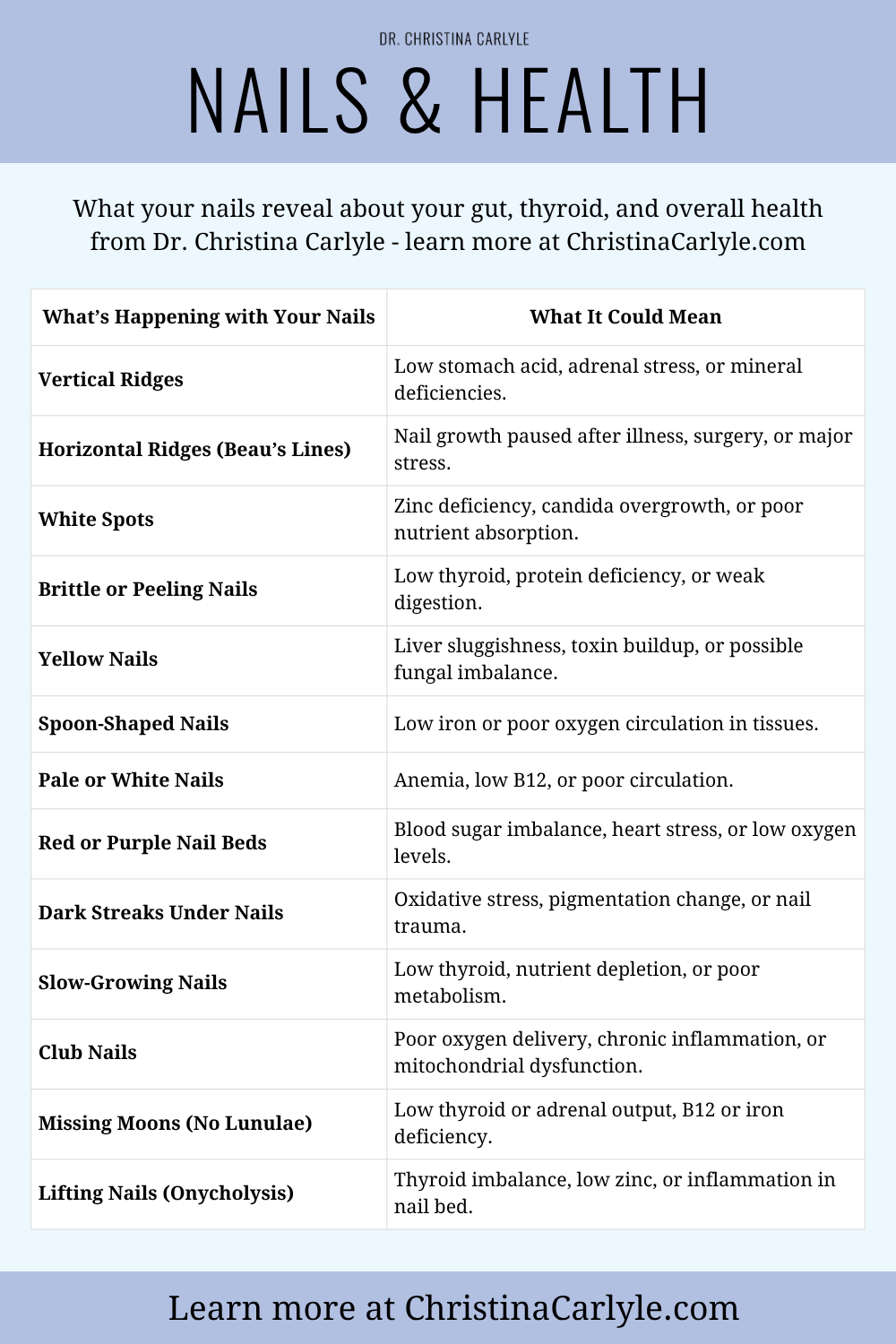
Below are some of the most common nail changes — what they might indicate medically, and how I interpret them functionally in practice.
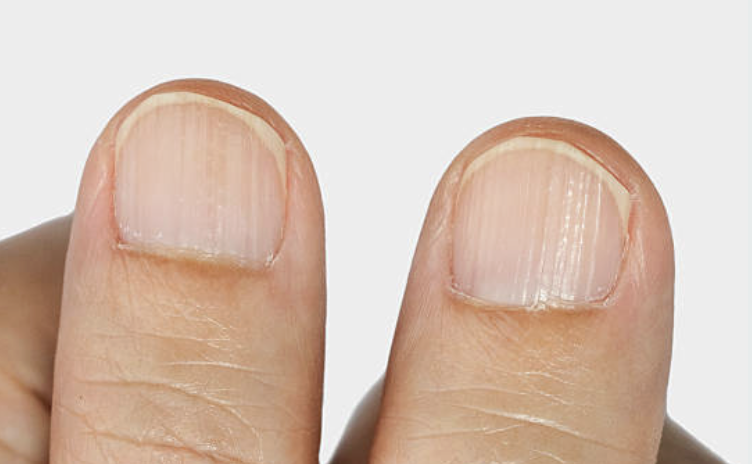
Vertical Ridges (Lines from Cuticle to Tip)
Fine ridges are common with age, but deep or rough ridges may reflect low stomach acid, adrenal fatigue, or nutrient malabsorption. Low hydrochloric acid makes it harder to absorb protein, zinc, iron, and B vitamins – nutrients your nails depend on. Chronic stress also taxes the adrenals, leading to mineral loss and weaker keratin production.
Horizontal Ridges (Beau’s lines)
These grooves indicate a temporary stop in nail growth… like hitting pause on a movie. They often appear after an illness, major stress, surgery, or extreme diet change. Essentially, your body redirected energy away from growth toward healing or survival.
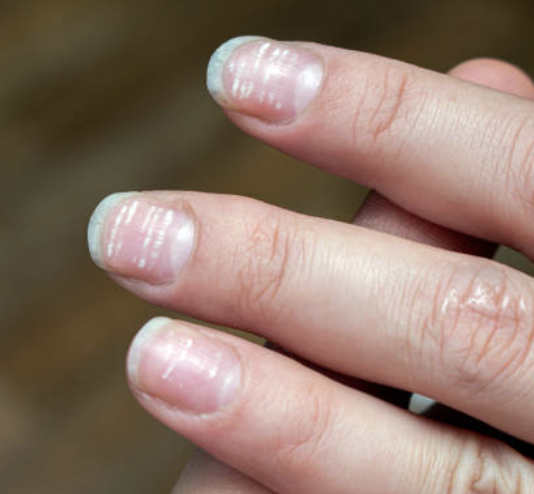
White Spots
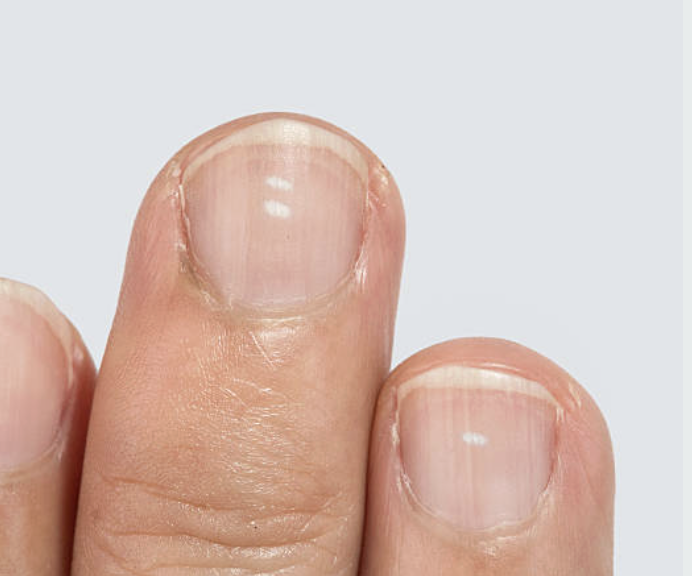
Tiny white spots can come from trauma, but chronic or widespread spots often signal zinc deficiency, candida overgrowth, or impaired nutrient absorption. Since zinc is critical for immunity, wound healing, and gut repair, recurring white spots are a cue to check your digestion and diet quality.
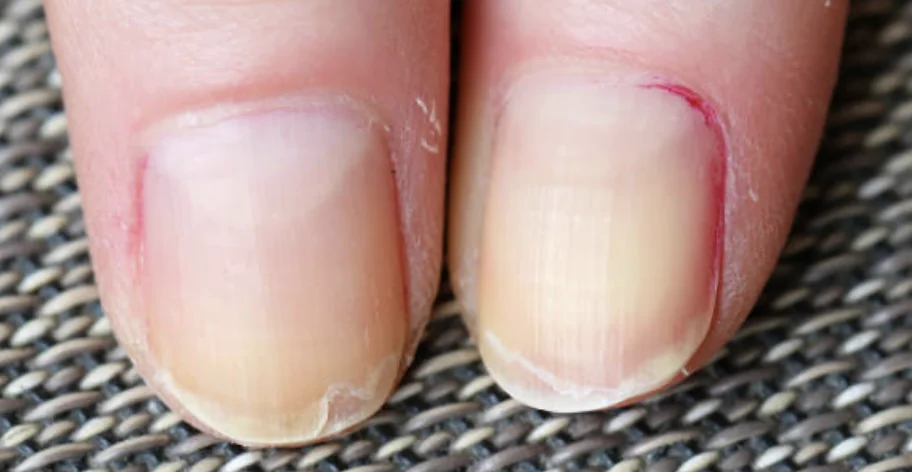
Brittle, Thin, or Peeling Nails
If your nails split, flake, or peel easily, think thyroid, iron, or protein deficiency. The thyroid regulates cell turnover and oxygenation, while iron and protein fuel keratin synthesis. Low stomach acid can make it worse by preventing protein breakdown and mineral absorption.
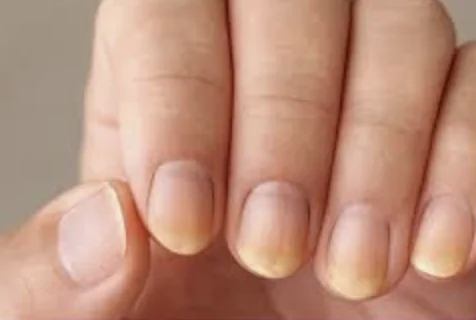
Yellow Nails
When nails turn yellow or thicken, fungus is one possibility but chronic yellowing often points to lymphatic congestion, liver sluggishness, or toxin buildup. It’s a common clue in clients with slow detox, poor bile flow, or a heavy chemical load from diet, stress, or environment.
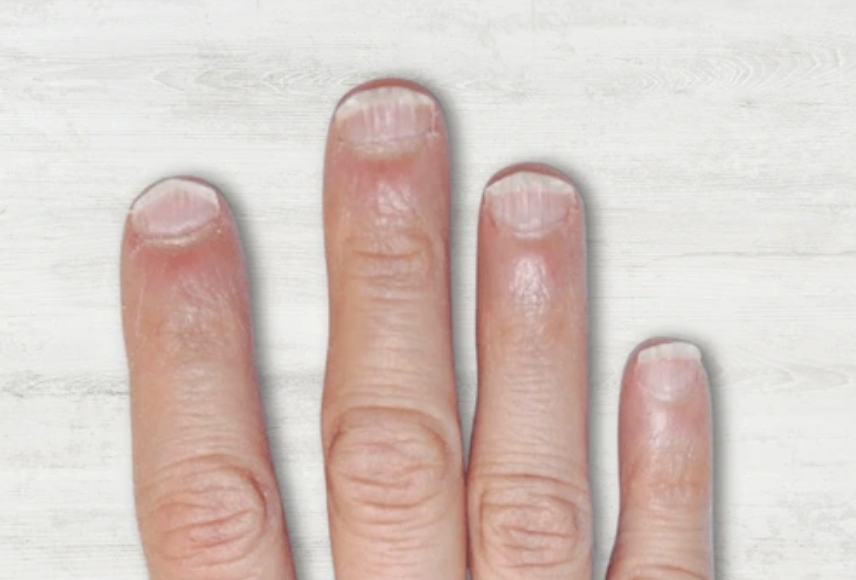
Spoon-Shaped Nails (Koilonychia)
Nails that curve upward at the edges can indicate iron-deficiency anemia or low oxygenation in tissues. This happens when hemoglobin (your oxygen carrier) is too low to nourish your nail matrix. Iron and oxygen are essential for cell energy, so spoon nails often show up alongside fatigue, dizziness, or pale skin.
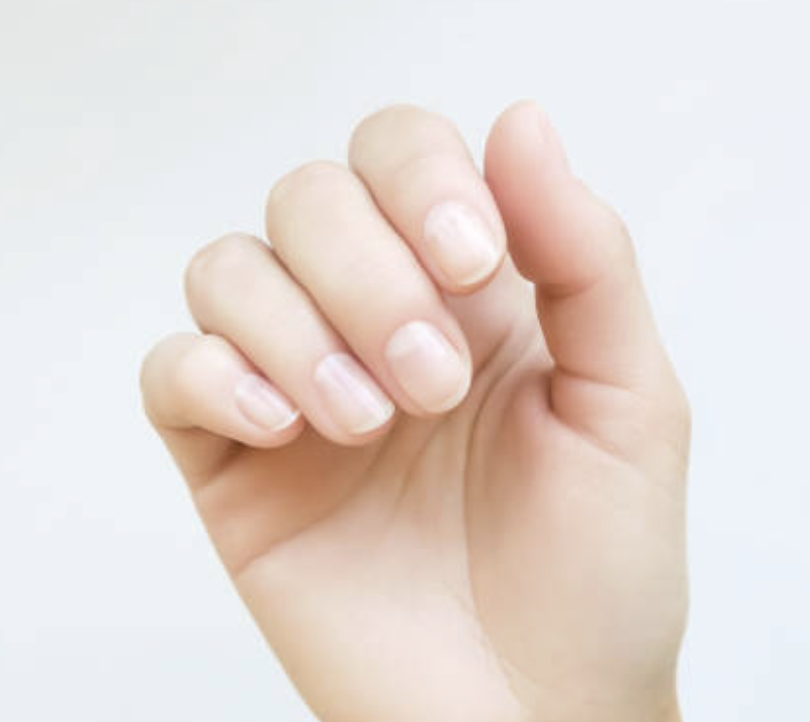
Pale or White Nail Beds
If your nail beds are very light or white, it could signal anemia, poor circulation, or liver dysfunction. From a functional standpoint, this reflects reduced oxygen delivery and nutrient transport – often linked to low B12, folate, or iron levels, or stagnant detox pathways.
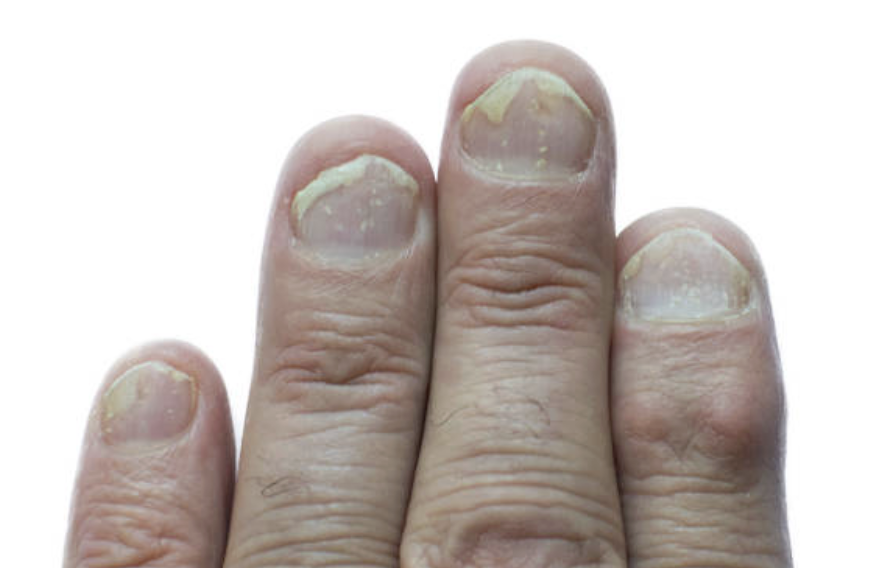
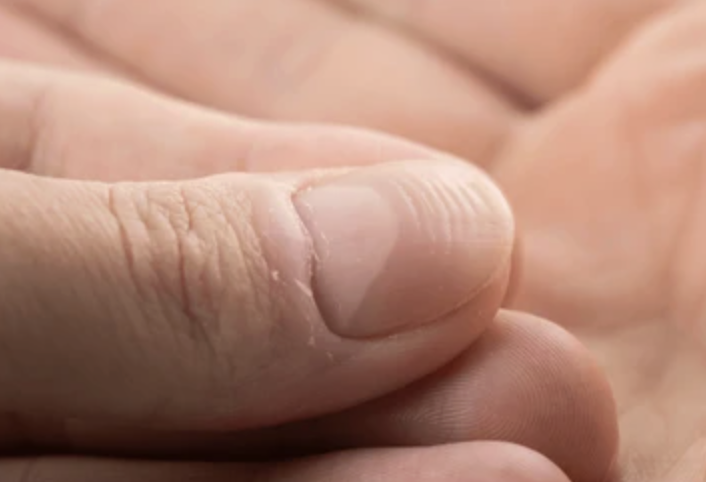
Lifting Nails (Onycholysis)
When your nails start lifting or separating from the nail bed, it can look harmless – but it’s often a clue your body’s under stress. Medically, it can happen from fungal infections, thyroid imbalances (especially hyperthyroidism), or repeated trauma from polish or gel removal. Functionally, it can also point to nutrient deficiencies like low zinc, iron, or B12, detox overload, or chronic inflammation weakening the nail’s attachment. Supporting thyroid health, gut repair, and mineral balance usually helps the nail reattach as it grows out.
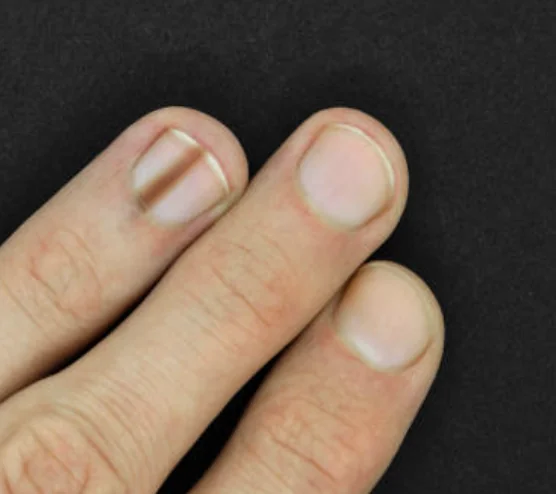
Dark Streaks Under Nails
Brown or black streaks can be harmless pigmentation, but new, changing, or irregular streaks need to be checked as they can rarely indicate melanoma. From a functional lens, recurrent discoloration without malignancy can still reflect oxidative stress or nutrient depletion.Slow-Growing Nails
If your nails grow slowly or break before reaching length, think low thyroid, chronic nutrient depletion, or poor circulation. The thyroid drives cellular metabolism – when it’s sluggish, growth slows everywhere. Supporting protein intake, iron, B12, and stress management usually helps.
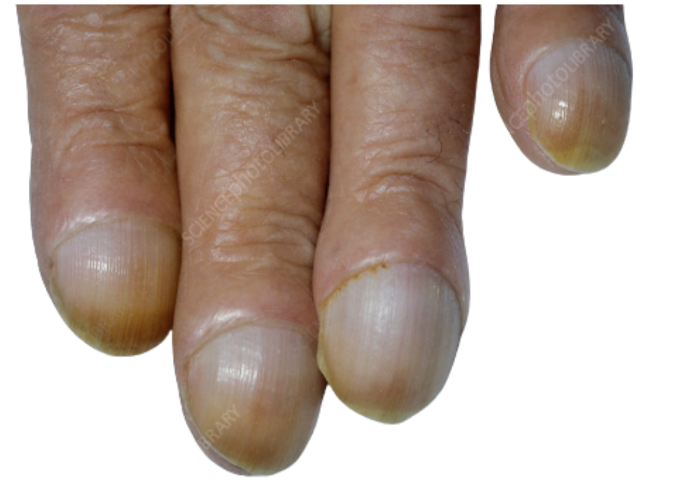
Club Nails (Digital Clubbing)
Club nails look rounded and bulbous at the fingertips, with the nails curving down and the nail beds feeling spongy to the touch. Medically, this can occur when blood oxygen levels stay low for a long time – common with heart, lung, or liver issues. Functionally, it signals that the body isn’t moving or using oxygen efficiently due to poor circulation, chronic inflammation, or mitochondrial stress.
Over time, low oxygen triggers excess vascular growth and connective tissue under the nail, causing the thick, curved shape. I often see mild clubbing in people with long-term stress, low thyroid function, or sluggish detox. Supporting circulation, oxygenation (movement, breathwork, red-light therapy), and anti-inflammatory nutrition can help restore balance and tissue health.
Missing Moons (Absent Lunulae)
The white half-moons at the base of your nails (lunulae) should be visible on most fingers. When they disappear or become faint, it often reflects low thyroid or adrenal function, anemia, or nutrient depletion – especially B12 and iron. These moons represent healthy circulation and cellular turnover, so when they fade, it can indicate your metabolism is running low.
Research has linked absent lunulae with chronic illness and malnutrition and even with depression caused by B12 deficiency. Functionally, I see missing moons as a sign your “battery” is depleted. Focusing on nutrient-dense foods, stress reduction, and thyroid/adrenal support can help bring them back over time.
What to Do for Healthier Nails
Support Digestion & Absorption
If your nails are weak or ridged, your gut may be struggling. Try lemon water or apple cider vinegar before meals to naturally boost stomach acid and improve mineral absorption.
Eat for Your Metabolic Type
Your body’s nutrient needs are unique. Eating foods aligned with your metabolic type can dramatically improve digestion, nutrient absorption, and visible markers like nails and skin. Take the Metabolic Type Quiz to discover your Metabolic Type.
Manage Stress
Cortisol drains minerals like zinc and magnesium. Practice nervous system regulation – breath work, somatic movement, meditation, or my Magic Moves program’s routines to rebuild internal balance.
Support Detox & Circulation
Hydration, movement, dry brushing, and liver-supportive foods (beets, dandelion, cruciferous veggies) improve nail growth by enhancing oxygen and nutrient delivery.
Nourish from the Inside Out
Prioritize clean protein, healthy fats, and micronutrients like zinc, iron, selenium, and B12. You can’t out-supplement poor digestion, so start with food and absorption first.
My Professional Recommendation
If your nails are changing – and you’re also experiencing fatigue, poor digestion, or other chronic symptoms – that’s your body asking for deeper support.
Start with a Case Review + Initial Consultation so we can identify your root causes and create a personalized treatment protocol.
If you’d rather go the self-paced route, take my Metabolic Type Quiz to start eating in alignment with your unique metabolism — you’ll absorb nutrients better and see the results right at your fingertips (literally).
Final Thoughts About what irregular nails mean
Your nails are more than decoration. They’re daily progress reports from your body – telling you how well you’re nourished, oxygenated, and supported.

Metabolic Type Meal Plan Results
Eating Healthy But Not Seeing Results?
The solution is eating for your unique metabolic type - When you eat foods that match your Metabolic Type you can lose weight and feel great 3 times faster. Take the Metabolic Type Quiz to discover your type and the meal plan that's best for you.
TAKE THE QUIZWhen you start listening to these subtle signals, you can catch imbalance before it becomes illness. Because beauty really does start from within – and your nails are one of the first places to prove it.
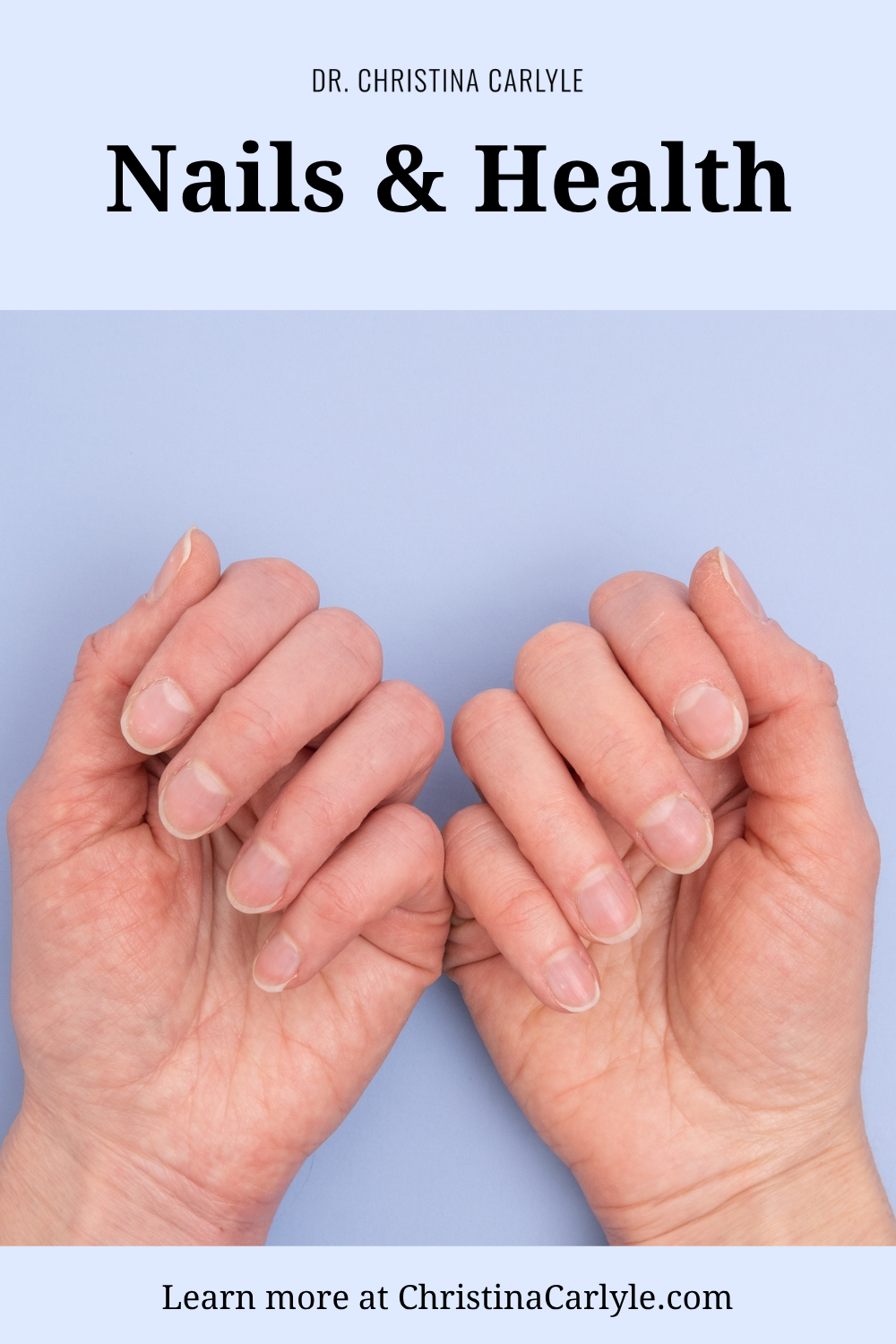

Dr. Christina Carlyle is a Doctor of Functional Medicine, FDN-P, Nutritionist, & Trainer who transformed her body and health – getting off 7 medications and losing 40 pounds for good. Now, she helps other women get happy, healthy, and fit – quickly & naturally – without any BS