Last Updated on April 16, 2026
I’ve been getting asked about adding salt in water a lot lately and I get why.
Some women are adding it because they’ve heard it helps with hydration. Others want a simpler, more natural, and cheaper alternative to electrolyte packets.
And yes, salt in water can absolutely help.
But like a lot of wellness trends, people take something useful and make it weird fast. I’m not telling you to dump a ton of salt into your water and hope for the best. What I do recommend is understanding why it helps, who it helps most, and how to do it in a way that actually supports your body.
When you do it right, salt in water can be one of the easiest ways to support hydration, energy, and mineral balance. It should taste lightly mineralized and fresh. Not like you accidentally swallowed ocean water.
What Does Salt in Water Actually Do?
Salt in water helps support hydration because sodium is one of the body’s main electrolytes.
Sodium helps regulate fluid balance, supports nerve and muscle function, and helps your body hold onto the water you drink more effectively. Hydration is not just about drinking more water. It’s about actually absorbing and using that water well.
This is where a lot of women get frustrated. They’re drinking water all day and still feeling tired, foggy, crampy, lightheaded, or just off. In many cases, the problem is not a lack of water. It’s a lack of minerals. Adding salt in water helps make it absorb better and balances minerals better.
Why I Recommend Salt in Water
I recommend salt in water for some women because it’s simple, affordable, and often surprisingly effective.
I see this all the time with clients who are doing all the “healthy” things and still not feeling great. They’re drinking tons of plain water, eating clean, working out, sweating a lot, and sometimes using saunas or dealing with stress on top of it all.
Meanwhile, their mineral balance is taking a hit. That’s where salt in water can be helpful. It’s not magic, but it can be a smart way to support sodium intake and help your body use water better.
Benefits of Salt in Water
When used appropriately, salt in water may help support:
- Better hydration
- Improved fluid balance
- Steadier energy
- Fewer dehydration related headaches
- Less lightheadedness when you feel depleted
- Better workout recovery
- Better hydration after sweating or travel
This is not about turning salt in water into a miracle hack. It’s about remembering that sodium is a key electrolyte, and a lot of women feel better when hydration includes minerals instead of endless plain water.
Who Benefits Most From Salt in Water?
Salt in water can be especially helpful if you:
- Sweat a lot during workouts
- Use saunas often
- Drink a lot of plain water
- Eat a very low sodium or very clean diet
- Travel frequently
- Tend to feel depleted, tired, headachy, or lightheaded
- Feel like plain water is not hydrating you well
Sometimes your body is asking for support, not more complexity.
Is Salt in Water the Same as Electrolytes?
Not exactly, but it is part of the picture.
Salt in water gives you sodium, and sodium is one of the main electrolytes involved in hydration. So yes, it can help support electrolyte balance. But it is not the same as getting a full range of minerals from your diet.
That’s why I see salt in water as one useful hydration tool, not the whole answer. You still need nutrient dense food, enough potassium and magnesium, and a nutrition strategy that actually works for your body.
What Kind of Salt Should You Use in Water?
If you’re going to add salt to your water, quality matters.
You want a salt that tastes clean and natural. Nothing gimmicky. Just something minimally processed with a more natural mineral profile.
I break this down more in my post on the healthiest salt, but the big takeaway is simple: choose one that tastes good and use the right amount.
The goal is not aggressive salt water. The goal is a gentle mineral boost.
How Much Salt Should You Add to Water?
You only need a small pinch.
That’s it.
You want your water to taste subtly enhanced, not obviously salty. Think of it like seasoning. A little makes it better. Too much ruins the whole thing.
If your water tastes like soup, you went too far.
The Easiest Way to Drink Salt in Water
If you want the easiest approach, here are two great options.
Option One: Add a Small Pinch of Quality Salt to Water
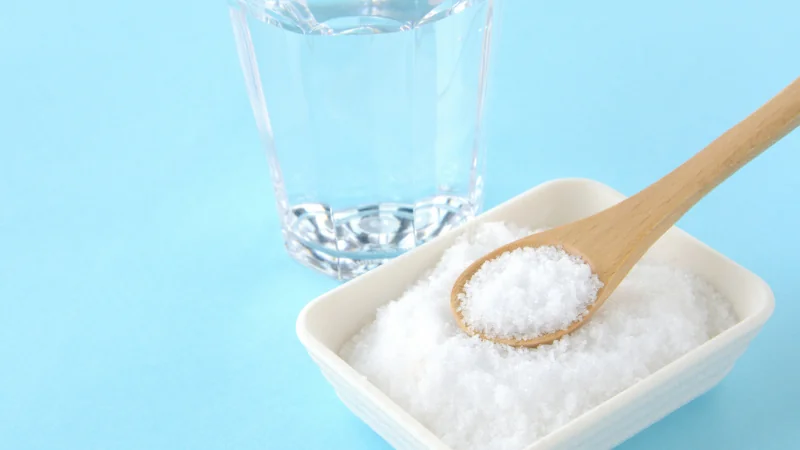
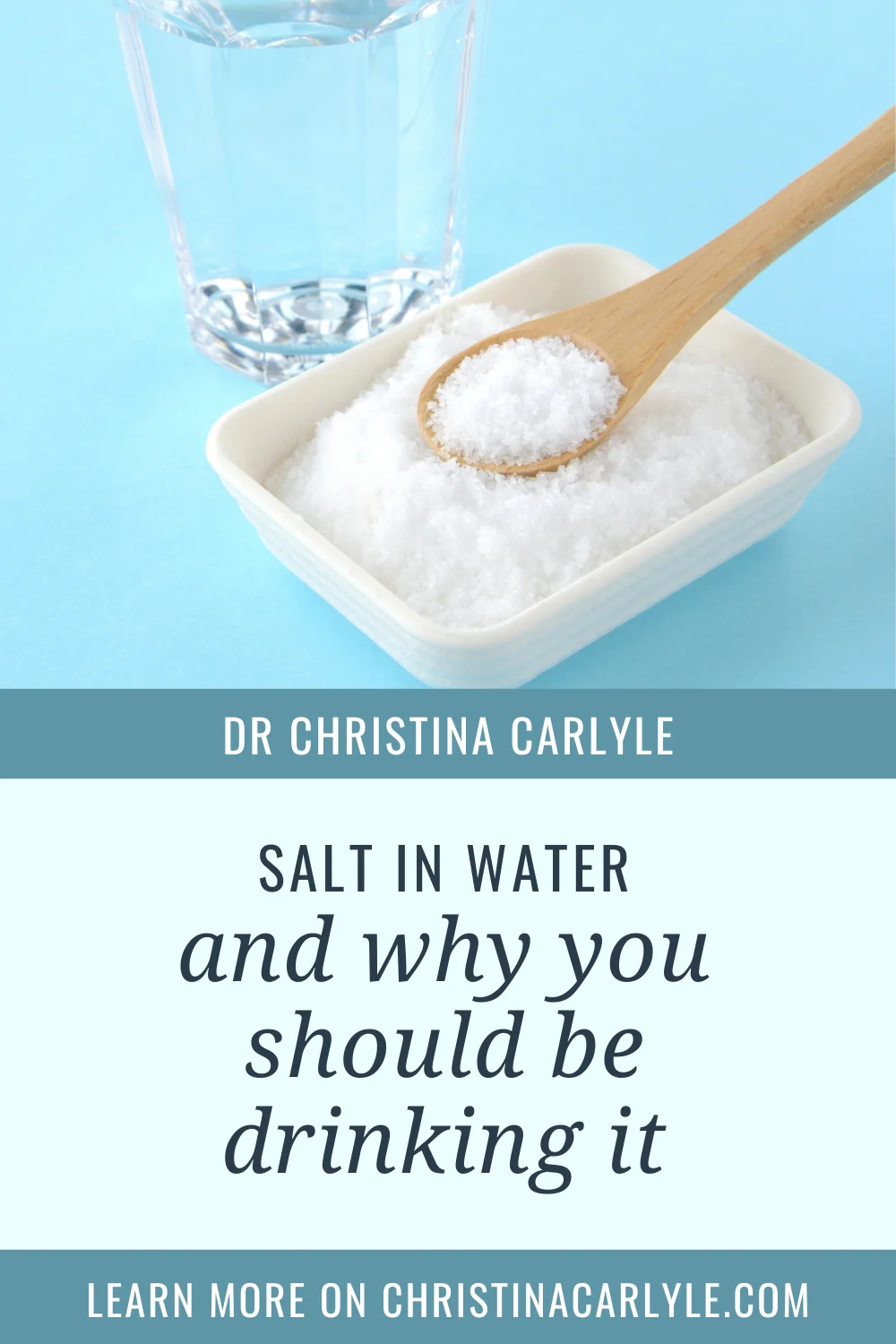
This is the simple DIY version. Add a small pinch of quality salt to a glass or bottle of water and stir or shake it up.
You can also add a squeeze of lemon or lime if you want it to taste fresher.
Option Two: Drink Sparkling Mineral Water
This is my favorite option… but I personally LOVE sparkling water.
Some sparkling mineral waters naturally contain sodium, so you get that lightly salted, mineral rich effect without having to mix anything yourself.
If you like bubbly water, this can be such an easy win. You’re hydrating, getting minerals, and it feels way less boring than forcing yourself to sip plain water all day.
When Salt in Water Can Be Especially Helpful
Salt in water tends to make the most sense:
- After a sweaty workout
- During travel
- After sauna use
- When you’ve been drinking a lot of plain water
- When you feel depleted or lightly headachy
- During periods of higher stress
It’s a nice middle ground. You get practical hydration support without relying on ultra processed products.
When You Might Not Need Salt in Water
You may not need salt in water if you’re already hydrating well, salting your meals appropriately, and eating a mineral rich diet that supports electrolyte balance naturally.
You also may not need it all day every day. Use it when it supports you. Skip it when it doesn’t.
Salt in Water Versus Electrolyte Packets
Sure, electrolyte packets can be convenient, especially for travel, longer workouts, or when you need something portable.
But salt in water is often a much simpler and more natural option if what you really need is a little sodium support. You also avoid a lot of the junk that can show up in trendy hydration products, like unnecessary sweeteners, dyes, fillers, and marketing fluff.
Salt in water is not always a replacement, but it can absolutely be a great first step. So are using other natural electrolytes.
Salt in Water Is Helpful, But It’s Still Only One Piece
Salt in water can help support hydration, but it is still just one piece of the puzzle.
If your overall nutrition is not working for your body, if you’re under eating, overtraining, or eating foods that leave you bloated and drained, adding salt to your water is not going to fix all of that.
This is why I always come back to personalization. Different women respond differently to foods and nutrients. When you start eating for your unique metabolic needs, everything tends to work better.
So yes, salt in water can help. But the bigger win is building a nutrition strategy that actually matches your body. That’s why I always recommend prioritizing Natural Electrolytes and nutrition that matches your Metabolic Type’s needs.
How to Add Salt in Water (safely)
- Start with a small pinch of quality salt
- Make sure it tastes light and pleasant
- Use it when you know you need extra hydration support
- Try sparkling mineral water if you want an even easier option
- Do not overcomplicate it
You do not need to make hydration harder than it has to be. You need a smart approach that supports your body and fits real life.
Final Thoughts on Salt in Water
If you’ve been wondering whether salt in water is worth trying, my answer is yes, for the right person it can be incredibly helpful.
It can support hydration, energy, recovery, and mineral balance in a simple, natural way. But it works best as part of a bigger nutrition strategy that actually fits your body.
If you’re ready to figure out the best way to eat for your unique needs, take my Metabolic Type Quiz. Different people respond differently to foods and nutrients, and when you eat for your metabolic type, you can lose weight and get healthier faster while avoiding a lot of the frustrating symptoms that keep women feeling stuck.
You deserve to feel hydrated, energized, and good in your body. Sometimes that starts with something as simple as a pinch of salt in your water. And sometimes it starts with finally giving your body the nutrition strategy it’s actually needed all along.
I hope you like this one! If you did or have any questions about salt in water let me know in the comments.

Dr. Christina Carlyle

Metabolic Type Meal Plan Results
Eating Healthy But Not Seeing Results?
The solution is eating for your unique metabolic type - When you eat foods that match your Metabolic Type you can lose weight and feel great 3 times faster. Take the Metabolic Type Quiz to discover your type and the meal plan that's best for you.
TAKE THE QUIZIf you liked this article, you’ll also like these posts
- The Healthiest Salt: Which One Should You Be Using?
- 10 Best Clean Drinks for Fitness, Health & Hydration
- 16 Delicious Spa Water Recipes
- Water Intake Calculator
- Natural Electrolytes – What They Are and the Best Natural Sources

Dr. Christina Carlyle is a Doctor of Functional Medicine, FDN-P, Nutritionist, & Trainer who transformed her body and health – getting off 7 medications and losing 40 pounds for good. Now, she helps other women get happy, healthy, and fit – quickly & naturally – without any BS