Last Updated on July 10, 2025
If you feel tired all the time, can’t lose weight no matter what you try, feel puffy or inflamed, or like your body is working against you – chances are you’re dealing with metabolic dysfunction.
And no, that doesn’t just mean your metabolism is “slow.”
Your metabolism is the sum of every single chemical reaction happening in your body – inside every cell, tissue, organ, and system. It’s how you convert food and oxygen into energy so your body can function, heal, and thrive.
Metabolic dysfunction is what happens when those chemical reactions stop working the way they’re supposed to. It’s a breakdown in the systems that create and use energy – and it affects everything.
If left untreated, it snowballs… and eventually leads to a diagnosis or even disease. In extreme cases, metabolic dysfunction can be fatal.
Let’s break it all down.
Signs of Metabolic Dysfunction
- You gain weight easily and can’t lose it
- You feel tired, foggy, or unmotivated no matter how much sleep you get
- You’re inflamed or puffy
- You crave sugar, salt, caffeine, or carbs all the time
- Your hormones feel out of control (PMS, acne, cycle issues, low libido)
- You feel bloated, constipated, or have weird reactions to food
- You’re stuck in survival mode, emotionally and physically
- You’re always hungry or never feel hungry
If you nodded yes to more than a few – you’re not broken. You’re not crazy. You’re just metabolically dysfunctional.

The Systems That Impact Metabolism Most
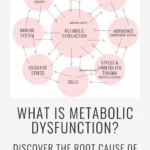
Metabolic dysfunction doesn’t happen in isolation. It’s a ripple effect that starts in one system and spreads to them all. These are the main players that drive metabolism – and when they’re off, so is everything else.
Gut Health (Digestive System)
If your gut can’t properly break down and absorb nutrients, your body and cells can’t get the fuel they need to function. Gut dysfunction = metabolic dysfunction… Plus, low energy, inflammation, cravings, bloat, anxiety, depression, and mood swings.
Liver (Detox System)
Your liver processes toxins, excess hormones, and byproducts of metabolism. If it’s overburdened, your metabolism slows to a crawl. Detox pathways must be open for fat loss and hormone balance to happen. Liver issues cause metabolic dysfunction.
Hormones (Endocrine System)
Hormones regulate everything from mood to fat storage to hunger cues. Insulin, cortisol, thyroid, estrogen, progesterone – if they’re out of balance, you will hold onto fat and feel off. All hormones are chemicals messengers… the metabolism is the sum of ALL chemical reactions in your body. That means any hormone issue will have a direct impact on metabolism.
Stress & Unresolved Trauma (Nervous System)
Your nervous system controls whether your body feels safe enough to heal and burn fat. Chronic stress or unresolved trauma locks you into fight-or-flight mode, where your metabolism literally shuts down. Any stress or unresolved trauma will affect the metabolism and all other systems.
Cells (Energy Production)
Your cells make ATP – the energy currency of the body. If your cells are inflamed, toxic, or undernourished, your entire system suffers. This is where fatigue, brain fog, and poor recovery begin. The cells are where a lot of metabolic reactions occur – so any issues with your cells will affect metabolism, energy, inflammation, and cause premature aging in the process.
Oxidative Stress
This is the internal wear and tear caused by toxins, inflammation, and stress. It damages cells and accelerates aging – which disrupts metabolic efficiency. To make it worse, the antioxidant nutrients that protect you – like glutathione, selenium, and vitamin C – are often depleted in metabolic dysfunction, which allows damage to build up faster. This accelerates aging, drains energy, and keeps your metabolism stuck.
Immune System
Your immune system is tightly linked to your metabolism. When metabolic dysfunction sets in, inflammation increases and immunity weakens. A dysfunctional immune system creates chronic inflammation. That inflammation blocks insulin signaling, increases fat storage, and further stresses your system. Blood sugar swings, gut issues, and stress overload confuse your immune system – making it either overreactive (hello, autoimmunity and histamine issues) or under-active (hello, constant colds, flares, and slow recovery). If your immune system feels like it’s “always on” or totally shut down, your metabolism is likely behind it.
Nutrient Deficiency, Imbalance, & Toxicity
Your metabolism runs on nutrients – vitamins, minerals, amino acids, and antioxidants are the raw materials your body needs to produce energy, regulate hormones, detox, and repair cells. When you’re deficient (which most people are), your body can’t complete these processes efficiently. Metabolic dysfunction either causes or worsens nutrient deficiencies by impairing digestion and absorption. On top of that, stress and toxins burn through your reserves faster, creating imbalances and even toxic buildup from synthetic supplements or medications. Without targeted nutritional support, your metabolism simply can’t recover.
What Causes These Systems to Break Down?
It often starts with nutrient deficiency, chronic stress, and toxicity. These weaken the nervous system, which signals to the rest of the body that it’s not safe. That’s when the dominoes fall.
Here are the “healthy habits” that actually trigger or worsen metabolic dysfunction:
- Low-calorie diets and chronic under-eating
- Fasting without proper metabolic support
- High-intensity or long-duration workouts
- High-impact workouts that inflame joints and tissues
- Cutting out entire food groups (keto, Atkins, carnivore, etc.)
- Taking toxic or unnecessary supplements
- Accumulated exposure to medications, chemicals, and environmental toxins
When your body is under stress – physical, emotional, nutritional, or chemical – and it’s not getting what it needs to heal, dysfunction sets in. Over time, this becomes your new normal. But it’s not normal – it’s just common.
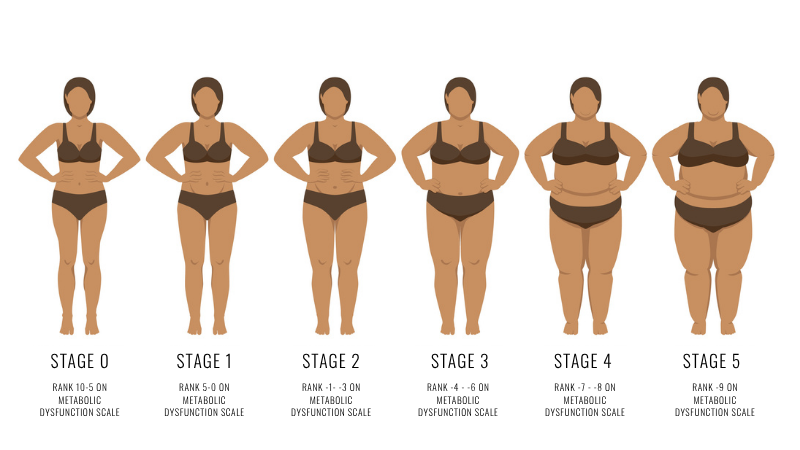
Left unaddressed, dysfunction escalates into burnout, chronic symptoms, diagnoses, and disease. Eventually, it can lead to life-threatening conditions, organ/system failure, and even death. Once metabolic dysfunction starts it can affect weight. As it escalates weight can feel impossible to lose or in some cases can result in drastic, rapid weight loss.
How to Fix Metabolic Dysfunction
Here’s what actually works – not trendy diets or workouts, but a whole-body strategy that supports all the systems driving your metabolism.
1. Eat for your Metabolic Type
Your body has a specific fuel preference. When you eat in alignment with it, digestion improves, energy increases, inflammation drops, and fat loss becomes easier.
Take my Metabolic Type Quiz to discover what your body needs to function and burn fat efficiently.
2. Train in Sync With Your Body
If your workouts leave you bloated, puffy, or exhausted – they’re working against your metabolism. That’s a sign you have advanced metabolic dysfunction.
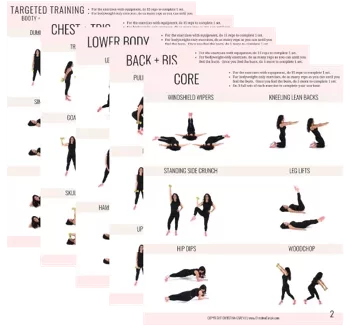
In some cases, exercise can actually backfire. The right plan should energize you and support fat loss without stressing your system.
Take my Program Style Quiz to find the best approach for your current state.
3. Support Your Nervous System
You cannot heal or reverse metabolic dysfunction with a dysregulated nervous system. You can eat perfectly and train consistently — but if your nervous system is jacked, your body will block progress.
That’s why I created Magic Moves – a somatic exercise program designed to regulate your nervous system and support metabolic healing from the inside out.
4. Flood Your Body With Nutritional Support
You can’t heal on food alone. Most people are severely depleted.
This is where I recommend my 90-day ULT program. It delivers therapeutic levels of nutrients your metabolism needs to repair, reset, and thrive. Most clients feel it working and have improved symptoms within 2 days.
If you’re already stressed, overwhelmed, have more than 20 pounds to lose, and your symptoms are getting worse – start here.
As a bonus everyone who commits to the 90 day ULT program gets a free 1:1 case review session ($300 value) with me to personalize your protocol.
If you’re on the fence watch this webinar that explains more about metabolic dysfunction and how ULT helps reverse it quickly and naturally.
Final Thoughts
Metabolic dysfunction isn’t a life sentence. It’s a wake-up call.
Metabolic dysfunction is real and luckily it’s reversible. But it takes a holistic, system-based approach that works with your body, not against it.
If you’re ready to reset your metabolism and finally feel like yourself again:
- Take the Metabolic Type Quiz
- Do the 90 day ULT program
- Take the Program Style Quiz if you want to add on workouts that boost metabolism instead of crashing it
- Add Magic Moves somatic exercise program to support your nervous system
Your body wants to heal. Let’s give it the tools to do it.
This is the proven framework I’ve used to help thousands of women reverse symptoms, lose weight and feel great. You’re next. ❤️

Metabolic Type Meal Plan Results
Eating Healthy But Not Seeing Results?
The solution is eating for your unique metabolic type - When you eat foods that match your Metabolic Type you can lose weight and feel great 3 times faster. Take the Metabolic Type Quiz to discover your type and the meal plan that's best for you.
TAKE THE QUIZIt works, if you work it.



Dr. Christina Carlyle is a Doctor of Functional Medicine, FDN-P, Nutritionist, & Trainer who transformed her body and health – getting off 7 medications and losing 40 pounds for good. Now, she helps other women get happy, healthy, and fit – quickly & naturally – without any BS