Last Updated on July 8, 2026
I recently wrote a post about the healthiest fruits, and since then, fiber has come up in several client sessions. Not in a boring “eat more roughage” way. More like, “Why am I bloated, constipated, craving sugar, and not getting the results I want from my probiotics?” kind of way.
Fiber matters because it supports digestion, gut health, regular bowel movements, blood sugar balance, fullness, cholesterol metabolism, and a healthier gut microbiome. It can also help you get better results from supplements like probiotics and multivitamins because a healthier gut is better able to digest, absorb, and use what you give it.
That is why I wanted to write this post on high fiber fruits. Fruit can be one of the easiest swaps for processed sweets, wine, ice cream, cookies, crackers, pretzels, chips, and other snacky foods that give you calories without much nutritional value. Whole fruit gives you sweetness plus fiber, water, antioxidants, vitamins, minerals, and phytonutrients.
And when fruit is in season, it usually tastes better, which makes it easier to choose instead of the processed stuff. Better flavor, better nutrients, better fiber. We love a snack that actually has a job.
What Are High Fiber Fruits?
High fiber fruits are fruits that provide more dietary fiber per serving than the average fruit. Fiber is the part of plant food your body does not fully digest, and that is a good thing. It helps move food through your digestive tract, feeds beneficial gut bacteria, supports regularity, slows the absorption of sugar, and helps you feel full longer.
Most people do not get enough fiber, which is one reason digestion, cravings, blood sugar, and gut health can feel harder than they need to. The National Academies lists adequate fiber intake around 25 grams per day for adult women and 38 grams per day for adult men, and fiber intake recommendations are one reason I like using food first whenever possible.
How I Chose These High Fiber Fruits
For this list, I looked at fiber per realistic serving first. Then I filtered for fruits that are still reasonable in sugar, easy to find, pleasant to eat, and that work well in real life.
That sugar piece matters. Fruit is healthy, but more is not always better. Too much fruit sugar can be hard on the liver, blood sugar, digestion, and gut balance, especially if you are blending huge smoothies, drinking juice, grazing on dried fruit, or using fruit as your main meal.
So this is not just a list of fruits with the most fiber on paper. These are the high fiber fruits I would actually recommend because they give you fiber, nutrients, and sweetness without turning your snack into a sugar bomb.
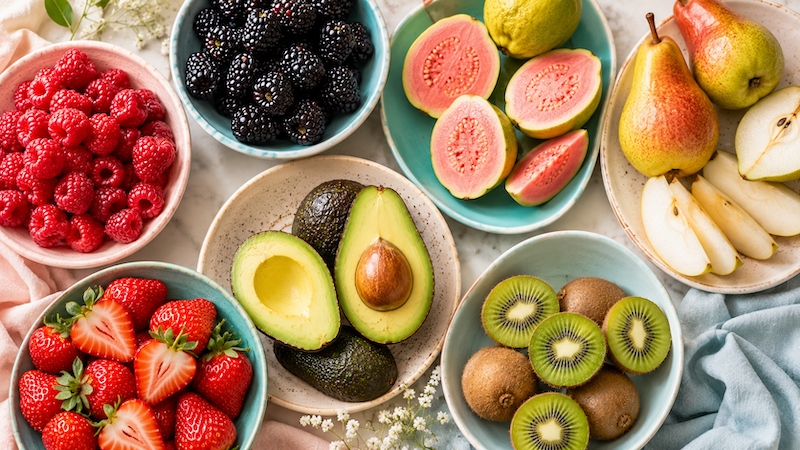
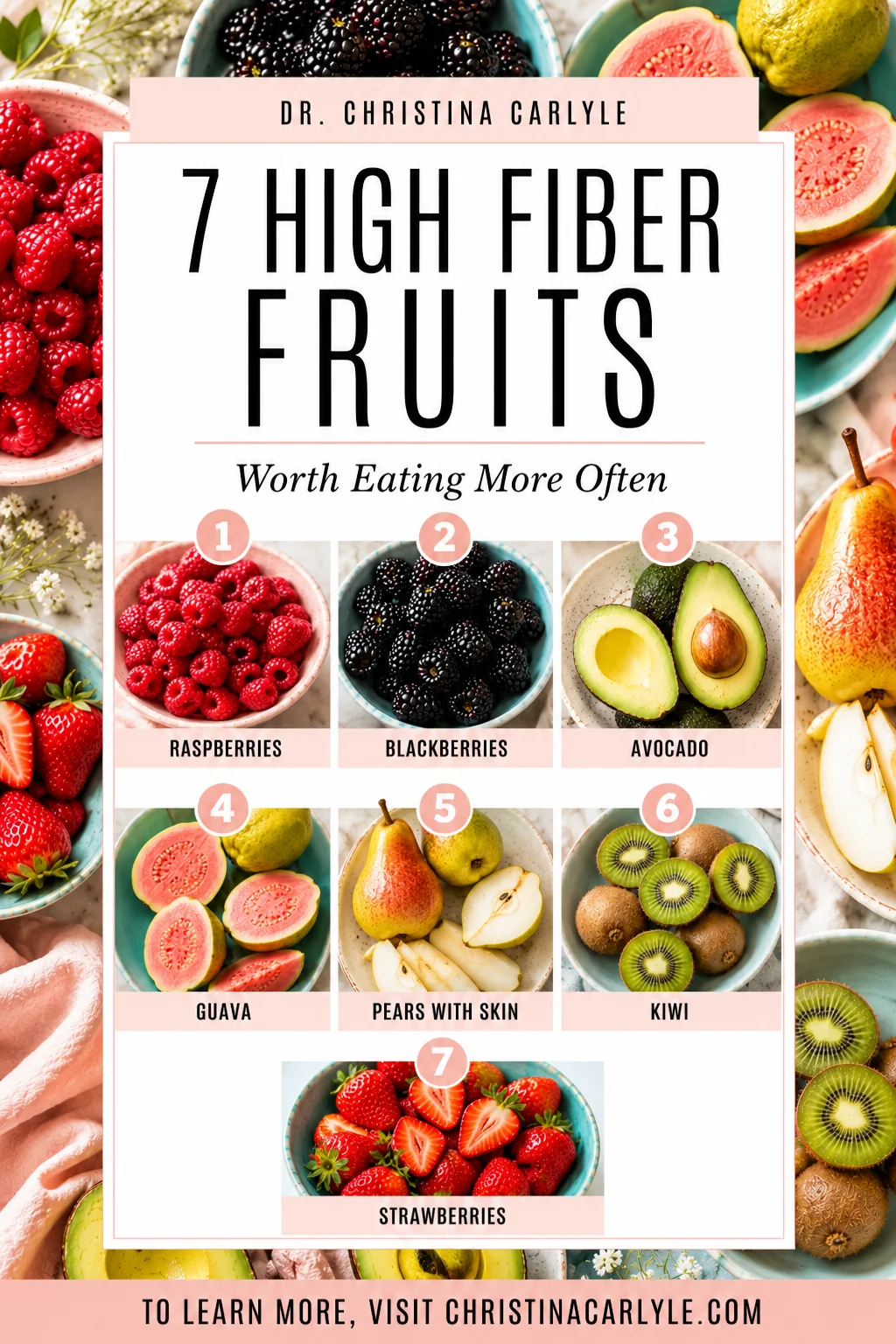
7 High Fiber Fruits Worth Eating More Often
1. Raspberries
Raspberries are one of the best high fiber fruits because they give you about 8 grams of fiber per cup with only about 5 grams of sugar. That is a fantastic fiber-to-sugar ratio. You can verify raspberry nutrition through USDA FoodData Central, which tracks fiber, sugar, vitamins, minerals, and calories.
Raspberries are also rich in antioxidants and polyphenols, which support cellular health and a healthy inflammatory response. Add them to Greek yogurt, chia pudding, protein smoothies, cottage cheese, oatmeal, or eat them frozen when you want something sweet that still supports your goals.
2. Blackberries
Blackberries are right behind raspberries with about 7.6 grams of fiber per cup and about 7 grams of sugar. They also provide vitamin C, vitamin K, manganese, and anthocyanins, the deep purple plant compounds linked with antioxidant benefits. USDA blackberry nutrition data shows why they deserve a top spot.
I love blackberries for clients who want something sweet after meals but do not want to end up in a snack spiral. They are juicy, satisfying, and easy to pair with protein so your blood sugar stays steadier.
3. Avocado
Avocado is technically a fruit, and yes, it absolutely belongs on this list. One cup of avocado provides around 10 grams of fiber with less than 1 gram of sugar. The USDA avocado nutrient profile also shows potassium, folate, vitamin E, and monounsaturated fats.
Because avocado has fiber and healthy fat, it helps meals feel more satisfying. Add it to eggs, salads, tacos, bowls, smoothies, or use it as a creamy swap for less helpful condiments. Since avocado is calorie-dense, portion matters. Half an avocado is usually plenty for most meals.
4. Guava
Guava is a little less common than berries, but it is still realistic enough to make the list, especially if your grocery store has a good produce section. One cup of guava provides about 9 grams of fiber, plus vitamin C, folate, potassium, and antioxidants. You can see the nutrient breakdown in USDA guava nutrition data.
Guava does contain more sugar than berries, so portion size matters. Try it sliced with lime, added to a fruit bowl, or paired with protein instead of eating a giant bowl by itself.
5. Pears With Skin
Pears are one of the easiest high fiber fruits to find. One medium pear with the skin provides about 5.5 grams of fiber. The skin matters because that is where a lot of the fiber lives. USDA pear nutrition data lists the fiber, sugar, potassium, and other nutrients in raw pears.
Pears are higher in sugar than berries, so I like them best paired with protein or fat. Try pear slices with almond butter, chopped pear over Greek yogurt, or a pear with turkey slices if you want a snack that is sweet but still more balanced.
6. Kiwi
Kiwi is small but surprisingly helpful. One cup of kiwi provides about 5 grams of fiber, plus vitamin C, potassium, and antioxidants. USDA kiwi nutrition data shows why this little fruit earns its place.
Kiwi is especially popular for digestion and regularity. A clinical review found that kiwifruit may help with constipation and bowel function, which is one reason I like it for clients who feel sluggish or backed up. You can read more in this kiwifruit digestion review.
7. Strawberries
Strawberries are not the highest fiber fruit on the planet, but they earned their spot because they are low in sugar, easy to find, delicious, and still provide about 3 grams of fiber per cup. They also provide vitamin C, manganese, folate, and antioxidants. USDA strawberry nutrition data shows the fiber and sugar balance that makes them such a smart choice.
Strawberries are perfect when you want something dessert-like without going straight to cookies, candy, or ice cream. Buy organic when possible, wash well, and pair them with protein if cravings are your main struggle. Heads up! Strawberries are high in pesticides and have been listed on the Dirty Dozen for years! Always enjoy your strawberries organic.
How to Eat High Fiber Fruits for Better Results
The easiest way to eat high fiber fruits is to use them as swaps, sides, or toppings instead of turning fruit into a giant meal.
Add berries to Greek yogurt. Put avocado in a breakfast bowl. Pair pear slices with almond butter. Add kiwi to a protein smoothie. Keep washed berries in the fridge so they are easier to grab than processed snacks.
Whole fruit is usually better than fruit juice because juice strips away much of the fiber and delivers sugar much faster. Dried fruit can also be tricky because it is easy to overeat and much more concentrated in sugar.
Start slow if you are not used to eating much fiber. Too much too fast can cause bloating, gas, or digestive drama. Add one serving at a time and drink enough water so fiber can do its job.
Why High Fiber Fruits Are Worth Eating
Adding more high fiber fruits can support:
- Better digestion and regular bowel movements
- A healthier gut microbiome
- Fewer cravings for processed sweets
- More stable blood sugar
- Better fullness between meals
- Improved cholesterol metabolism
- More nutrients from snacks and meals
- Better support from probiotics and gut health supplements
This is why I like fruit as a bridge food for clients who struggle with sugar cravings. You still get sweetness, but you also get fiber, water, antioxidants, and nutrients. That is a much better deal than processed snacks that give you sugar, refined starch, inflammatory oils, additives, and almost nothing your body can actually use.
FAQ About High Fiber Fruits
What fruit is highest in fiber?
Raspberries, blackberries, avocado, guava, pears, and kiwi are some of the best high fiber fruits per serving. Passion fruit is extremely high in fiber too, but it is not as easy to find or use regularly for most people.
Are high fiber fruits good for weight loss?
They can be. Fiber helps you feel full, slows digestion, and can make sweet cravings easier to manage. For best results, pair fruit with protein or healthy fat instead of eating fruit alone all day.
Is fruit sugar bad for you?
Fruit sugar in whole fruit is very different from added sugar in processed foods because whole fruit comes with fiber, water, nutrients, and antioxidants. Still, portions matter. If you are dealing with blood sugar issues, liver concerns, gut symptoms, or cravings, choose lower-sugar, higher-fiber fruits more often.
Final Thoughts on High Fiber Fruits
High fiber fruits are one of the easiest ways to make snacks and meals more nutritious without making healthy eating complicated. Start with berries, avocado, kiwi, pears, guava, or strawberries, and use them to replace processed sweets and snack foods that do not do your body any favors.
One important note: just because these fruits are high in fiber does not mean they are the best fruit options for your metabolic type. Different people react to different foods in different ways. If your body does not digest, metabolize, absorb, and use a food well, you will not get the full benefits from it.
To learn which foods are the best fit for your body, take my Metabolic Type Quiz. Eating for your metabolic type helps you choose the right fuel for your body so you can burn fat, boost energy, support hormones, reduce symptoms, and feel good without guessing.
I hope this article helped you.
If you liked this article or have questions, let me know in the comments.
Forever rooting for you,
Dr. Christina Carlyle
Save this article so you can come back to this high fiber fruits list when you want a healthier snack, a better sweet swap, or an easy way to support digestion.

Metabolic Type Meal Plan Results
Eating Healthy But Not Seeing Results?
The solution is eating for your unique metabolic type - When you eat foods that match your Metabolic Type you can lose weight and feel great 3 times faster. Take the Metabolic Type Quiz to discover your type and the meal plan that's best for you.
TAKE THE QUIZIf you liked this article, you’ll also like these posts
- Top 10 Healthiest Fruits
- Fruit in Season Now
- Best Fruits for Weight Loss
- Is Fruit Good for You?
- Low Glycemic Fruit You Should Eat

Dr. Christina Carlyle is a Doctor of Functional Medicine, FDN-P, Nutritionist, & Trainer who transformed her body and health – getting off 7 medications and losing 40 pounds for good. Now, she helps other women get happy, healthy, and fit – quickly & naturally – without any BS