
Last Updated on January 23, 2025
If you’ve been wondering whether seed oils are bad for you, you’re not alone. Over the years, these oils have become a staple in processed foods, restaurant meals, and even “healthy” packaged snacks. As a functional health practitioner and holistic nutritionist, I’ve seen firsthand how cutting out seed oils can improve metabolism, reduce inflammation, and help with weight loss.
But what are seed oils, and why should you care?
Let’s break it down so you can make the best choices for your health.
What Are Seed Oils?
Seed oils are highly processed vegetable oils extracted from seeds using industrial methods, often involving high heat and chemical solvents. These oils are high in omega-6 fatty acids, which are essential in small amounts but can become problematic when consumed in excess.
The most common seed oils include:
-
Canola oil
-
Soybean oil
-
Corn oil
-
Cottonseed oil
-
Sunflower oil
-
Safflower oil
-
Grapeseed oil
-
Rice bran oil
-
Peanut oil
-
Sesame oil
-
Flaxseed oil
- Hemp seed oil
-
Chia seed oil
- Pumpkin seed oil
While some of these oils, like flaxseed and chia seed oil, have beneficial omega-3s, they are still prone to oxidation and should be consumed carefully, preferably unheated.
I find that all of my clients benefit from cutting seed oils from their diet, regardless of their metabolic type. Just about everyone reports improvements in inflammation, appearance of skin, energy, and overall feeling of wellbeing.
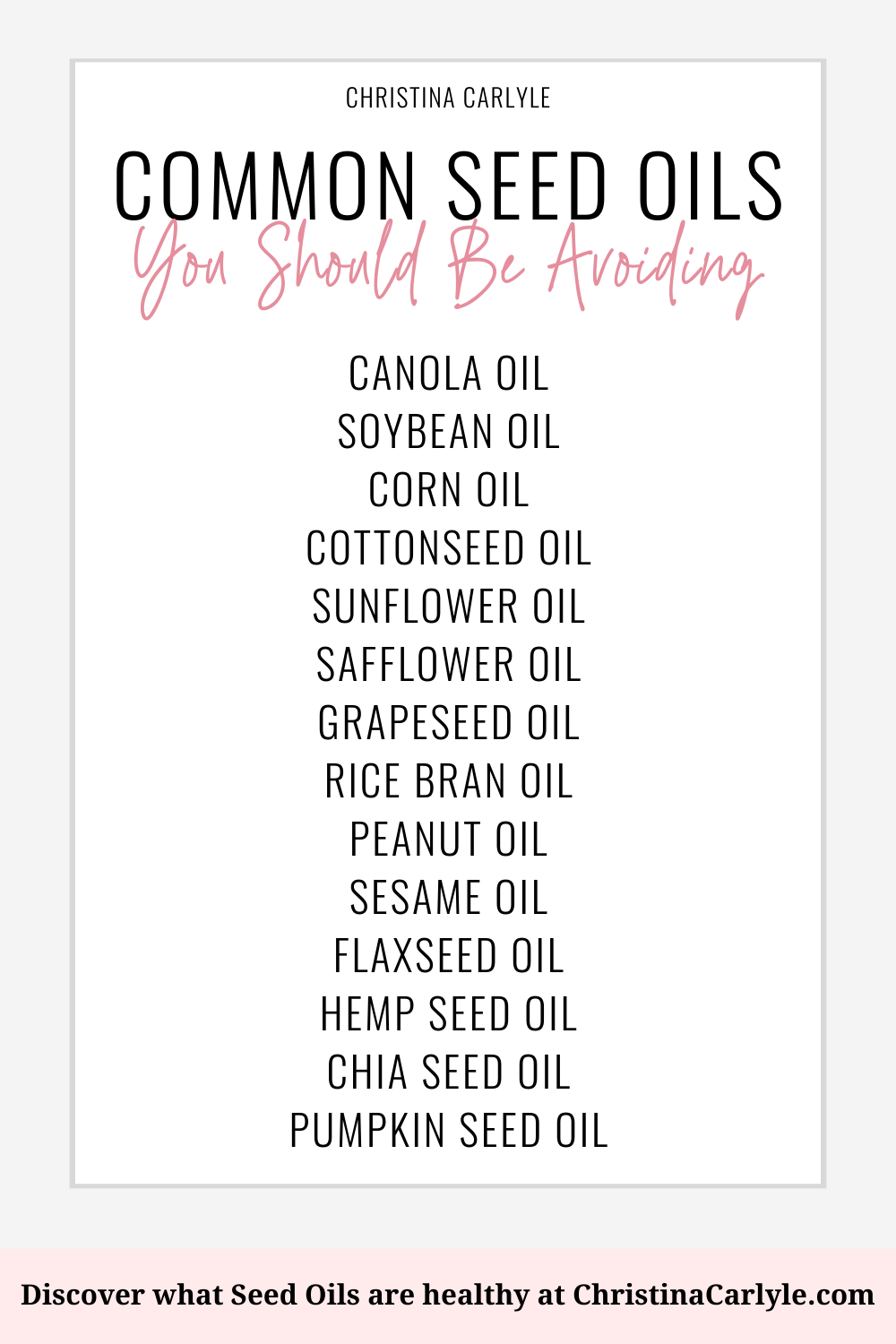
Pin this to Pinterest so you’ll have it forever
How They Affect Health & Weight
There’s no specific daily requirement for seed oils to stay healthy—your body doesn’t need them at all.
While they do provide omega-6 fatty acids, which are essential in small amounts, most people consume far more than necessary due to their presence in processed foods.
A healthy balance of fats comes from maintaining a good omega-6 to omega-3 ratio to reduce inflammation and support overall health.
The problem? Seed oils are everywhere—used in cooking, processed foods, and even so-called “healthy” snacks. But despite their widespread use, these highly processed oils can have a big impact on your health.
They’re rich in omega-6 fatty acids, which, while essential in small amounts, can contribute to health issues when consumed in excess.
Here’s how excessive seed oil consumption may impact your body:
- Increases Inflammation: An imbalanced intake of omega-6 to omega-3 fatty acids can promote chronic inflammation. A study published in Biomedicine & Pharmacotherapy highlights that the typical Western diet now provides an omega-6/omega-3 ratio of approximately 20:1, predisposing individuals to excessive inflammatory responses.
- Disrupts Metabolic Health: Overconsumption of omega-6 fatty acids has been linked to metabolic disturbances. Research indicates that a high omega-6 diet may exacerbate inflammation and reveal spatial memory deficits, suggesting broader metabolic implications.
- Affects Heart Health: While omega-6 fatty acids are essential, an excessive intake relative to omega-3s can influence cardiovascular health. A study in Prostaglandins, Leukotrienes, and Essential Fatty Acids discusses the importance of the omega-6/omega-3 ratio in modulating inflammation, which is a key factor in heart disease.
- Impacts Gut Health: Diets high in certain seed oils may affect gut microbiota composition. A study found that supplementation with specific oils could alleviate inflammation and oxidative stress by modulating gut microbiota, indicating the complex role dietary fats play in gut health.
- May Accelerate Aging: The oxidative stability of dietary oils is crucial, as lipid peroxidation can lead to cellular damage. Research suggests that omega-6 polyunsaturated fatty acids are considered to increase lipid peroxidation, while omega-3s exert chemopreventive effects, highlighting the need for a balanced intake.
Balancing the intake of omega-6 and omega-3 fatty acids is essential for maintaining optimal health. Avoiding sources of omega-6’s and incorporating sources rich in omega-3s help achieve a healthier fatty acid ratio.
What to Avoid
Processed Snacks
- Chips, crackers, and popcorn are almost always cooked in canola, sunflower, or soybean oil.
- Even “healthy” brands often use these oils—always check the ingredients.
Restaurant & Fast Food
- Most restaurants and fast-food chains cook with soybean or vegetable oil because it’s cheap and shelf-stable.
- Even grilled meats and vegetables are often coated in seed oils.
Salad Dressings & Sauces
- Store-bought dressings and mayonnaise typically contain soybean or canola oil.
- Opt for homemade versions using olive or avocado oil instead. Try these healthy homemade salad dressings.
Roasted Nuts & Nut Butters
- Many packaged nuts are roasted in sunflower or canola oil.
- Look for dry-roasted or raw nuts without added oils.
Rotisserie Chicken & Deli Meats
- Grocery store rotisserie chickens are often basted with soybean or vegetable oil blends.
- Check labels or opt for homemade roasted chicken instead.
Plant-Based & Vegan Products
- Many meat alternatives and dairy-free products use canola or safflower oil as a base.
- Read ingredient labels carefully!
Ways to Avoid Seed Oils
Use these easy tips to avoid seed oils that affect health and weight most.
- Cook at Home: Preparing meals from scratch allows you to control the ingredients and avoid hidden seed oils.
- Read Labels: Always check ingredient lists on packaged foods, even those labeled “healthy.”
- Choose Whole Foods: Stick to fresh, unprocessed foods like fruits, vegetables, meats, and whole grains.
- Use Healthier Cooking Oils: Replace seed oils with extra virgin olive oil, avocado oil, coconut oil, grass-fed butter, ghee, or tallow.
- Ask When Dining Out: Request that your food be cooked in butter or olive oil instead of vegetable oil.
- Make Your Own Snacks: Instead of buying processed snacks, prepare homemade alternatives like air-popped popcorn with butter or roasted nuts without added oils.
- Avoid Fried Foods: Fried foods at restaurants are often cooked in industrial seed oils, so opt for grilled or baked options instead.
Use Healthier Alternatives
- Extra virgin olive oil (great for dressings and low-heat cooking)
- Avocado oil (stable at higher temperatures)
- Coconut oil (good for baking and cooking)
- Grass-fed butter & ghee (nutrient-dense and flavorful)
- Tallow & lard (traditional animal fats that are stable for cooking)
Also be sure to check out my complete Healthy Cooking oil Guide to learn more about healthier options and how to cook with them for maximum health benefits & flavor.
Now that you know where to look, you can make healthier swaps that benefit your metabolism, weight, and overall wellness.
Start by checking labels, cooking more meals at home, and choosing whole, unprocessed foods whenever possible.
Try cutting out seed oils for 28 days and you should notice a difference, especially if you’re used to consuming them daily and often.
Have you tried cutting out seed oils? Did you feel a difference? Let me know in the comments—I’d love to hear about your experience!



Metabolic Type Meal Plan Results
Eating Healthy But Not Seeing Results?
The solution is eating for your unique metabolic type - When you eat foods that match your Metabolic Type you can lose weight and feel great 3 times faster. Take the Metabolic Type Quiz to discover your type and the meal plan that's best for you.
TAKE THE QUIZPin this to Pinterest so you’ll have it forever

Dr. Christina Carlyle is a Doctor of Functional Medicine, FDN-P, Nutritionist, & Trainer who transformed her body and health – getting off 7 medications and losing 40 pounds for good. Now, she helps other women get happy, healthy, and fit – quickly & naturally – without any BS