
Last Updated on May 14, 2026
Today I’m sharing tips all about how to lose water weight. Why?? A lot of my clients come to me because they want to lose weight, and they assume the weight they’re holding on to is fat. Sometimes it is. But in a lot of cases, especially when the scale gets stubborn, getting results feel sluggish, or clothes suddenly feel tight, it’s water weight.
I also see this all the time with women who tell me, “I know I have muscle, but it feels like it’s hiding under this layer of fluff.” And very often, that soft, swollen, puffy feeling isn’t a lack of effort. It’s inflammatory water weight.
One of my favorite ways to motivate clients is to get water weight off quickly, because you can lose water faster than you can lose fat. Fat loss takes time because your body has to actually burn stored energy. But water weight shifts fast once you address the reason your body is holding on to it.
So in this post, I’m breaking down how to lose water weight, what water weight actually is, what causes it, and what to do depending on the root cause.
What Is Water Weight?
Water weight is extra fluid your body holds in your tissues, cells, bloodstream, or the spaces between cells. It can make you feel swollen, puffy, heavy, bloated, or ‘soft’ instead of firm.
Water weight isn’t the same as fat gain. If you wake up three pounds heavier after a salty dinner, a stressful day, a hard workout, or a hormonal shift, you did not gain three pounds of fat while sleeping. Your body is holding water.
Your body holds water for a reason. Sometimes it’s normal and temporary. Sometimes it’s a sign that your body is inflamed, stressed, undernourished, overexposed to toxins, reacting to foods or hormones, or struggling to regulate fluid balance.
That’s why learning how to lose water weight isn’t just about drinking more water or eating less salt. Those can help… but the real magic is figuring out why your body is retaining fluid in the first place and then addressing that root cause.
What Causes Water Weight?
The root cause matters because the fix changes depending on what’s driving the fluid retention.
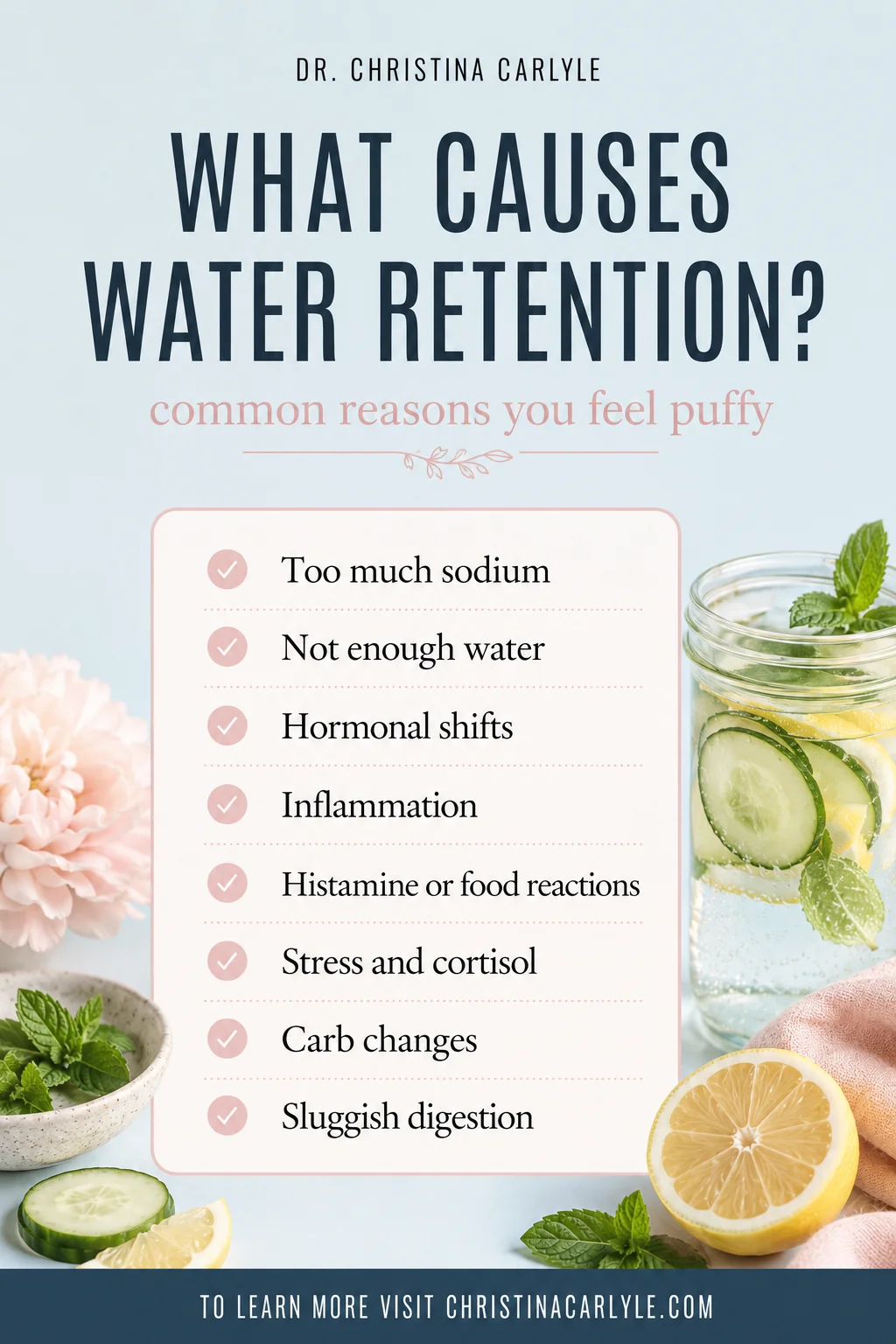
1. Too Much Sodium
Sodium helps regulate fluid balance, nerve function, and muscle contractions. You need it. But when you eat a high-sodium meal, especially from processed foods, restaurant meals, sauces, packaged snacks, or takeout, your body may hold extra water to balance it out.
2. Not Enough Water
Dehydration can make the body hold on to water. If your body doesn’t feel like enough fluid is coming in, it may conserve what it has.
Drinking enough water helps your body flush excess sodium, support digestion, move waste, and regulate fluid balance. Hydration works even better when you also have enough minerals.
3. Hormonal Shifts
Hormonal changes can absolutely cause water weight. Many women notice puffiness, breast tenderness, bloating, or scale jumps during ovulation or before their period. This can also happen during perimenopause, menopause, postpartum shifts, thyroid changes, adrenal shifts, and other hormone fluctuations.
4. Inflammation
Inflammation is a huge cause of water retention. When your body is irritated, injured, stressed, or reacting to something, it may pull fluid into tissues as part of the inflammatory response.
This can make you feel puffy, swollen, achy, and heavier than usual. Research shows that inflammation and fluid regulation are closely connected through immune and vascular signaling, which is one reason the body can retain fluid when inflammation is high.
5. Food Reactions and Histamine
Some foods can cause certain people to feel puffy, bloated, itchy, flushed, congested, or swollen. This may be related to food sensitivities, histamine, gut irritation, or immune response.
Inflammation is a huge cause of water retention. When your body is irritated, injured, stressed, allergic, or reacting to something, it may pull fluid into tissues as part of the inflammatory response. Research on toxic, allergic, and inflammatory edema explains how inflammatory and allergic processes can contribute to swelling and fluid accumulation.
If your puffiness comes with headaches, itching, flushing, congestion, or digestive symptoms, histamine or food reactions may be worth exploring.
6. Stress and Cortisol
Stress can make you retain water because stress changes hormone signaling, blood sugar, digestion, sleep, inflammation, and mineral balance. Stress can be emotional, but it can also come from under-eating, over-exercising, poor sleep, too much caffeine, inflammation, illness, or toxin exposure.
7. Carbohydrate Changes
Your body stores carbohydrates as glycogen, and glycogen is stored with water. So when you eat more carbs than usual, especially after eating lower carb, your body may hold more water.
This isn’t bad. It’s normal physiology. It’s also why people lose several pounds quickly when they cut carbs. Much of that early drop is water, not fat.
8. Sluggish Digestion
Constipation and slow digestion can make you feel bloated, heavy, swollen, and uncomfortable. Digestion relies on hydration, minerals, fiber, movement, bile flow, stomach acid, enzymes, and a regulated nervous system. If one of those is off, puffiness can follow.
How to Lose Water Weight
Now let’s talk about how to lose water weight in a way that actually makes sense. The goal is not to dehydrate yourself. Please do not do weird things to “dry out” your body. We are not turning you into beef jerky.
The goal is to help your body release the extra fluid it is holding because of sodium, stress, inflammation, sluggish digestion, food reactions, or poor fluid balance.
1. Drink More Water
If you want to lose water weight, start with water. I know, deeply unsexy, but effective.
Water helps your body flush excess sodium, support kidney function, move waste, and reduce dehydration-related fluid retention. Use my Water Intake Calculator to find out how much water you really need to stay hydrated. If plain water feels boring, add lemon, cucumber, mint, berries, or a splash of unsweetened cranberry juice.
2. Balance Sodium With Potassium-Rich Foods
If sodium is one side of fluid balance, potassium is the other. Potassium helps support healthy fluid balance, muscle function, and blood pressure.
Good potassium-rich foods include avocado, spinach, sweet potatoes, bananas, coconut water, white beans, salmon, tomatoes, and leafy greens. It’s also a good idea to eat other foods high in natural electrolytes.
3. Move Your Body Gently
Movement helps reduce water weight by supporting circulation, lymph flow, blood sugar balance, digestion, and sweating.
You do not need to destroy yourself with a brutal workout to feel less puffy. Walking, light strength training, yoga, mobility, stretching, or a gentle rebounder session can all help move fluid.
4. Support Your Lymphatic System
Your lymphatic system helps move fluid and waste through the body. Since lymph does not have a central pump like the heart, it relies on breathing, movement, muscle contractions, and gentle pressure.
Helpful lymph-supporting habits include walking, deep breathing, dry brushing, gentle lymphatic drainage massage, stretching, rebounding, hydration, and using a vibration plate safely if you have one.
5. Calm Inflammation
If your water weight is inflammatory, you need to reduce the things that are irritating your body. Common triggers include alcohol, sugar, processed foods, foods you don’t tolerate well, poor sleep, too much stress, over-exercising, and toxin exposure.
For a few days, focus on anti-inflammatory basics: protein, vegetables, berries, healthy fats, herbs, water, sleep, walking, and reducing foods that leave you bloated, itchy, congested, tired, or inflamed.
6. Prioritize Sleep
Poor sleep can increase stress hormones, cravings, inflammation, blood sugar issues, and water retention. If you want to lose water weight, sleep matters.
Try eating dinner earlier, cutting caffeine earlier, dimming lights at night, putting your phone away, and creating a calmer bedtime routine. Your metabolism and hormones love boring consistency. I know. Rude but true.
7. Identify Food Triggers
If you keep getting puffy after certain meals, pay attention. Your body may be reacting to something.
Processed foods are one of the biggest drivers of water weight because they often contain high amounts of sodium, refined carbs, inflammatory seed oils, additives, and ingredients your body may not tolerate well.
Other common culprits include gluten, dairy, alcohol, high-histamine foods, highly processed foods, artificial sweeteners, fried foods, or foods that simply don’t work for your metabolic type.
The Fastest Way to Lose Water Weight and Feel Lighter
If you want to know how to lose water weight quickly, the fastest place I recommend starting is my Reset Cleanse.
The Reset Cleanse is a 7-day metabolism and full body detox that uses whole foods to rid the body of all the things that make it harder to burn fat, get healthy, and feel good. It helps reduce exposure to toxins while flooding the body with essential nutrients for seven days.
This is exactly what many women need when they feel puffy, inflamed, bloated, sluggish, and stuck. The goal is not to dehydrate your body. The goal is to help your body release what it has been holding because of toxic load, inflammation, poor digestion, cravings, and nutrient deficiency.
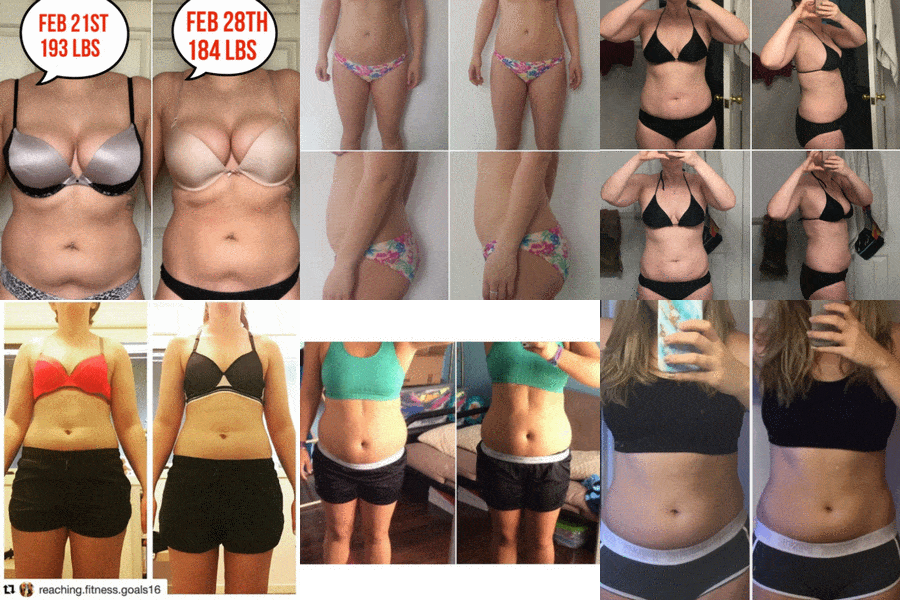
Reset Cleanse results in 7 days
Many women lose up to 10 pounds in seven days with the Reset Cleanse, and a lot of that early shift can come from releasing water weight, reducing bloating, improving digestion, and calming inflammation. The scale can move quickly, but the bigger win is feeling lighter, clearer, less swollen, and more in control.
Once your body is reset, it’s prepped and primed for fat burning. Then the next step is giving it the right fuel for your unique metabolic needs with the Metabolic Type Meal Plan.
Final Thoughts on How to Lose Water Weight
Learning how to lose water weight can be incredibly motivating because water can shift faster than fat. If you’ve been feeling puffy, mushy, swollen, bloated, or like your muscle tone is hiding under a layer of inflammation, water weight may be part of the issue.
The key is figuring out why your body is holding water. Is it sodium? Stress? Hormones? Inflammation? Food reactions? Sluggish digestion? Not enough water? Too many processed foods? The answer matters because the right fix depends on the root cause.
Start with the basics: hydrate, balance minerals, reduce processed foods, walk, support lymph flow, sleep, and pay attention to food triggers. And if you want the fastest, most structured way to feel lighter, less bloated, and more in control, start with the Reset Cleanse.
I hope this post helped you understand how to lose water weight and why your body may be holding on to extra fluid in the first place.
If you liked this post or have questions, let me know in the comments.
Forever rooting for you,
Dr. Christina Carlyle

Metabolic Type Meal Plan Results
Eating Healthy But Not Seeing Results?
The solution is eating for your unique metabolic type - When you eat foods that match your Metabolic Type you can lose weight and feel great 3 times faster. Take the Metabolic Type Quiz to discover your type and the meal plan that's best for you.
TAKE THE QUIZIf you liked this article, you’ll also like these posts
- Dandelion Tea Benefits
- Lymphatic Drainage Massage at Home
- How to Reduce Bloating
- What Causes Bloating?
- Symptoms of Toxins: Top 10 Signs You Need to Detox

Dr. Christina Carlyle is a Doctor of Functional Medicine, FDN-P, Nutritionist, & Trainer who transformed her body and health – getting off 7 medications and losing 40 pounds for good. Now, she helps other women get happy, healthy, and fit – quickly & naturally – without any BS