Last Updated on July 16, 2026
Today, we’re talking about something that doesn’t get nearly enough attention: Mold toxicity symptoms and one of the most overlooked places they may be coming from.
And I’m speaking from personal experience. When I was in high school my school was LOADED with mold and I had allergy and toxicity reactions to it… so much so I spent 75% of my senior year homeschooling myself because I’d get crazy sick every time I went to school. The moment I got home I was fine.
If you think you have mold allergies or toxicity you’re in the right place!
Let me ask you this:
When you wake up exhausted, do you assume you didn’t sleep well enough?
When your brain feels foggy and you can’t concentrate, do you blame stress, hormones, or getting older?
When your sinuses stay congested, your skin keeps reacting, or your body suddenly becomes sensitive to everything, do you assume you’ve simply developed seasonal allergies?
What if it isn’t just stress?
What if it isn’t just hormones?
What if it isn’t just part of getting older?
What if something in your environment is affecting the way your body feels and functions?
Many mold toxicity symptoms are blamed on completely unrelated problems because mold exposure doesn’t always look the way people expect.
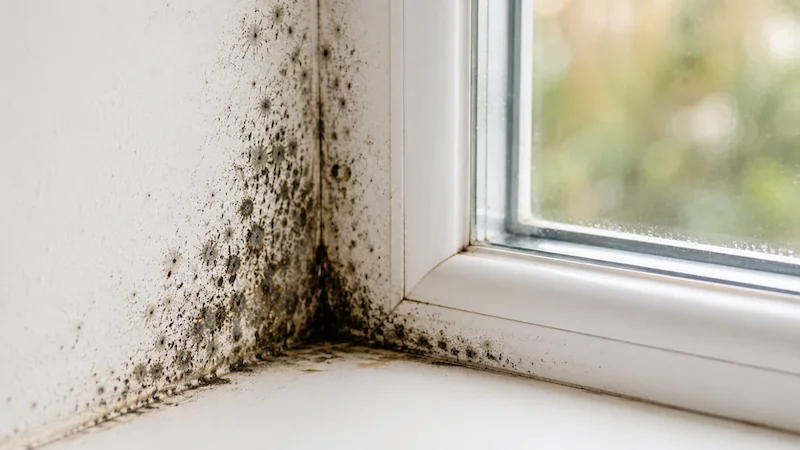
There isn’t always black mold covering a wall.
There isn’t always a powerful musty smell.
There isn’t always an obvious leak.
Sometimes the first sign of a mold problem is that you simply stop feeling like yourself.
The Hidden Water Damage Problem that causes Mold
Mold can develop anywhere moisture becomes trapped.
That may include your home, office, apartment, school, vehicle, bathroom, kitchen, attic, crawl space, air-conditioning system, or a building that experienced storm damage.
A mold problem may begin after:
- A leaking roof
- A plumbing leak
- Flooding
- Hurricane damage
- An overflowing appliance
- Condensation
- High indoor humidity
- Poor ventilation
- An air-conditioning problem
- Building materials that weren’t dried properly
The moisture may disappear while mold continues growing behind drywall, underneath flooring, inside cabinets, around windows, or within an air-conditioning system.
The mold doesn’t announce itself and mold and water damage can be invisible to the naked eye.
You may not see a large stain on the ceiling.
You may not smell anything unusual.
But you may notice that your body feels noticeably different inside a particular building… that’s the biggest clue mold is affecting you.
Signs a Building May Have Mold that’s Affecting Your Health
Here are some of the biggest signs that mold is affecting you:
- Feel significantly worse at home than you do elsewhere or vice versa
- Feel better during vacations or weekends away
- Become tired, foggy, congested, or headachy at work
- Developed symptoms after moving into a new home or apartment
- Became sick after a hurricane, flood, leak, or renovation
- Feel worse when your air conditioner is running
- Notice symptoms improving when you spend more time outside
- Have family members or coworkers experiencing similar problems
- Feel better during one season but worse when the building stays closed
- Notice a musty smell, water stains, bubbling paint, or warped materials
Feeling better away from a building doesn’t automatically prove mold is responsible.
However, that pattern is a major clue that your environment deserves a closer look.
Sometimes the person isn’t randomly sick.
Sometimes the building or your home is sick.
There are two main ways mold can affect you… you can either have an allergy or toxicity. I’m covering both.
Common Mold Allergy Symptoms
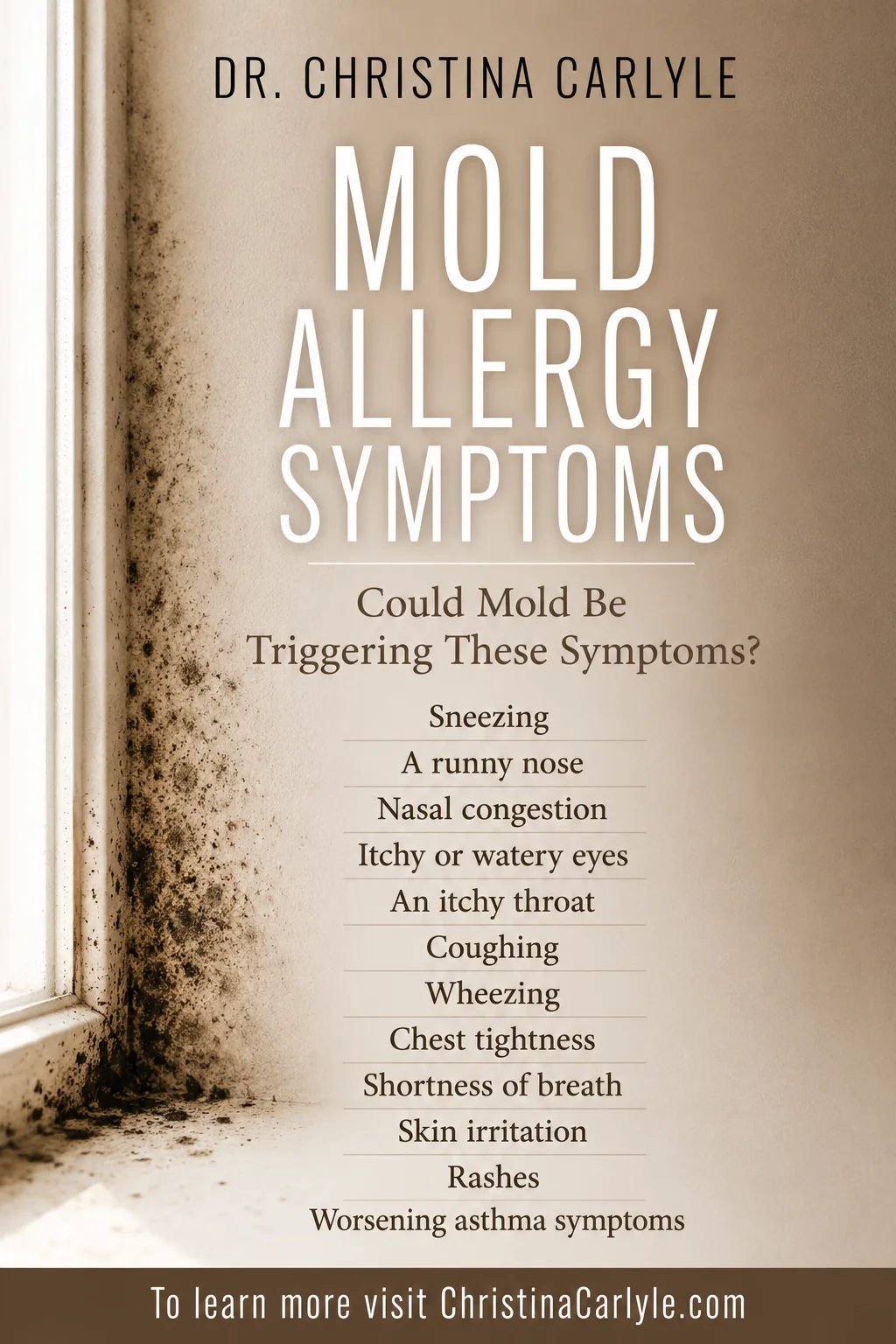
A mold allergy occurs when your immune system reacts to mold spores.
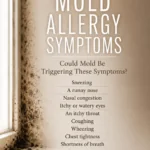
Common mold allergy symptoms can include:
- Sneezing
- A runny nose
- Nasal congestion
- Itchy or watery eyes
- An itchy throat
- Coughing
- Wheezing
- Chest tightness
- Shortness of breath
- Skin irritation
- Rashes
- Worsening asthma symptoms
These symptoms are often easier to recognize because they resemble other environmental allergies.
You may walk into a damp building and immediately begin sneezing, coughing, or feeling congested.
However, mold exposure doesn’t always present as an obvious allergy attack.
Some people describe a much broader collection of symptoms and most likely have a mold toxicity issue.
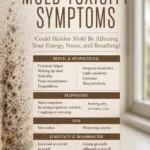
Commonly Reported Mold Toxicity Symptoms
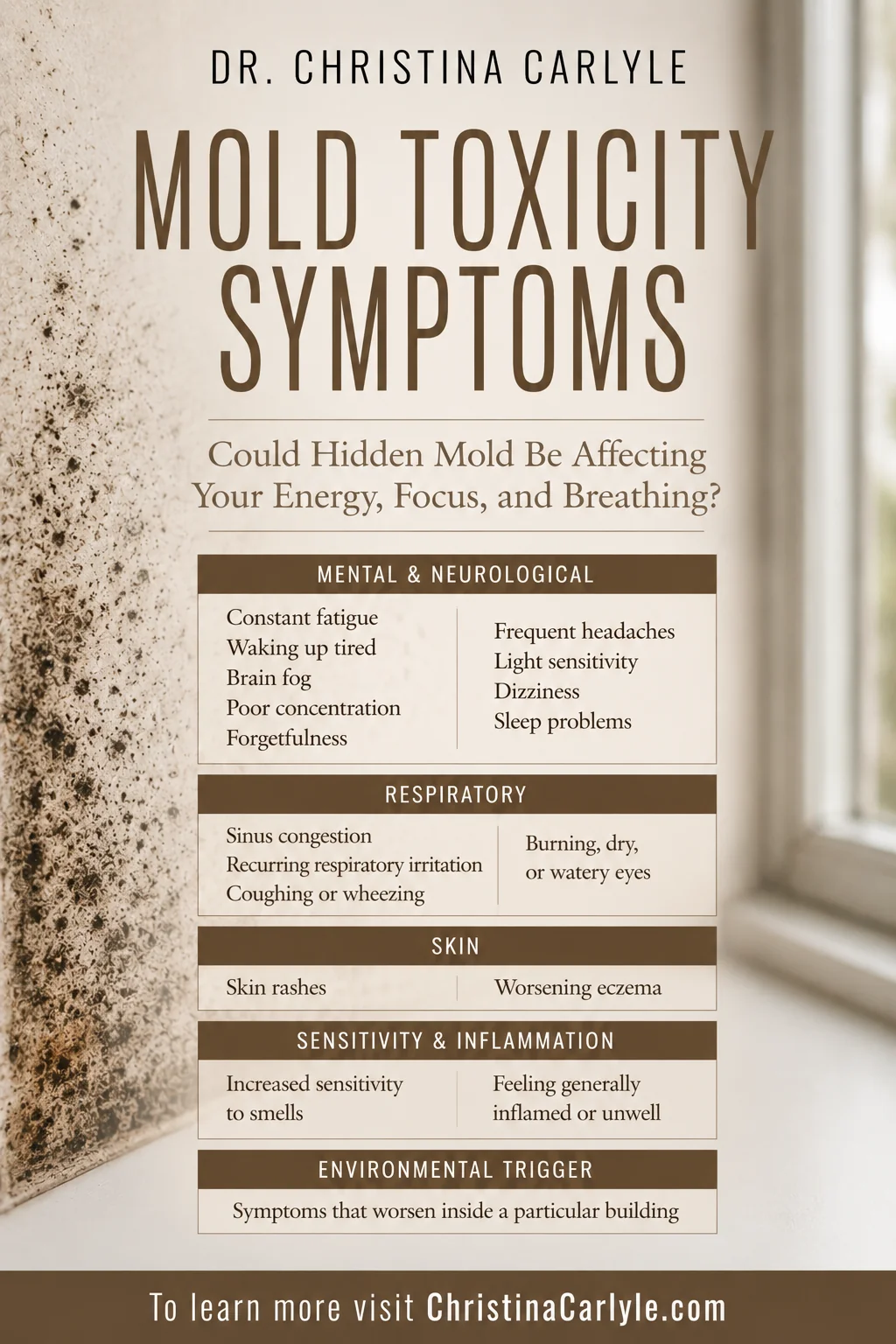
The phrase ‘mold toxicity symptoms’ is often used to describe persistent symptoms associated with exposure to mold or a water-damaged building.
These may include:
- Constant fatigue
- Waking up tired
- Brain fog
- Poor concentration
- Forgetfulness
- Frequent headaches
- Sinus congestion
- Recurring respiratory irritation
- Coughing or wheezing
- Burning, dry, or watery eyes
- Light sensitivity
- Dizziness
- Sleep problems
- Skin rashes
- Worsening eczema
- Increased sensitivity to smells
- Feeling generally inflamed or unwell
- Symptoms that worsen inside a particular building
Not everyone exposed to mold will experience the same symptoms.
One person may primarily have sinus and respiratory problems. Another may notice fatigue, headaches, skin reactions, or difficulty concentrating.
These symptoms can also be caused by many other health conditions. That’s why mold shouldn’t automatically be blamed for every unexplained symptom.
However, it also shouldn’t be ignored when your symptoms and environmental history follow a clear pattern.
Mold allergies vs. Mold Toxicity
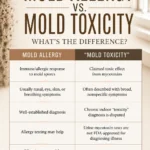
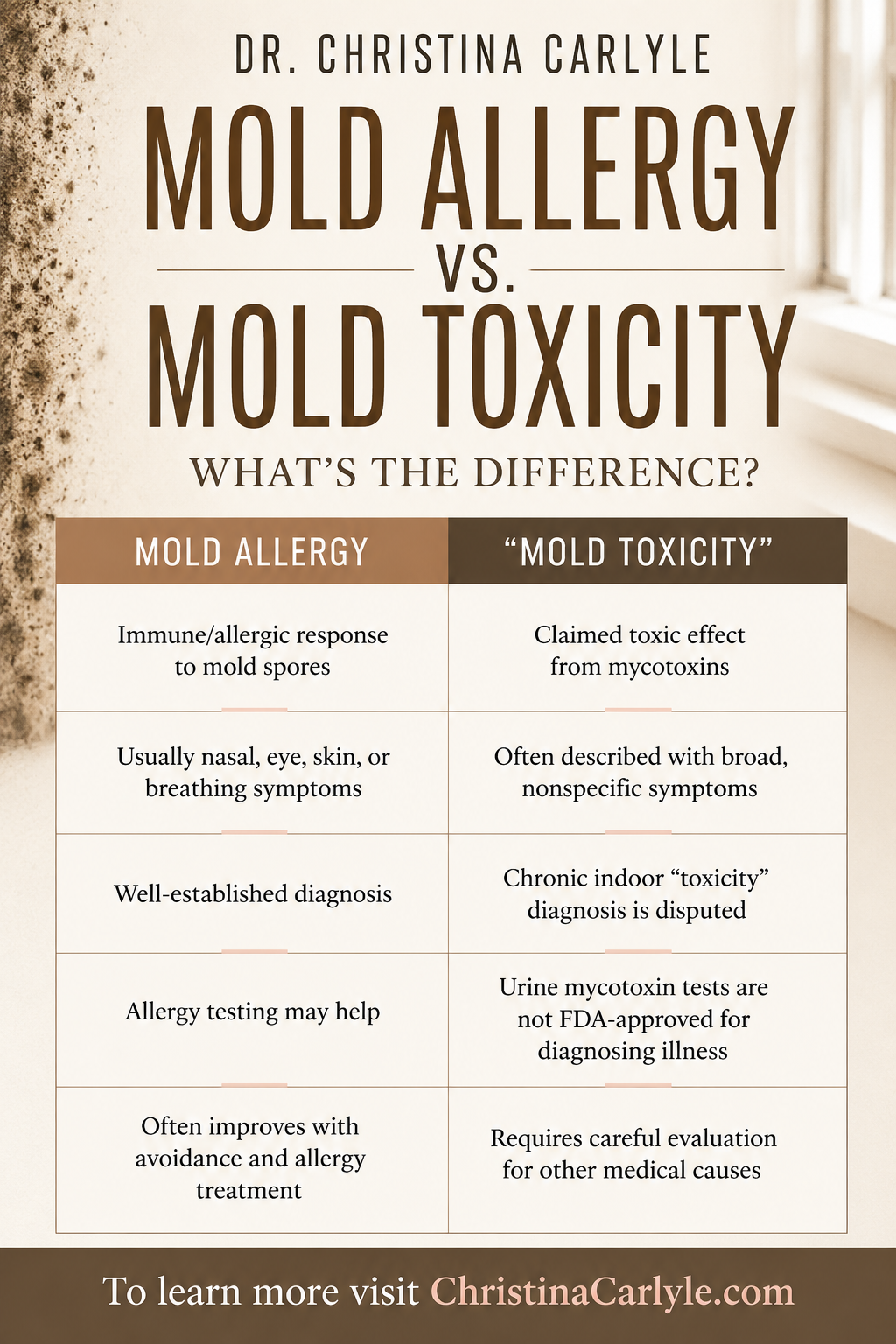
Mold allergy and “mold toxicity” are not the same thing…
Mold allergy is a recognized immune reaction to mold spores. In sensitive people, exposure can trigger sneezing, runny or congested nose, itchy or watery eyes, coughing, wheezing, skin rash, and asthma flare-ups. It can often be evaluated with an allergy history plus skin-prick or blood testing for mold-specific IgE.
Mold toxicity usually refers to illness attributed to mycotoxins which are chemicals produced by some molds. True mycotoxin poisoning, or mycotoxicosis, is best established after significant exposure, especially through contaminated food. The broader idea that ordinary indoor mold exposure routinely causes chronic symptoms such as brain fog, fatigue, memory problems, dizziness, or “whole-body inflammation” is often called “toxic mold syndrome” or CIRS, but it remains medically controversial and is not accepted as a clearly established diagnosis by major allergy and public-health organizations.
The Mold Toxicity Symptoms Most People Overlook
These are the red flag mold symptoms people often struggle to connect to their environment. I find that a lot of my clients have mold toxicity but think it’s ‘age’ or menopause… here are the main clues mold is an issue.
Brain Fog and Poor Focus
You may walk into a room and forget why you’re there.
You may struggle to find words, process information, remember appointments, or concentrate on work that used to feel easy.
Brain fog has many possible causes, including poor sleep, blood sugar problems, nutrient deficiencies, hormones, chronic stress, infections, and inflammation.
Mold exposure may be worth investigating when the brain fog began after entering a particular environment or improves when you leave.
Fatigue That Doesn’t Improve With Rest
This isn’t the normal tiredness you feel after a busy week. It may feel like your body is heavy, your motivation is gone, and no amount of sleep restores your energy.
You may wake up feeling as though you barely slept at all. Fatigue is one of the most nonspecific mold toxicity symptoms, but it’s also one of the most commonly reported.
The location pattern matters.
Do you feel better after spending several days somewhere else? Do you crash again shortly after returning home?
That’s information worth paying attention to.
Headaches That Seem to Follow You
You may blame your headaches on dehydration, computer screens, stress, or hormones. Sometimes those are the real cause.
But if your headaches consistently appear at home, at work, or in another specific building, the environment may be contributing.
Skin and Histamine Reactions
Mold can act as an allergen or irritant in susceptible people.
You may experience itching, rashes, flushing, watery eyes, nasal congestion, or worsening eczema.
Some people also notice that they become more reactive to foods, fragrances, alcohol, or other environmental triggers when their overall inflammatory or histamine burden is high.
Feeling Anxious, Irritable, or Unlike Yourself
Chronic physical symptoms can affect your mood, nervous system, sleep, concentration, and ability to cope with stress.
You may feel anxious, overstimulated, irritable, withdrawn, or emotionally unlike yourself.
That doesn’t mean every emotional symptom is caused by mold.
It does mean that physical and environmental factors deserve consideration before everything is dismissed as stress.
Why Mold Toxicity Symptoms Get Missed
Mold toxicity symptoms overlap with many other common health complaints.
You may be told that you have:
- Seasonal allergies
- Chronic stress
- Hormonal imbalances
- Anxiety
- Poor sleep
- Nutrient deficiencies
- Migraines
- Irritable bowel syndrome
- Asthma
- Eczema
- A lingering viral illness
Any one of those may be part of the picture.
The problem is that each symptom may be treated separately without anyone asking when the symptoms began, where you spend your time, or whether you feel better away from a specific building.
Your environment is part of your health history.
It shouldn’t be overlooked.
What to Do If These Mold Toxicity Symptoms Sound Familiar
Start paying attention to your patterns.
Compare how you feel at home versus somewhere else.
Notice whether your energy, congestion, headaches, skin, mood, or concentration improve after several days away.
Think about whether your symptoms started after:
- Moving
- Flooding
- Hurricane damage
- A roof leak
- Plumbing repairs
- Renovations
- Air-conditioning problems
- A musty odor appearing
Document known moisture problems and address the source rather than simply cleaning the visible surface.
You should also seek appropriate medical care for severe breathing problems, chest tightness, worsening asthma, fever, persistent coughing, or signs of infection.
Most importantly, don’t start buying random mold supplements based solely on a symptom list.
You need to look at the full picture.
Do You Suspect Mold May Be Affecting Your Health?
If these mold toxicity or allergy symptoms sound familiar, please don’t keep guessing.
You may have already changed your diet, taken supplements, reduced stress, exercised, and tried to sleep more and find that it’s not helping or that you’re getting worse.
The problem may not be that you aren’t trying hard enough.
The problem may be that no one has looked at your symptoms, environment, health history, and timeline together.
In my functional health practice, I look for the overlooked root causes that may be keeping your body inflamed, overwhelmed, and unable to recover.
That may include mold exposure, gut problems, histamine issues, nutrient deficiencies, chronic infections, hormonal imbalances, nervous system stress, and other factors affecting your health. These things have to be addressed in a very specific order to help clear the mold and get tangible results.
The sooner we identify what may be driving your symptoms, the sooner you can stop wasting time on generic solutions that aren’t addressing the actual problem.
Work With Me and Schedule Your Initial Consultation and Case Review – I’ll pinpoint what’s going on and custom create a treatment plan that’ll get you results and relief quickly and naturally.
If you have an questions, let me know in the comments.
I’ve got your back!
Dr. Christina Carlyle
Remember to pin this post to Pinterest so you’ll have it forever.

Metabolic Type Meal Plan Results
Eating Healthy But Not Seeing Results?
The solution is eating for your unique metabolic type - When you eat foods that match your Metabolic Type you can lose weight and feel great 3 times faster. Take the Metabolic Type Quiz to discover your type and the meal plan that's best for you.
TAKE THE QUIZIf you liked this article, you’ll also like:
- What Causes Inflammation?
- How to Reduce Inflammation Naturally
- High Histamine Foods to Limit or Avoid
- Histamine Allergy Symptoms
- How to Improve Gut Health
- Mental Health Symptoms: What Your Body Is Trying to Tell You

Dr. Christina Carlyle is a Doctor of Functional Medicine, FDN-P, Nutritionist, & Trainer who transformed her body and health – getting off 7 medications and losing 40 pounds for good. Now, she helps other women get happy, healthy, and fit – quickly & naturally – without any BS