Last Updated on April 9, 2026
If you’re curious about astaxanthin, you’ve probably been seeing it everywhere lately, and there’s a good reason for that. It’s trending hard right now in the beauty, wellness, and anti-aging space. But like most things that blow up online, there’s also a lot of conflicting advice, a lot of eyebrow-raising hype, and a lot of influencers pushing garbage supplements that aren’t worth your money.
This particular supplement has been coming up a lot in sessions lately, so I wanted to break it down properly. In this post, I’m going to cover what astaxanthin is, why it matters, how it can help you, the foods highest in it, signs you may need more support, and the best astaxanthin supplement if you want the fastest, easiest, and most effective way to get the most benefits and results.
Because yes, there are astaxanthin foods, but in real life, most people aren’t eating enough high-quality seafood consistently enough to get a meaningful amount every day. That’s one of the biggest reasons I usually recommend an astaxanthin supplement instead. It’s more concentrated, more consistent, and honestly just way more realistic if your goal is to actually notice a difference.
What Is Astaxanthin?
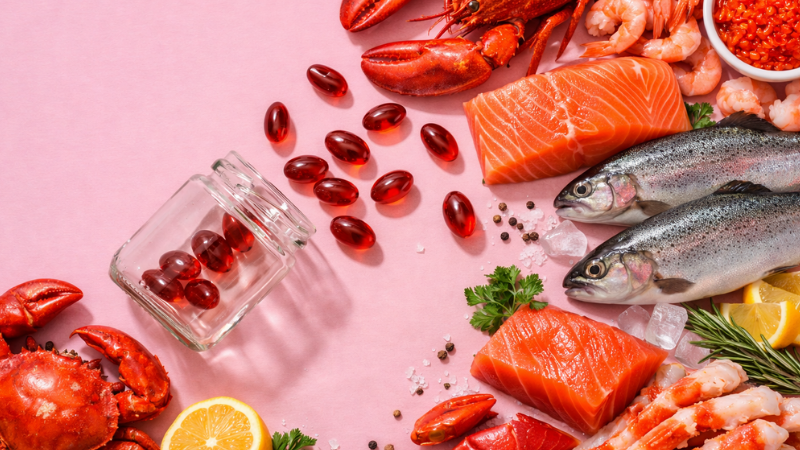
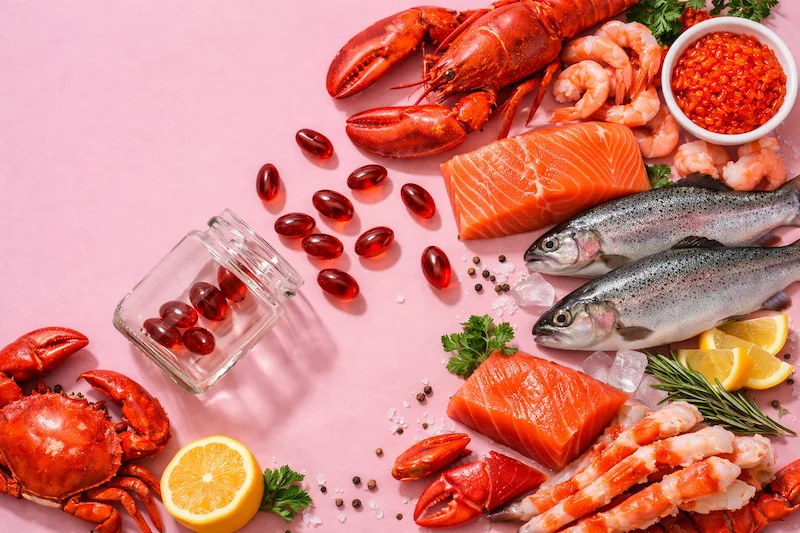
Astaxanthin is a red-orange carotenoid antioxidant found naturally in certain marine organisms. It’s what gives salmon, trout, shrimp, lobster, and krill their reddish color. One of the richest natural sources used in supplements is the microalga Haematococcus pluvialis, which is widely recognized in the scientific literature as a major natural source of astaxanthin.
What makes astaxanthin so interesting is its antioxidant power. In fact, research reviews note that its antioxidant activity has been reported to be much stronger than vitamin C, vitamin E, beta carotene, lutein, and lycopene. That’s a big deal, because free radical damage is something you literally cannot avoid. Stress, sun exposure, inflammation, poor sleep, workouts, toxins, and just existing in the modern world all add up.
Over time, that damage tends to show up where women notice it most first: skin, eyes, energy, inflammation, and recovery. That is why astaxanthin has become so popular lately, and honestly, why it deserves the attention.
Why Astaxanthin Matters
Astaxanthin matters because oxidative stress doesn’t stay theoretical. It shows up in real life as dull skin, fine lines, dry skin, tired eyes, slower recovery, inflammation, and that general worn-down feeling where your body seems like it’s taking more hits than it’s bouncing back from.
That’s why astaxanthin gets talked about so much in anti-aging, skin, recovery, and eye health conversations. It’s been studied for skin moisture, elasticity, texture, visible signs of aging, visual comfort, and exercise recovery.
For skin, the research is especially interesting. A systematic review and meta-analysis found that astaxanthin may help improve moisture content, elasticity, and wrinkles. Another review on skin health reported improvements in skin texture, appearance, wrinkles, and moisture content.
It has also been studied for eye support and visual fatigue, which matters a lot if your eyes feel destroyed by screens all day. Clinical research on ocular health suggests it may help support visual function and eye comfort.
So no, this isn’t just another random trendy supplement. It’s one of the few that actually makes sense if your goal is to protect your skin, support your eyes, improve recovery, and give your body stronger antioxidant support overall.
Signs You May Need Astaxanthin
You can’t technically be diagnosed as deficient in astaxanthin the way you can with certain vitamins or minerals, but there are some pretty obvious signs that you may benefit from more support:
- Your skin looks dull, dry, tired, or older than it should.
- Your eyes feel strained or fried from screens.
- You feel beat up by stress, workouts, or inflammation.
- Your recovery is slower than it used to be.
- You want stronger antioxidant support than food alone usually gives.
If that sounds like you, astaxanthin is absolutely worth looking into.
Foods High in Astaxanthin
If you want to get more astaxanthin from food, your best options are salmon, trout, shrimp, lobster, and krill. These are the main astaxanthin foods people talk about, and yes, they can absolutely contribute to your overall intake.
But here’s the catch. Food sources vary a lot. The amount depends on the type of seafood, the source, the quality, how often you’re eating it, and whether it’s wild or farmed. So while food is great for background support, it usually isn’t the most efficient or predictable way to get enough to notice meaningful skin, eye, or recovery benefits.
And let’s be honest, eating that much high-quality seafood regularly isn’t realistic for most people anyway. It can get expensive fast, quality varies, and a lot of fish on the market isn’t exactly what I’d call ideal.
Best Astaxanthin Supplement
If you want the easiest, most effective way to get astaxanthin consistently, these are the astaxanthin supplements I recommend most:
Shop my recommended astaxanthin supplements here
This is one of those supplements where quality really matters. Because it’s sourced from marine algae, you don’t want something cheap, contaminated, oxidized, counterfeit, or packed with fake fillers. You want something pure, potent, and worth taking. That’s exactly why I recommend using the professional-grade options in my Fullscript dispensary instead of grabbing a random bottle online and hoping for the best.
As far as how much you need, astaxanthin is commonly used in the 4 to 12 mg per day range, with many studies and real-world protocols landing around 6 mg to 12 mg daily. A safety review found recommended or approved doses in different countries ranged from 2 to 24 mg. A simple place to start is following the label directions on one of the supplements I recommend.
And if your goal is to notice results faster, this is exactly why I lean toward supplements over food alone. Food helps, yes, but a high-quality supplement makes it much easier to get enough consistently to actually support your skin, your eyes, your recovery, and your overall antioxidant status.
Final Thoughts on Astaxanthin
If you’ve been wondering whether astaxanthin is worth the hype, I hope this helped clear through some of the noise. It isn’t just another flashy social media supplement. It’s one of the smarter targeted antioxidants out there, especially if your skin looks stressed, your eyes feel tired, or your body feels like it’s taking on too much wear and tear.
Yes, astaxanthin foods have value. But if you want a more concentrated, more consistent, and more noticeable level of support, a quality astaxanthin supplement is usually the better move.
If you want to skip the online nonsense and go straight to the ones I trust most, you can shop my recommended astaxanthin supplements here.
It’s a must have supplement! You’re going to love your results. I know I do.
xo
Dr. Christina
Pin this to Pinterest so you’ll have access to this post forever

Metabolic Type Meal Plan Results
Eating Healthy But Not Seeing Results?
The solution is eating for your unique metabolic type - When you eat foods that match your Metabolic Type you can lose weight and feel great 3 times faster. Take the Metabolic Type Quiz to discover your type and the meal plan that's best for you.
TAKE THE QUIZIf you liked this article, you’ll also like:
- Natural Healthy Sunscreen You Should Wear Every Day
- The Best Amino Acid Supplement I’ve Ever Used
- Foods High in Glutathione
- Functional Foods: My Secret Weapon for Better Health
- Foods Highest in Antioxidants to Nourish Your Body and Fight Free Radicals
- Free Radicals and Easy Ways to Reduce Them Quickly

Dr. Christina Carlyle is a Doctor of Functional Medicine, FDN-P, Nutritionist, & Trainer who transformed her body and health – getting off 7 medications and losing 40 pounds for good. Now, she helps other women get happy, healthy, and fit – quickly & naturally – without any BS