
Last Updated on June 8, 2026
Today I’m sharing foods High in Glutathione so you can eat it, instead of wasting your money on another pointless supplement you don’t need.
If your feed is suddenly packed with ads promising a “glutathione glow” or “detox in a bottle,” and sales pitches promising miracles by supplementing with it – don’t be fooled. I see this happen all the time. A client sees a polished ad, the claims sound sciencey, and suddenly they’re wondering if they need a pricey product to “boost glutathione” and ask me if it’s ok and what supplements they should take.
Here’s the professional truth: glutathione is important, but most people do not need a trendy supplement to support it. You usually need a smarter food strategy, enough protein, and lifestyle basics that let your body do what it was designed to do.
That’s why I’m sharing a practical list of foods high in glutathione, how much you really need, and when supplements are actually worth considering.
What is glutathione
Glutathione is a compound your body makes from amino acids. It’s found in nearly every cell and plays a central role in antioxidant protection and cellular defense.
Here’s the key point most ads skip: glutathione is not a vitamin with a daily requirement you must hit from food. Your body produces it and recycles it, and your day to day status depends heavily on your overall nutrition and your oxidative stress load.
Foods high in glutathione
Certain foods naturally contain more glutathione than others. A classic analysis of glutathione levels in foods found that many fruits and vegetables contain moderate to high amounts, while dairy, cereals, and breads are generally lower.
Freshly prepared meats were relatively high. Processing and preservation often lowered glutathione content.
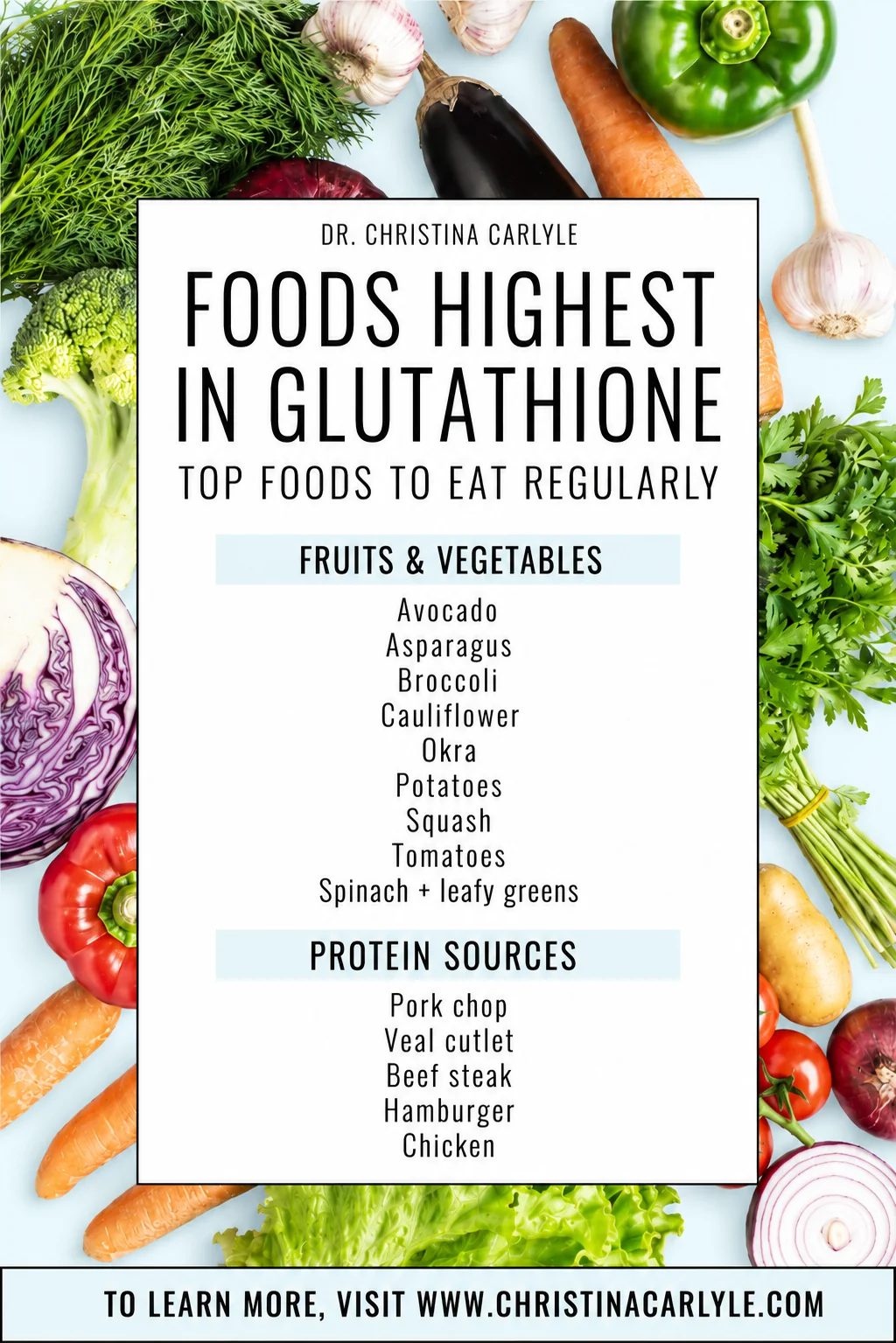
Top foods high in glutathione to eat regularly
These foods are the best sources of glutathione are the easiest ones to rotate through week to week.
Fruits and vegetables
- Avocado
- Asparagus
- Broccoli
- Cauliflower
- Okra
- Potatoes
- Squash
- Tomatoes
- Spinach and other leafy greens
Protein sources
The highest glutathione main dish proteins (by usual portion size) are:
- Pork chop
- Veal cutlet
- Beef steak
- Hamburger
- Chicken
Choose fresh, minimally processed proteins most of the time, like beef steak, chicken, pork, and fresh fish, cooked simply. The study found fresh versions were substantially higher than canned and processed options overall.
Pin this pin to Pinterest so you’ll have it forever
Does cooking reduce glutathione in foods
Some does, yes. The research above found frozen foods were often similar to fresh, while other processing and preservation methods tended to reduce glutathione more significantly.
Practical takeaway: aim for a mix of fresh and frozen produce, and keep cooking simple. Lightly cooked and raw, when tolerated, both have a place.
How much glutathione do you need daily
There is no official daily recommended intake for glutathione like there is for many vitamins, because your body produces it.
That said, researchers have estimated typical dietary intake. One study estimated daily dietary glutathione intake ranged from 13.0 to 109.9 mg per day, averaging about 34.8 mg per day, with fruits and vegetables contributing over half.
This is helpful because it shows two things.
First, people do get glutathione from food without trying.
Second, the bigger issue is usually not more glutathione. It’s whether your body is supported to make and recycle it efficiently.
Can you get adequate glutathione support from food
For most people, yes, because your body’s glutathione status depends heavily on what supports production.
Glutathione is made from amino acids, so food quality and protein intake matter. Your body also needs a broader antioxidant system to keep oxidative stress in check.
Also, dietary glutathione appears relevant in humans. In the study above, researchers estimated dietary glutathione intake and compared it with plasma total glutathione.
Translation: food sources can matter, especially when your overall diet supports digestion, absorption, and nutrient status.
Are glutathione supplements necessary
Usually, no. Sometimes, maybe.
This is where influencer marketing gets messy. “This supplement increases glutathione” is not the same statement as “you need this supplement.”
What research says about oral glutathione
A six month randomized controlled trial in healthy adults found that daily oral glutathione supplementation increased body glutathione stores at the doses used in the study.
Another randomized double blind placebo controlled trial looked at the effects of oral glutathione on biomarkers of systemic oxidative stress in human volunteers.
That’s meaningful, but it still does not automatically justify a supplement for everyone. The body prefers food – not supplements.
When a supplement might make sense
A supplement conversation can be reasonable if someone has factors like:
- Very low protein intake or restrictive dieting
- Significant gut issues affecting digestion and absorption
- Higher oxidative stress burden, higher toxicant exposure, or intense lifestyle strain
- A medical context where a clinician is monitoring symptoms and labs
If none of that applies, the best first step is almost always food and fundamentals. Also, if you haven’t had a professional assess you for these issues then the best first step would be eating foods high in glutathione, first. If you want an assessment you can start that process here.

How to eat more foods high in glutathione without overthinking it
Here are simple ways to do this without turning your kitchen into a supplement store.
Meals High In Glutathione
- Add avocado to a protein plate or salad
- Roast asparagus or broccoli a few nights per week
- Keep frozen cauliflower and spinach on hand for quick meals
- Use tomatoes regularly if you tolerate them
- Eggs or turkey with spinach and tomatoes
- Salmon with roasted asparagus and potatoes
- Chicken with broccoli and squash
- A simple bowl with protein, cauliflower, and avocado
Foods high in glutathione FAQ
Is food better than supplements
Food gives you glutathione plus fiber, minerals, and plant compounds that support the whole system. Supplements can be useful in specific situations, but food is the foundation.
Do I need a daily glutathione target
No official target exists. Dietary intake estimates can be helpful context, but your body is also producing and recycling glutathione constantly.
Why do people feel like they need glutathione supplements
Because marketing is good at turning a real concept into a fear based purchase. In real life, the most powerful move is improving food quality, protein intake, digestion, sleep, and stress load.
Want to Make Sure your Diet has everything you need to stay healthy?
If you want to turn eating healthy into something that actually works for your body and you want to know the best foods for you, I always recommend eating for your Metabolic Type.
When you eat foods that match your metabolic type, your body is more likely to digest and absorb them well, which means you get more benefit from the nutrients you are working so hard to eat… and not just glutathione – but with every other food source that has essential nutrients needed for optimal metabolism and immune function.
Take the Metabolic Type Quiz to find out which foods support your body best.
Before you take the Quiz, remember this: you don’t need a $50 “glutathione booster” to support your body. Start with real food, solid protein, and the basics that actually move the needle.
If you take one thing from this, let it be this: glutathione support is usually a food and fundamentals conversation, not a flashy supplement conversation.
As always I’m here to tell you the truth and nothing but the truth and hope this post helped you. If it did, let me know in the comments.
Forever rooting for you,

Metabolic Type Meal Plan Results
Eating Healthy But Not Seeing Results?
The solution is eating for your unique metabolic type - When you eat foods that match your Metabolic Type you can lose weight and feel great 3 times faster. Take the Metabolic Type Quiz to discover your type and the meal plan that's best for you.
TAKE THE QUIZDr. Christina
If you liked this article, you’ll also like:
- Foods Highest In Protein
- Protein Intake Calculator
- The Best Amino Acid Supplement I’ve Ever Used
- Free Radicals and Easy Ways to Reduce them Quickly
- Symptoms of Toxins: Top 10 Signs You Need to Detox

Dr. Christina Carlyle is a Doctor of Functional Medicine, FDN-P, Nutritionist, & Trainer who transformed her body and health – getting off 7 medications and losing 40 pounds for good. Now, she helps other women get happy, healthy, and fit – quickly & naturally – without any BS