Last Updated on February 19, 2026
If you’re curious about GLP-1’s and are interested in boosting GLP-1 naturally with food – you’re in the right place.
As a Doctor of Functional Medicine, Holistic Nutritionist, and Personal Trainer, the second someone finds out what I do, the questions start rolling in.
And lately? It is always about GLP-1. And peptides. But mainly GLP-1 because I feel like it’s the most trendy.
I get it. GLP-1 medications are everywhere. People are curious. People are hopeful. People are also nervous about side effects, long term impact, and whether there is a more natural way to support their metabolism.
I talk about peptides in much more detail in this post on natural peptides because peptides and GLP-1 medications are not the same thing.
This article is specifically about GLP-1 foods. What they are. How they work. And how you can support your body’s natural GLP-1 response through nutrition.
If you are struggling with weight loss, cravings, blood sugar swings, or metabolic resistance, you are not alone. I have been there myself. And I see it every single week with clients who feel like their hunger signals are out of control.
What Is GLP-1?
GLP-1 stands for glucagon-like peptide-1. It is a hormone released from specialized L cells in the gut in response to food intake.
GLP-1 helps your body:
- Increase insulin secretion when glucose is present
- Improve post meal blood sugar control
- Slow gastric emptying so you feel fuller longer
- Signal satiety to the brain
GLP-1 receptor agonist medications mimic this hormone. They can be effective, but they also override normal physiology and may come with side effects, particularly digestive slowing.
Nutrition, on the other hand, works upstream by stimulating your own endogenous GLP-1 production.
What Are GLP-1 Foods?
GLP-1 foods do not contain GLP-1.
They stimulate the release of GLP-1 or support the gut environment and metabolic pathways involved in GLP-1 signaling.
Dietary composition has been shown to influence endogenous GLP-1 secretion. In this review on nutrient induced GLP-1 secretion, researchers describe how macronutrients such as protein, fat, and fermentable carbohydrates can stimulate GLP-1 release through different mechanisms.
GLP-1 Foods That Support Natural GLP-1 Activity
1. Protein Rich Foods
Protein is one of the strongest dietary stimulators of GLP-1.
In this randomized controlled trial examining pre meal whey protein, whey consumption increased endogenous GLP-1 secretion and influenced postprandial glucose levels.
Similarly, this human crossover study on whey protein and satiety hormones demonstrated increased GLP-1 levels and greater satiety compared to carbohydrate control drinks.
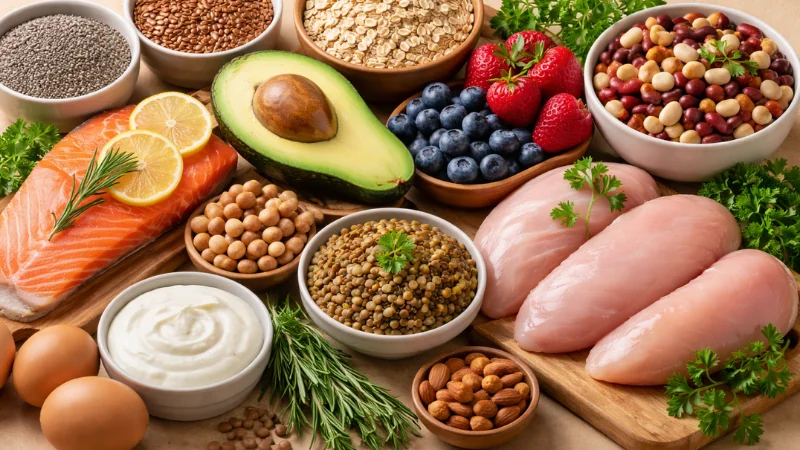
GLP-1 supportive protein sources include:
- Wild caught fish
- Pasture raised eggs
- Grass fed beef
- Organic poultry
- Greek yogurt
- Lentils and beans if well tolerated
From a clinical perspective, adequate protein also preserves lean muscle mass, which directly impacts metabolic health and insulin sensitivity.
2. Fiber Rich Foods and Short Chain Fatty Acids
GLP-1 is produced in the gut, and gut microbiota play a significant role in regulating its secretion.
When fermentable fibers are metabolized by gut bacteria, they produce short chain fatty acids. In this mechanistic study on short chain fatty acids and GLP-1 secretion, researchers demonstrated that short chain fatty acids stimulate GLP-1 release through specific gut receptors.
Barley derived fibers have also been associated with increased fermentation and GLP-1 pathway activity. This is discussed in this study on barley fiber, short chain fatty acids, and GLP-1 signaling.
GLP-1 supportive fiber sources include:
- Chia seeds
- Flaxseeds
- Oats and barley
- Avocado
- Berries
- Beans and lentils
3. Healthy Fats and GLP-1 Signaling
Dietary fat can influence incretin hormones, including GLP-1, depending on the type of fat consumed.
In this clinical study examining olive oil and incretin response, olive oil ingestion was associated with changes in GLP-1 secretion and improved postprandial glucose responses.
Additionally, this comparative study on dietary fats and GLP-1 response suggests that monounsaturated fats may stimulate GLP-1 differently than saturated fats.
GLP-1 supportive fat sources include:
- Extra virgin olive oil
- Avocado
- Nuts and seeds
- Fatty fish
4. Fermented Foods and Gut Mediated Hormone Support
Because GLP-1 is produced in the gut, microbiome composition influences incretin signaling.
In this experimental study on fermented yogurt and metabolic markers, researchers explored changes in gut microbiota and downstream metabolic hormone signaling, including GLP-1 related pathways.
Fermented foods that may support gut diversity include:
- Plain yogurt or kefir
- Sauerkraut
- Kimchi
Food vs GLP-1 Medication: Supporting the System, Not Forcing It
GLP-1 receptor agonist medications amplify one hormonal pathway.
Whole foods provide amino acids, fatty acids, fiber, micronutrients, and phytonutrients that support the broader metabolic network.
In practice, cravings and weight resistance are rarely caused by one hormone alone. They often involve insulin sensitivity, stress physiology, sleep disruption, inflammation, and nutrient deficiencies.
GLP-1 foods are one piece of a much larger metabolic puzzle.
Eat for Your Metabolic Type to Maximize GLP-1 Food Benefits
It is not just what you eat. It is what you digest, absorb, and utilize.
Different metabolic types process carbohydrates, fats, and proteins differently. If you are eating “healthy” GLP-1 foods that your body does not tolerate well, you may not be efficiently using the nutrients required for optimal hormone signaling.
This is why I recommend starting with my Metabolic Type Quiz.
When you eat according to your metabolic type:
- Cravings stabilize
- Energy improves
- Blood sugar becomes more consistent
- Fat loss feels less forced
GLP-1 foods can support appetite and metabolic health. But personalization is what makes them effective.
Final Thoughts on GLP-1 Foods
GLP-1 foods are a science supported way to enhance your body’s natural satiety and blood sugar signaling pathways.
But they are not a shortcut.
The most important step is eating in a way your body can actually metabolize and absorb.
Start with the Metabolic Type Quiz so you can build a nutrition plan that supports not just GLP-1, but your entire metabolic system.
If you have questions about GLP-1 foods or how they fit into your personal health journey, share them in the comments. I genuinely want to hear what you are navigating.
You deserve to feel good in your body. And that starts with informed, intentional action.
With you in this,

Metabolic Type Meal Plan Results
Eating Healthy But Not Seeing Results?
The solution is eating for your unique metabolic type - When you eat foods that match your Metabolic Type you can lose weight and feel great 3 times faster. Take the Metabolic Type Quiz to discover your type and the meal plan that's best for you.
TAKE THE QUIZDr. Christina Carlyle
If you liked this post, you’ll also like these articles
- Cortisol and Weight Gain: How Stress Causes Metabolic Dysfunction
- 10 Hormones That Cause Hormonal Weight Gain
- Hormone Imbalance Symptoms You Can’t Ignore
- Nutrient Deficiency: Are You Deficient?
- Why Am I Not Losing Weight?
- What Is Metabolic Dysfunction?

Dr. Christina Carlyle is a Doctor of Functional Medicine, FDN-P, Nutritionist, & Trainer who transformed her body and health – getting off 7 medications and losing 40 pounds for good. Now, she helps other women get happy, healthy, and fit – quickly & naturally – without any BS