Last Updated on June 5, 2026
Every time I talk about hormone imbalance symptoms, women tell me the same thing:
I had no idea all of this could be connected.
Because when your body starts acting weird, it rarely sends one random, expected symptom, too. You’re tired, puffy, wired at night, craving sugar, gaining weight, waking up at 3 a.m., snapping at people you love, wondering why your skin is breaking out, and maybe even dealing with random symptoms like dizziness, itchy ears, food sensitivities, or phantom smells.
Then you go to the doctor, get a few labs, and you’re told your hormones are imbalanced. Or you’re told it’s age. Stress. Perimenopause. Motherhood. “Just part of being a woman.” This isn’t entirely true…
In my world, hormone imbalances are NOT usually the root problem. They’re a symptom of several root-cause problems.
Your hormones are messengers. They’re responding to what’s happening inside your body, your nervous system, your gut, your liver, your immune system, your blood sugar, and your stress load. So if your hormones are off, the better question is not just, “Which hormone is low or high?” The better question is, “What is driving the imbalance in the first place?”
That’s what we’re digging into today. First, I’m giving you the 30 hormone imbalance symptoms women often miss. Then I’ll show you why the imbalance itself may be the smoke alarm, not the fire.
30 Red Flag Hormone Imbalance Symptoms Women Often Miss
Some hormone imbalance symptoms are obvious, like irregular periods, hot flashes, or unexplained weight gain. Others are so random that most women never think to connect them to hormones.
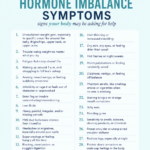
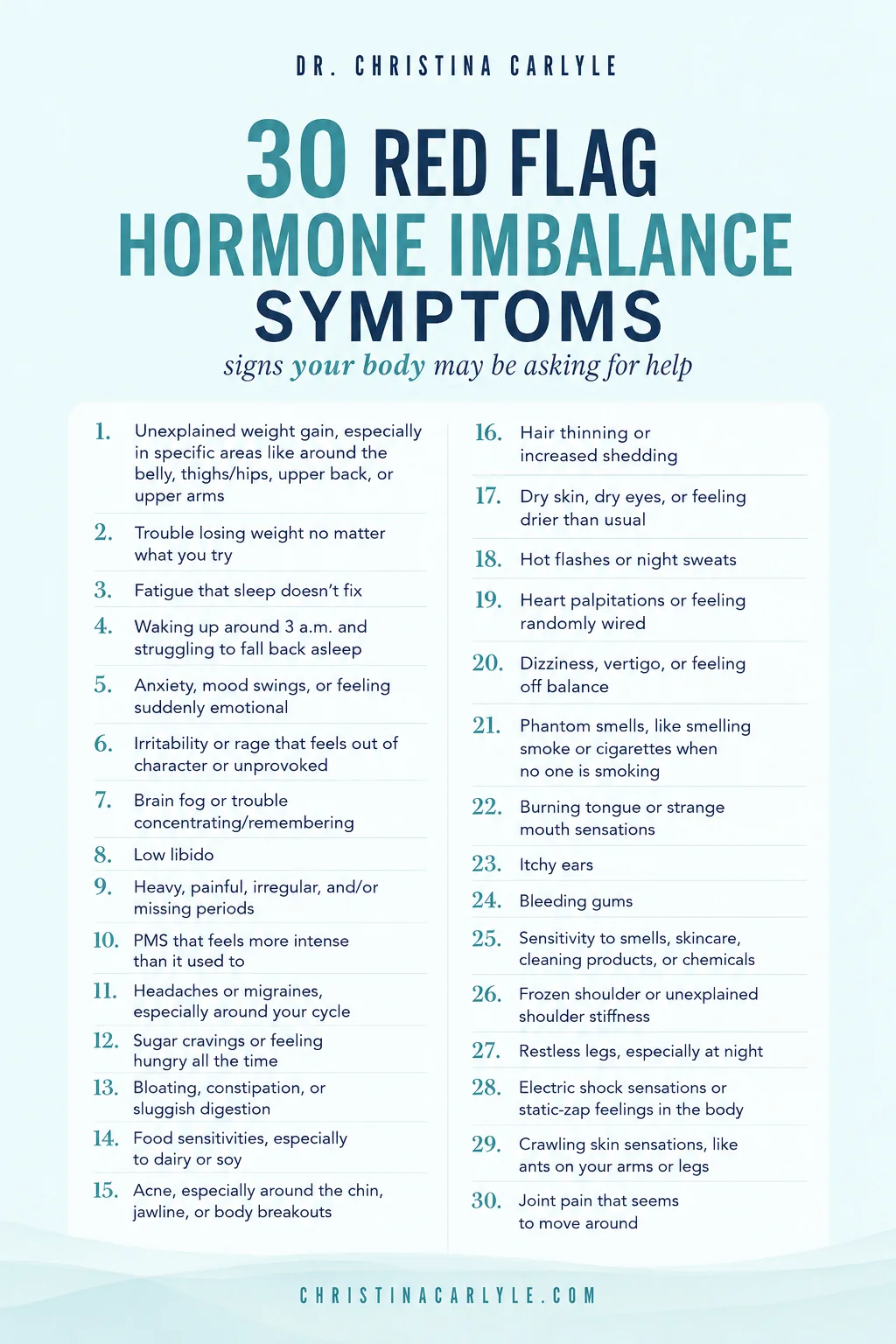
Here are 30 red flags worth paying attention to:
- Unexplained weight gain, especially in specific areas like around the belly, thighs/hips, upper back, or upper arms
- Trouble losing weight no matter what you try
- Fatigue that sleep doesn’t fix
- Waking up around 3 a.m. and struggling to fall back asleep
- Anxiety, mood swings, or feeling suddenly emotional
- Irritability or rage that feels out of character or unprovoked
- Brain fog or trouble concentrating/remembering
- Low libido
- Heavy, painful, irregular, and/or missing periods
- PMS that feels more intense than it used to
- Headaches or migraines, especially around your cycle
- Sugar cravings or feeling hungry all the time
- Bloating, constipation, or sluggish digestion
- Food sensitivities, especially to dairy or soy
- Acne, especially around the chin, jawline, or body breakouts
- Hair thinning or increased shedding
- Dry skin, dry eyes, or feeling drier than usual
- Hot flashes or night sweats
- Heart palpitations or feeling randomly wired
- Dizziness, vertigo, or feeling off balance
- Phantom smells, like smelling smoke or cigarettes when no one is smoking
- Burning tongue or strange mouth sensations
- Itchy ears
- Bleeding gums
- Sensitivity to smells, skincare, cleaning products, or chemicals
- Frozen shoulder or unexplained shoulder stiffness
- Restless legs, especially at night
- Electric shock sensations or static-zap feelings in the body
- Crawling skin sensations, like invisible ants on your arms or legs
- Joint pain that seems to move around
Now, one symptom doesn’t automatically mean your hormones are imbalanced…
But if you checked off several, especially if they’ve been building over time or getting worse, your body is trying to tell you something.
Hormone Imbalances Are Symptoms, Not the Root Problem
This is where a lot of women get frustrated trying to balance their hormones and reverse symptoms.
You go to the doctor for fatigue and get told to rest more… even though you can’t sleep.
You go in for weight gain and get told to eat less.
You go in for anxiety and get offered medication.
You go in for heavy periods or hot flashes and get told it’s probably perimenopause/menopause or PMOS.
You mention food sensitivities, dizziness, depression, anxiety, or weird skin sensations and you’re given a referral to another doctor or therapist.
The problem is that traditional medicine often looks at symptoms one at a time. But your body doesn’t work in separate little cubicles.
Your blood sugar affects your stress hormones. Your stress hormones affect your sleep. Your sleep affects cravings, hunger, mood, and metabolism. Your gut affects how your body clears hormones. Your liver helps process used hormones and toxins. Your nervous system tells your body whether it is safe enough to repair, burn fat, sleep deeply, digest well, and make healthy levels of hormones.
So when one system gets stressed, other systems start compensating.
That’s why hormone imbalance symptoms can feel like a weird collection of unrelated problems. They may not be unrelated at all. They may be different ways your body is showing you that something deeper needs support.
When women are told their hormones are imbalanced, they often think they finally found the answer.
But in my world a hormone imbalance is a symptom telling us something is off. It does not always tell us why the imbalance happened in the first place.
So yes, the hormone imbalance matters. But the deeper question is, what made the hormones imbalanced in the first place?
What Nobody Is Telling You About Hormone Imbalance Symptoms
Here’s the part most women are missing: hormone imbalance symptoms often show up after years of the body being overloaded.
Not one bad week. Not one missed workout. Not one dessert. I’m talking about a body that has been quietly compensating for a long time.
Common root causes and hidden stressors can include:
- A toxic load the liver is struggling to keep up with
- Sluggish bile flow or poor detox pathways
- Gut issues that interfere with hormone clearance
- Blood sugar swings that keep cortisol and cravings all over the place
- Food sensitivities that keep inflammation high
- Chronic nervous system stress from relationships, finances, caregiving, trauma, or always feeling “on”
- Poor sleep or years of waking up unrefreshed
- Hidden infections or immune system stress
- Mold or environmental exposures
- Nutrient depletion from dieting, birth control, stress, poor digestion, or under-eating
- Over-exercising, under-fueling, or pushing harder when your body actually needs repair
This is why I don’t love when women are told to just “balance their hormones” as if hormones are floating around causing chaos for no reason.
Your liver helps process hormones. Your gut helps eliminate them. Your mitochondria help produce energy. Your nervous system helps regulate whether your body feels safe enough to heal. Your immune system influences inflammation. Your blood sugar affects hunger, cravings, cortisol, and fat storage.
If those systems are under stress, your hormones are going to feel it.
Your symptoms are not random annoyances. They’re clues.
What To Do If You Have Hormone Imbalance Symptoms
If these hormone imbalance symptoms feel familiar, there are two ways to start.
If your symptoms are newer, mild, or you know your basics have been off, start by supporting your metabolism and detox pathways with food, blood sugar balance, hydration, protein, sleep, walking, and a less chaotic daily rhythm. I know. Annoying that the boring stuff works, but here we are.
A great first step is my Reset Cleanse. It’s a 7-day metabolism and full body detox that helps rid the body of things that make it harder to burn fat, get healthy, and feel good.
Once the body is reset, it’s prepped and primed for fat burning. The next step is giving it the right fuel for its unique metabolic needs, which is exactly why I created my Metabolic Type Meal Plans. Different people react to different foods in different ways… they also digest foods differently. You need to be eating the right foods you can actually absorb, otherwise you won’t be able to make hormones or balance them. Take my Metabolic Type Quiz to discover your Metabolic type and the right meal plan for you.
But if this has been going on for a while, or you’ve already tried programs, supplements, hormone support, diets, detoxes, or clean eating and you’re still not getting relief, it may be time to stop guessing.
That’s when I’d recommend a Root Cause Assessment and Initial Consult.
Book a Root Cause Assessment and Initial Consult
My Root Cause Assessment and Initial Consult is for the woman who is tired of being told everything is normal when she feels anything but normal.
It’s for you if your hormone imbalance symptoms have been building for months or years. It’s for you if you’ve tried doing the right things but your body still isn’t responding. It’s for you if you know there’s something deeper going on and you want someone to actually look under the hood.
During your assessment, I review your symptoms, goals, history, patterns, and possible root causes so we can talk through what may be affecting you most and what your next best steps could be.
And because I want this to be a real first step, not just another random appointment, the amount you pay toward your Root Cause Assessment and Initial Consult is credited toward your treatment plan if you move forward. That credit does not apply to third-party labs, supplements, or products, but it does apply toward your treatment plan.
You do not need another generic hormone tip. You need to understand what your body is trying to tell you.
If you’re ready for that, book your Root Cause Assessment and Initial Consult.

Final Thoughts on Hormone Imbalance Symptoms
If you saw yourself in this list of symptoms, I want you to know this: you’re not crazy, lazy, dramatic, ‘too old,’ or broken.
Your body is communicating. And instead of blaming everything on age, stress, perimenopause, or “just hormones,” it’s time to start asking better questions.
Hormone imbalance symptoms are often clues that something deeper needs support. When you stop chasing symptoms one by one and start looking for the root cause, your body finally has a chance to respond differently.
Start with the basics if your symptoms are mild. Use the Reset Cleanse and Metabolic Type Meal Plan if you want guided support. And if this has been going on for too long, book a Root Cause Assessment and Initial Consult so we can look at the full picture.
I hope this post helped you connect the dots and see your symptoms with more clarity, compassion, and confidence.
If you liked this post or have questions, let me know in the comments.
Forever rooting for you,
Dr. Christina Carlyle


Metabolic Type Meal Plan Results
Eating Healthy But Not Seeing Results?
The solution is eating for your unique metabolic type - When you eat foods that match your Metabolic Type you can lose weight and feel great 3 times faster. Take the Metabolic Type Quiz to discover your type and the meal plan that's best for you.
TAKE THE QUIZIf you liked this article, you’ll also like these posts
- Perimenopause Symptoms
- Insulin Resistance Symptoms and How to Fix It
- Symptoms of Toxins
- Cortisol and Weight Gain
- Toxic Relationships

Dr. Christina Carlyle is a Doctor of Functional Medicine, FDN-P, Nutritionist, & Trainer who transformed her body and health – getting off 7 medications and losing 40 pounds for good. Now, she helps other women get happy, healthy, and fit – quickly & naturally – without any BS