Last Updated on May 26, 2026
I’m talking about insulin resistance symptoms because this is one of the biggest metabolic blocks I look for when a client tells me she’s doing “all the right things” and still not getting results.
She’s eating healthier. She’s trying to exercise. She’s cutting back on sugar. She’s buying the protein, drinking the water, taking the walks, and doing her best to be the kind of woman who casually says, “I meal prepped.”
But she’s still exhausted. Still hungry. Still craving carbs. Still gaining around the middle. Still dragging herself through workouts. Still wondering why her body is not responding.
And that’s when I stop looking at effort and start looking at metabolism.
Because if insulin resistance is part of the picture, more willpower is not the answer. We need to fix the metabolic issue that’s blocking the result.
This is also why I get spicy when people say, “Just eat less and move more.” Lovely. Groundbreaking. But if your cells are not responding well to insulin, your blood sugar is unstable, your cravings are loud, and your body is storing instead of using fuel efficiently, another diet may make you feel worse, not better.
So today, I’m walking you through the insulin resistance symptoms I look for, why they matter, and what I’d do first if you suspect this is one of the reasons your body feels stuck.
What Is Insulin Resistance?
Insulin is a hormone that helps move glucose from your bloodstream into your cells so your body can use it for energy.
Insulin resistance happens when your cells stop responding to insulin the way they should. Your body has to make more insulin to try to move glucose out of the blood and into the cells. Over time, this can contribute to higher blood sugar, inflammation, weight gain, prediabetes, type 2 diabetes, and other metabolic issues.
The National Institute of Diabetes and Digestive and Kidney Diseases explains that insulin resistance means cells do not respond well to insulin and cannot easily take up glucose from the blood. NCBI Bookshelf also notes that insulin resistance can lead to compensatory hyperinsulinemia, which means the body produces more insulin to try to keep blood sugar controlled.
Translation: your body may have fuel available, but your cells may not be using it well.
And when that happens, you can feel hungry, tired, foggy, snacky, inflamed, and stuck.
Insulin Resistance Symptoms I Look For
Before we get into the list, let me be clear: insulin resistance can be sneaky. Some people have symptoms. Some people don’t. These signs are clues, not a diagnosis. Testing matters.
That said, when several of these symptoms show up together, I’m absolutely thinking about blood sugar, insulin, and metabolic dysfunction.
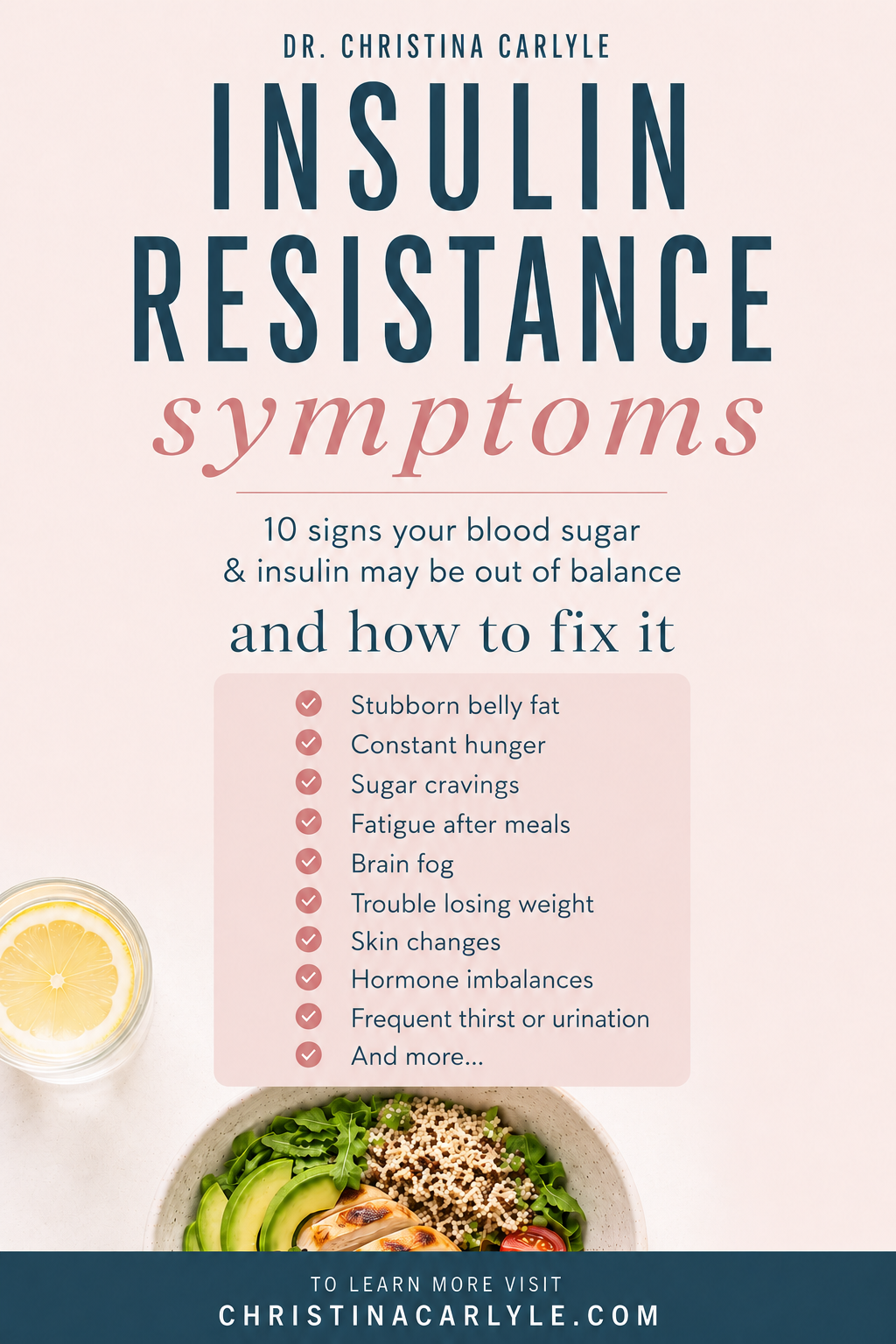
1. Stubborn Belly Fat or Weight Gain Around the Middle
One of the most common insulin resistance symptoms is weight gain around the waist, especially when it feels like your body is holding onto belly fat no matter what you do.
This does not mean every person with belly fat has insulin resistance. But insulin is a storage hormone, and when insulin stays high too often, it can make fat loss harder. Insulin resistance is closely tied to metabolic dysfunction, inflammation, and abdominal obesity, which is why I look at waist gain as a clue, not a character flaw.
2. Constant Hunger or Feeling Hungry Soon After Eating
If you eat a meal and feel hungry an hour later, that matters.
When blood sugar swings up and down, your body can keep asking for more food even though you technically just ate. This is especially common after meals that are heavy in carbs but light on protein, fiber, and healthy fats.
Research on high-glycemic foods suggests they may increase hunger and promote overeating in the short term. So no, you’re not weak because the cereal, muffin, smoothie, or “healthy” snack bar didn’t hold you. It may not have been built to.
3. Sugar Cravings and Carb Cravings
Insulin resistance and blood sugar dysfunction can make cravings feel urgent, dramatic, and very bossy.
You may crave sugar after meals, need something sweet in the afternoon, feel like you can’t stop once you start, or feel pulled toward bread, chips, crackers, pasta, granola, cereal, cookies, or snacky carbs.
This is why I don’t love telling people to “just have discipline.” If your blood sugar is unstable and your brain is looking for fast fuel, cravings can feel biological because they are.
4. Fatigue, Especially After Meals
Getting sleepy after eating can be a major clue.
If you eat and then feel like you need a nap, a coffee, or a new identity, your body may be struggling with that meal. This can happen when your blood sugar and insulin response are not well matched to what you ate.
Post-meal fatigue does not automatically mean insulin resistance, but when it shows up with cravings, belly weight, brain fog, and trouble losing weight, I pay attention.
5. Energy Crashes, Shakiness, or Feeling Hangry
Do you go from “I’m fine” to “I need food immediately or someone may suffer”?
That shaky, irritable, anxious, lightheaded, hangry feeling can happen when blood sugar drops or feels unstable. Some people need food constantly because their body does not feel metabolically steady.
This is not your personality. This is physiology with an attitude.
6. Brain Fog or Trouble Focusing
Your brain is an energy-hungry organ. When blood sugar regulation is messy, focus can get messy too.
Some women describe it as feeling cloudy, slow, scattered, forgetful, unmotivated, or like their brain is wrapped in a wet blanket. Cute visual, terrible lifestyle.
If brain fog is worse after meals, worse when you skip meals, or worse with sugar and carbs, I’m looking at blood sugar.
7. Trouble Losing Weight Even When You’re Eating Healthy and Exercising
This is the one that makes women want to scream into a pillow.
You can eat “healthy,” exercise, buy the supplements, reduce calories, and still not lose weight if the root issue is metabolic. Healthy eating is not the same thing as metabolically matched eating.
If your meals are spiking blood sugar, your stress hormones are high, sleep is poor, inflammation is present, and insulin resistance is part of the picture, your body may not respond the way a calorie calculator promised it would.
8. Skin Tags or Dark, Velvety Patches of Skin
This is one of the more visible, red-flag insulin resistance symptoms.
Skin tags and dark, velvety patches of skin, often around the neck, armpits, or body folds, can be associated with insulin resistance. The darkened skin is called acanthosis nigricans.
Research on skin manifestations of insulin resistance describes acanthosis nigricans as a common skin finding often related to insulin-resistant conditions, and research has associated skin tags and acanthosis nigricans with insulin resistance.
9. Irregular Periods, PMOS Symptoms, or Hormone Issues
FYI PMOS is the new name for PCOS…
Insulin resistance does not just affect blood sugar. It can affect hormones too.
This is especially important for women with PMOS symptoms, irregular periods, acne, facial hair growth, stubborn weight gain, or intense cravings. Insulin resistance and PMOS commonly overlap, which is why I always look at the metabolic picture when hormones feel chaotic.
NCBI Bookshelf notes that PMOS is associated with acanthosis nigricans and that insulin resistance and hyperandrogenism are seen in patients with PMOS.
10. Increased Thirst, Frequent Urination, Blurry Vision, or Slow Healing
These symptoms are more concerning because they may point to elevated blood sugar or diabetes, not just early insulin resistance.
If you’re dealing with frequent thirst, frequent urination, blurry vision, slow wound healing, unexplained weight changes, or extreme fatigue, please get evaluated. Don’t try to green smoothie your way through symptoms that need labs.
The NIDDK lists increased thirst, increased urination, fatigue, blurred vision, increased hunger, and slow-healing sores as symptoms that can occur with diabetes.
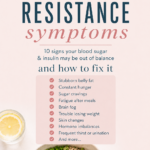
Pin this to Pinterest so you’ll have it forever
Why Insulin Resistance Blocks Results
Insulin resistance blocks results because it changes the way your body handles food.
Instead of easily moving glucose into your cells and using it efficiently for energy, your body has to work harder. Insulin may stay elevated. Blood sugar may swing. Cravings may intensify. Energy may crash. Hunger may get louder. Fat loss may slow down.
So the person keeps trying to eat less and exercise more, but the body keeps pushing back.
This is why I don’t assume my client’s aren’t being consistent when the results come slow. If your body feels exhausted, foggy, stressed, inflamed, hungry, and craving-driven, of course you’re going to struggle to make the “right” choices.
The goal isn’t to punish the body into submission. The goal is to fix the root cause metabolic issue so the body can respond again.
What To Do If You Have Insulin Resistance Symptoms
If you recognize yourself in these insulin resistance symptoms, don’t panic. Get curious, get data, and start with the basics that actually move the needle.
What To Do If You Have Insulin Resistance Symptoms
If you recognize yourself in these insulin resistance symptoms, don’t panic. But don’t ignore them either.
This is where I want you to get curious, get data, and stop guessing. Because insulin resistance is much easier to address before it turns into a bigger diagnosis. Once you’re prediabetic or diabetic, the conversation changes. Prevention is always easier than disease management, so this is the time to pay attention.
1. Get Tested So You Know What’s Really Going On
If you go to a conventional doctor, they may run basic labs, tell you that your blood sugar is normal, or tell you that you’re insulin resistant or prediabetic without explaining why it’s happening.
In my practice, I use functional labs to look deeper. I want to see what’s driving the issue, not just whether you have the issue. Blood sugar, insulin, inflammation, stress hormones, liver function, thyroid function, nutrient status, gut health, and other root-cause markers can all matter when your metabolism is struggling.
If you have several of these symptoms, or you’ve already been told you’re insulin resistant or prediabetic, Work with me and get a root cause assessment and I’ll figure out what’s blocking your body from responding and build a plan that actually makes sense for your metabolism.
2. Balance Protein, Fiber, and Carbs for Your Metabolic Type
Protein and fiber matter, but I don’t want you just throwing chicken and broccoli at the problem and hoping your metabolism revs up.
You need to balance protein, fiber, fats, and carbs in a way your body can actually metabolize and digest. Different metabolic types respond differently to carbs. They also respond differently to different proteins, fibers, and food combinations.
This is why one woman can eat oatmeal and feel amazing while another eats the same oatmeal and is starving, foggy, and craving sugar an hour later.
When you give your body the foods it can actually use, hunger regulates, hormones stay balances, cravings calm down, energy improves, mood improves. Metabolism accelerates and weight loss gets a lot easier.
Start with my Metabolic Type Quiz so you can learn your unique metabolic type, how foods affect you, and the best meal plan for your type.
3. Take a 10-Minute Walk After Meals
A short walk after meals is one of the easiest ways to support better blood sugar.
When you move after eating, your muscles help pull glucose out of the bloodstream and store it as glycogen. That means your body has somewhere useful to put that glucose instead of letting it hang around causing problems.
Try walking 10 minutes after meals… that’s all you need to start fixing the problem.
4. Exercise Consistently (Without Over-Stressing Your Body)
Exercise is essential for insulin resistance, but more is not always better.
Your body is already working hard if you have blood sugar issues. So punishing it with workouts that spike stress hormones, wreck recovery, and leave you ravenous, worsening the problem.
You need consistent exercise that includes both cardio and strength training. Muscle helps your body handle glucose better, and cardio can support fat loss and metabolic health. Since excess body fat can increase the risk of insulin resistance, fat loss matters, but it needs to happen in a way your body can recover from.
That’s why my workout programs are designed for healing, health, mood, metabolism, and fat loss, not just burning yourself into the ground.
Take my Program Style Quiz to find the workout program that best fits your body, goals, and starting point.
5. Support Sleep and your Nervous System
If your nervous system is fried, your blood sugar, mood, and sleep will be, too.
Chronic stress and poor sleep can worsen cravings, blood sugar regulation, cortisol patterns, hunger, mood, and recovery. And if your body is constantly stuck in survival mode, it is going to be a lot harder to burn fat, balance blood sugar, and feel in control around food.
This is one of the reasons I created Magic Moves. I needed a way to help treatment-resistant clients regulate their nervous systems so their bodies could finally respond to the work they were already doing.
The Magic Moves Somatic Exercise routines helps balance the nervous system, release stress and tension, improve mood, and create the internal conditions your metabolism needs to function better. Try this Magic Moves sample class and you’ll be a believer.
6. Reset Your Body
If you’re constantly hungry, struggling with cravings, feeling puffy, inflamed, sluggish, bloated, foggy, or like your body is just not responding, I’d start with the Reset Cleanse.
The Reset Cleanse is a 7-day metabolism and full body detox that helps rid the body of things that make it harder to burn fat, get healthy, and feel good.
I created it to help reset and rebalance the body quickly so you can feel lighter, clearer, more in control, and ready for the next step. You can lose up to 10 pounds and notice significant improvements in cravings, bloating, energy, and other symptoms in just 7 days.
Once your body is reset and prepped for fat burning, the next step is giving it the right fuel for its unique metabolic needs. That’s where the Metabolic Type Quiz and Metabolic Type Meal Plan come in.
Final Thoughts on Insulin Resistance Symptoms
I hope this post helped you understand insulin resistance symptoms and why they can make weight loss, energy, cravings, and consistency feel so much harder than they should.
You are not lazy because you’re hungry. You are not broken because your body is not responding. And you do not need another plan that ignores the root cause and then blames you when it doesn’t work.
Start with data. Stabilize blood sugar. Build meals around protein and fiber. Walk after meals. Strength train. Sleep. Regulate stress. Reset what’s blocking your body, then fuel it in a way that actually matches your metabolism.
If you liked this post or have questions, let me know in the comments.
Forever rooting for you,
Dr. Christina Carlyle

Metabolic Type Meal Plan Results
Eating Healthy But Not Seeing Results?
The solution is eating for your unique metabolic type - When you eat foods that match your Metabolic Type you can lose weight and feel great 3 times faster. Take the Metabolic Type Quiz to discover your type and the meal plan that's best for you.
TAKE THE QUIZIf you liked this article, you’ll also like these posts:
- Why Am I Not Losing Weight?
- Signs of a Slow Metabolism and What They Really Mean
- What Is Metabolic Dysfunction?
- Hormone Imbalance Symptoms You Can’t Ignore
- GLP-1 Foods

Dr. Christina Carlyle is a Doctor of Functional Medicine, FDN-P, Nutritionist, & Trainer who transformed her body and health – getting off 7 medications and losing 40 pounds for good. Now, she helps other women get happy, healthy, and fit – quickly & naturally – without any BS