

Last Updated on November 25, 2025
When I first started my career more than twenty years ago, I thought health was simple. Eat clean foods. Move your body. Balance your macros. Count calories if you wanted to lose weight.
Back then, if someone wasn’t healing or dropping weight the way they “should,” I assumed it was hormones or diet or something physiological. And while those things absolutely matter, years of working with thousands of clients taught me something else entirely.
People can be doing everything right and still get the wrong results because of one thing.
A chronically activated nervous system caused by toxic relationships.
Most women think their symptoms are happening because of hormones or age or metabolism or stress in general. But in functional medicine, the real root cause of chronic stress is an activated nervous system. And nothing activates the nervous system more consistently or more severely than unhealthy relationships.
This is the part most people never connect the dots on. So let’s talk about it.
Why I’m Talking About Toxic Relationships
Over the past two decades, I have studied behavior modification, attachment styles, trauma patterns, and the psychology behind why people do what they do. I’ve seen heartbreaking situations and subtle dynamics that slowly break someone down.
Out of every one-on-one client I’ve ever worked with, every single person who developed autoimmune issues had a history of toxic relationship stress. Every person with chronic bloating, fatigue, anxiety spikes, stubborn weight, insomnia, or mystery symptoms had relational trauma in their past or present.
The body keeps the score.
And relationships rewrite the score more than anything else.
I’m one of the very few people I know who doesn’t have an autoimmune condition because of a relationship. Not because I’ve never experienced toxic dynamics, but because I refuse to tolerate them long term and I know how to offset the unavoidable stress that comes with normal conflict.
You cannot avoid every disagreement or disappointing interaction in life.
But you can absolutely avoid letting a relationship destroy your nervous system.
What Makes a Relationship Toxic
“Toxic” doesn’t always mean abusive.
It often means chronically dysregulating.
Some examples include:
• walking on eggshells
• emotional instability or unpredictable reactions
• constant criticism
• stonewalling or shutting down
• gaslighting
• breadcrumbing or inconsistent attention
• reactive attachment patterns
• manipulation
• disrespect
• explosive anger
• poor communication
• someone else’s unhealed trauma spilling onto you
Sometimes it’s loud and obvious.
Other times it’s subtle and sneaky.
But the body feels it no matter what.
How Toxic Relationships Activate the Nervous System
You have two primary nervous system states.
Parasympathetic
Rest
Digest
Repair
Heal
Burn fat
Absorb nutrients
Balance hormones
Sympathetic
Fight
Flight
Freeze
Fawn
Inflammation
Hormone chaos
Nutrient depletion
Gut shutdown
Fat storage
Toxic relationships activate your sympathetic state repeatedly.
Over time this chronic pattern pushes the body into Cell Danger Response.
Functional medicine research, including work published by UC San Diego and in PubMed indexed journals, shows that Cell Danger Response shuts down normal healing, disrupts metabolism, alters immune function, and blocks cellular repair.
This is why you can eat clean, sleep eight hours, take supplements, follow a meal plan, and still feel awful.
Your body doesn’t heal when it is defending.
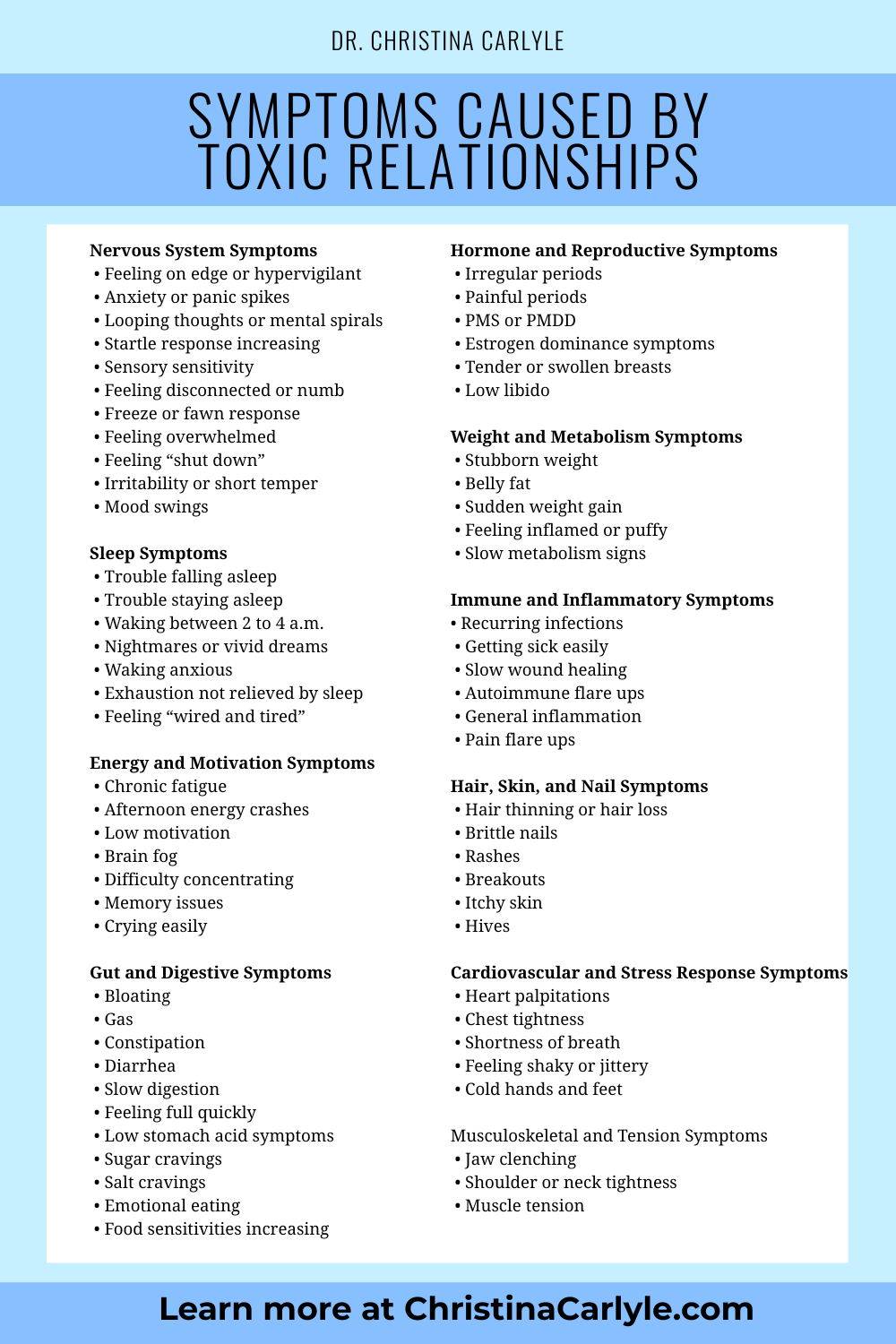
The Health Symptoms Caused by Toxic Relationship Stress
Hormonal imbalance
Chronic nervous system activation disrupts cortisol, insulin, progesterone, estrogen, thyroid hormones, and adrenal output.
Common symptoms include:
• stubborn weight
• low libido
• irregular or painful periods
• hair thinning
• estrogen dominance
• PMS or PMDD
• exhaustion not relieved by sleep
Gut dysfunction
Stress shuts down digestion. This can cause:
• bloating
• constipation or diarrhea
• slowed motility
• reduced stomach acid
• increased gut permeability
• microbiome imbalance
• higher susceptibility to Candida and parasites
Multiple studies confirm that relational stress disrupts the gut brain axis.
Sleep disturbances
This is one of the biggest clues.
Clients often wake exhausted, wake up between 2 and 4 a.m., have cortisol spikes at night, or have vivid dreams or nightmares. These patterns almost always reflect emotional threat detection.
Immune Dysregulation
Chronic stress increases inflammatory cytokines while suppressing immune resilience. This can lead to:
• recurring infections
• autoimmune flares
• inflammation
• fatigue
• slow healing
Weight gain and metabolic slowdown
Sympathetic dominance and cortisol dysregulation shift fat storage to the belly and slow mitochondrial function. This makes weight loss feel impossible until the nervous system is addressed.
Why Talking About It Doesn’t Heal the Nervous System
Most women are told to:
- Talk about their feelings
- Vent
- Rehash the situation
- Go to therapy weekly
But talking about something that activates your nervous system reactivates your nervous system. And women process emotional memory differently than men. Women often relive the emotion rather than simply recall it.
This is why talk therapy, ranting, venting, or replaying the story can make you feel worse.
You cannot talk your way out of dysregulation. You have to regulate the body first.
How to Calm an Activated Nervous System
Somatic regulation tools
Somatic work bypasses the conscious mind and speaks directly to the part of the brain responsible for safety, threat detection, and freeze responses.
This is why my Magic Moves Program works so quickly. It teaches your body how to switch out of survival mode, reduce stored stress, and return to a regulated state. It also includes additional trainings and tools that help heal emotional dysregulation, trauma loops, and chronic stress patterns.
Start Magic Moves here. You can also try a sample Somatic Exercise Class here.
Personalized nutrition for stress recovery
Stress increases nutrient demand, reduces nutrient absorption, and speeds nutrient excretion. This means your body needs more than usual and many people aren’t absorbing what they eat.
This is why so many women feel depleted even when they eat healthy.
Your nutritional support must match your metabolism, stress load, and current deficiencies.
You can begin in two ways.
Discovery Call
If you need clarity on what direction to take or want a starting point.
Case Review and Initial Consult
If you already have symptoms or feel worn down or depleted. This includes intake review, root cause analysis, nutritional strategy, supplement guidance, and a structured path forward.
Final Thoughts about Toxic Relationships
If your body is sending you signals like fatigue, weight gain, anxiety, sleeplessness, bloating, inflammation, or emotional overload, you are not broken.
Your nervous system is speaking.
Your body is protecting you.
And you can heal.
If you’d like help restoring balance, regulating your nervous system, and supporting your metabolism, you have several options from on demand weight loss and wellness programs to personalized care.
You don’t have to do this alone.
I’m here when you’re ready.


Metabolic Type Meal Plan Results
Eating Healthy But Not Seeing Results?
The solution is eating for your unique metabolic type - When you eat foods that match your Metabolic Type you can lose weight and feel great 3 times faster. Take the Metabolic Type Quiz to discover your type and the meal plan that's best for you.
TAKE THE QUIZIf you liked this article, you’ll also like:
- Symptoms of a Dysregulated Central Nervous System
- 50 Symptoms of Stress (Red Flags Cortisol is High)
- Mental Health Symptoms: What Your Body Is Trying to Tell You
- Adrenal Fatigue Symptoms
- Symptoms of Toxins: Top 10 Signs You Need To Detox
- Intestinal Inflammation: Why Gut Inflammation Is a Huge Red Flag
- What Is Metabolic Dysfunction? Signs Your Metabolism Is Struggling

Dr. Christina Carlyle is a Doctor of Functional Medicine, FDN-P, Nutritionist, & Trainer who transformed her body and health – getting off 7 medications and losing 40 pounds for good. Now, she helps other women get happy, healthy, and fit – quickly & naturally – without any BS


AMEN!!!
Hi Angie! nice to see your name pop up. Toxic relationships are an epidemic! I’d say 95% of my one on one clients have symptoms as a direct results of trauma from relationships (family, romantic, etc.)