Last Updated on June 17, 2026
People find out I’m a trainer, nutritionist, and doctor of functional medicine… then they see my body and one of the first questions I get is:
“What supplements do you take?”
And I get it… When someone looks fit, lean, healthy, energetic, and shredded, it’s easy to assume there must be a fat burner, magic capsule, metabolism powder, or secret supplement stack involved.
But here’s the funny part: the leaner, healthier, and more metabolically functional I’ve become, the less random supplement nonsense I take.
Back in the day, before I really understood nutrition, training, metabolism, hormones, detox pathways, and how the body actually works, I took a bunch of supplements, too.
Fat burners. Random “wellness” pills. Whatever promised results or things I ‘thought’ I needed to look and feel good.
And I just saw Kim Kardashian say she takes around 35 supplements a day, which is a perfect example of how normalized the “more pills = more health” thing has become. She also mentioned “pill fatigue,” which had me having flashbacks because that’s how I used to feel, too.
Here’s the problem: your body doesn’t want 47 random capsules. It wants food, minerals, protein (aka amino acids), sunlight, movement, sleep, and targeted support when something is actually missing or broken.
Supplements can be amazing when they’re used correctly.
For example:
- If someone has thyroid issues, they may need nutrients like selenium or iodine.
- If they don’t have a gallbladder, they need bile salts. If we’re working on a stealth infection, we might use a targeted herbal tincture temporarily.
- If the body has lost a function, I’ll use supplements to support or replace that function until the body can do what it’s designed to do again.
But taking random supplements because TikTok, celebrities, influencers, or a bottle label told you it “boosts metabolism” is not the move. I also want to note that I also see a lot of ‘practitioners’
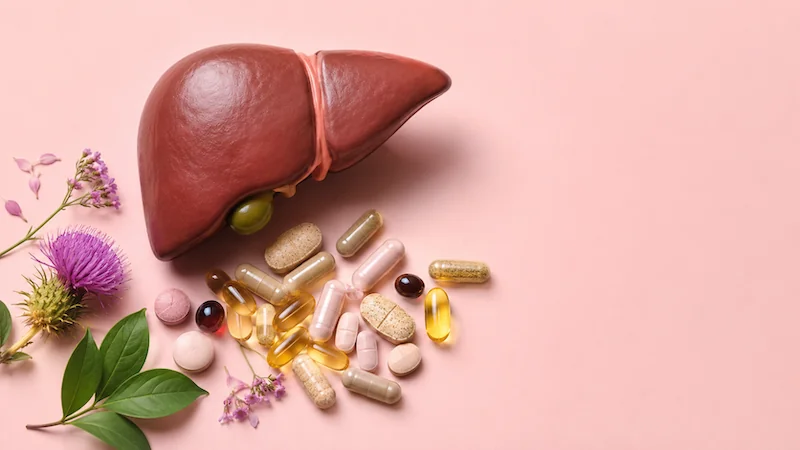
Your liver is involved in more than 500 vital functions, including detoxification, metabolism, hormone processing, bile production, blood sugar regulation, and nutrient storage. So when your liver is overloaded, irritated, inflamed, or injured, your metabolism is not going to burn hot. Your hormones can get messy. Your energy can tank. Your skin, digestion, joints, mood, and body composition can all take the hit.
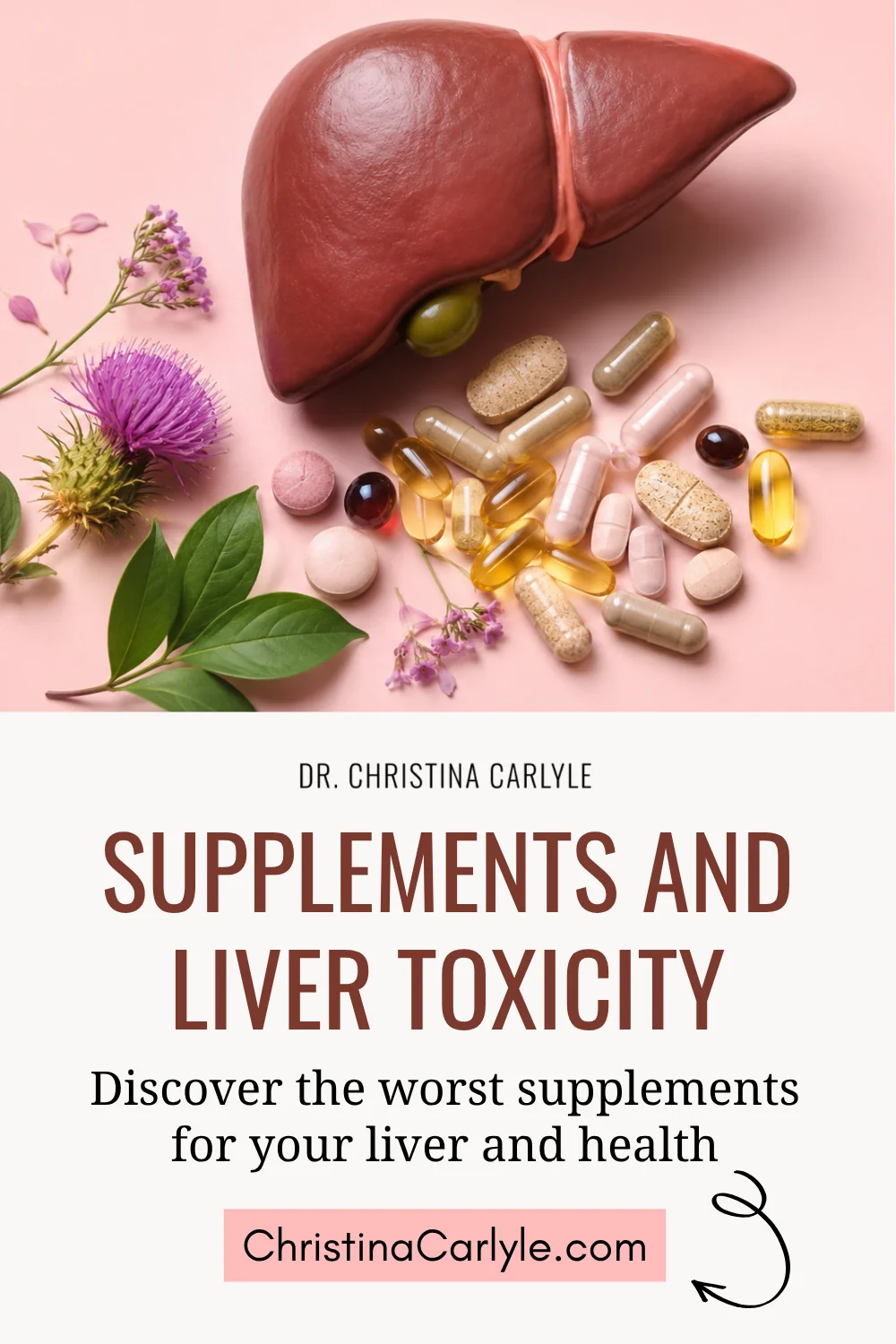
And yes, supplements and liver toxicity can absolutely go hand in hand.
And if you have liver toxicity issues it’ll be very difficult for you to lose weight, feel good, and stay healthy… your hormones will be an absolute mess, too.
So let’s talk about the top supplements scientifically linked to liver issues, because saving your liver, money, metabolism, and sanity is very much the assignment.
1. Ashwagandha
Ashwagandha is everywhere right now.
Stress support. Cortisol support. Sleep support. Hormone support. Calm-girl powder. You name it.
And while some people do fine with it, ashwagandha has been linked to liver injury in case reports and case series. LiverTox notes that most reported cases are mild-to-moderate and improve after stopping, but severe and even fatal cases have been described, especially in people with underlying liver issues.
One case series from Iceland described five cases of liver injury linked to ashwagandha, typically cholestatic or mixed, with severe jaundice and itching.
This is why I don’t love the “every stressed woman should take ashwagandha” advice.
Stress isn’t a supplement deficiency.
Sometimes stress is blood sugar. Sometimes it’s inflammation. Sometimes it’s thyroid. Sometimes it’s trauma. Sometimes it’s overtraining, under-eating, infection, toxic load, or a nervous system running on fumes.
Ashwagandha might be helpful for the right person at the right time. But it is not a personality trait, and it is not automatically liver-safe just because it’s an herb.
2. Turmeric and Curcumin Supplements
Turmeric in food? Totally different conversation.
Turmeric capsules, concentrated curcumin, and high-absorption formulas with black pepper extract? That’s where things get spicy, and not in the cute way.
Turmeric and curcumin supplements have been linked to liver injury in case reports and case series, especially newer high-bioavailability forms designed to increase absorption. LiverTox notes that turmeric supplements were once considered broadly safe, but more recent reports have connected turmeric and curcumin products to acute liver injury.
One Drug-Induced Liver Injury Network study found turmeric-related liver injury cases were increasing and that many involved products formulated for better absorption.
This matters because a lot of people think, “It’s anti-inflammatory, so more must be better.”
Nope.
A little turmeric in your food is not the same as a concentrated curcumin supplement with piperine designed to push more into your bloodstream.
More absorption can mean more effect.
It can also mean more risk.
3. Green Tea Extract
Green tea as a drink and green tea extract in a fat burner are not the same thing.
Green tea extract is one of the big ones I want women to understand because it shows up in so many “metabolism,” “belly fat,” “detox,” and “thermogenic” supplements.
LiverTox states that green tea extract, and more rarely very large amounts of green tea, has been implicated in cases of clinically apparent acute liver injury, including acute liver failure, urgent liver transplantation, and death.
One review/case report notes that more than 200 cases of liver failure associated with green tea products have been published over the last 30 years.
This is the problem with “natural fat burners.”
They often try to force metabolic heat from the outside while ignoring why your metabolism is struggling in the first place.
If your liver, blood sugar, hormones, thyroid, gut, or cells are stressed, a stimulant-y fat burner is not fixing the root cause. It may just add more burden.
4. Garcinia Cambogia
Garcinia cambogia has been marketed for weight loss for years, and it still pops up in fat-loss formulas.
The promise is usually appetite control, fat blocking, or weight loss support.
The reality? Not my favorite.
Garcinia cambogia has been linked to acute liver injury and liver failure in published case reports and reviews. A 2018 case series and literature review described four cases of acute liver failure in women taking Garcinia cambogia for weight loss.
Another report described fulminant hepatic failure associated with a dietary supplement containing Garcinia cambogia.
This is why I’m not a fan of “weight loss supplements” as a category.
If something claims to make fat loss happen without addressing food quality, protein, blood sugar, inflammation, thyroid function, liver function, hormones, digestion, sleep, and stress physiology… BIG side-eye.
5. Black Cohosh
Black cohosh is commonly used for menopause symptoms like hot flashes and night sweats.
And listen, I understand why women reach for it.
Hormone symptoms are miserable. If you’re sweating through your pajamas, snapping at everyone, gaining weight, and wondering what happened to your body, you want relief yesterday.
But black cohosh has been implicated in cases of clinically apparent acute liver injury. LiverTox notes that some cases have been severe and have led to emergency liver transplantation or death.
This does not mean every woman who takes black cohosh will have liver problems.
It means “natural menopause support” still needs to be treated like something that can affect your biology. Because it can.
And if you’re dealing with symptoms like weight gain, hot flashes, poor sleep, mood swings, PMS, painful periods, low libido, or stubborn belly fat, don’t stop at “my hormones are imbalanced.” Hormone imbalance is often the symptom, not the root cause. I break that down more in my post on hormone imbalance symptoms.
6. Red Yeast Rice
Red yeast rice is often sold as a “natural” cholesterol supplement.
But here’s the part people miss: red yeast rice can contain monacolin K, which is chemically identical to lovastatin, a cholesterol-lowering statin drug.
Natural doesn’t mean gentle. Natural doesn’t mean risk-free.
LiverTox notes that red yeast rice use has been associated with very rare cases of acute, clinically apparent liver injury.
There are also case reports describing acute liver injury after red yeast rice supplementation.
This is one of my biggest issues with the supplement world: people will take something “natural” without realizing it may behave like a medication in the body.
If it’s powerful enough to change your labs, it’s powerful enough to create side effects.
7. Mega-Dose Vitamins, Especially Vitamin A and Niacin
Sometimes the problem isn’t the supplement itself. It’s the dose.
Influencers love mega-dosing. Hair falling out? Take tons of biotin. Tired? Take huge B vitamins. Skin aging? Slam vitamin A. Cholesterol? Take niacin. Please don’t do this.
Vitamin A is fat-soluble, which means it can accumulate in the body. LiverTox notes that high doses can cause toxicity, including liver injury, jaundice, enlarged liver and spleen, portal hypertension, and cirrhosis.
Niacin is another one to be careful with. LiverTox states that niacin hepatotoxicity appears dose-dependent and is more common with sustained-release forms; severe cases can progress to liver failure requiring transplant or can be fatal.
This is why I don’t recommend building your health plan from random reels and Amazon reviews.
More isn’t better. Better is better. Targeted is better. Tested is better. Temporary when appropriate is better.
Why Liver Stress Can Stall Your Metabolism
Your liver isn’t just your “detox organ.”
It helps regulate blood sugar, process hormones, produce bile, metabolize fats, store nutrients, filter toxins, and keep your internal chemistry moving.
So if your liver is overwhelmed by alcohol, ultra-processed food, medications, environmental toxins, infections, poor sleep, under-eating, overtraining, or a pile of random supplements, your body has to prioritize survival and cleanup.
Not fat loss. Not glowing skin. Not snatched abs. Not happy hormones.
This is why symptoms of toxicity can show up as cravings, fatigue, mood swings, brain fog, skin issues, digestive distress, inflammation, and stubborn weight. I have a full breakdown here: Symptoms of Toxins: Top 10 Signs You Need to Detox.
And if liver stress is already showing up as weight loss resistance, bloating, brain fog, hormone issues, or fatigue, you may also like this post on fatty liver disease symptoms.
My Supplement Philosophy
I’m not anti-supplement.
I’m anti “take this because an influencer/friend/co-worker/stranger on the internet said so.”
I’m anti using supplements to force the body instead of fixing the reason the body needs support in the first place.
Food comes first.
Then targeted supplements based on actual need.
That’s how you support metabolism without creating more metabolic chaos.
By the way if your practitioner recommends 8+ supplements but doesn’t give you a customized diet… RUN FOR YOUR LIFE. That’ll only wreck your liver.
Ready to Give Your Liver a Break?
If you’ve been taking a bunch of these supplements, feel puffy, tired, inflamed, foggy, stuck, bloated, or like your metabolism is running on airplane mode, your liver may need a break and your detox pathways may need support.
That’s exactly why I created my Reset Cleanse.
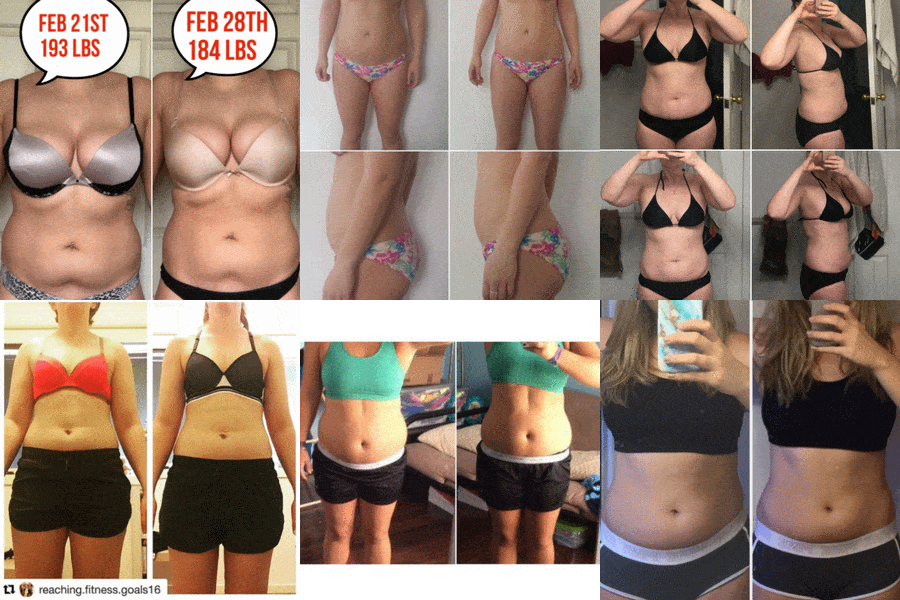
Reset Cleanse results in 7 days
It’s a whole-food detox designed to support your liver, detox pathways, metabolism, hormones, digestion, cravings, inflammation, and energy so your body can start functioning better again. And as a very fun bonus, you can lose up to 7 pounds in 10 days.
Because yes, we love health. But we also love pants fitting better.
I hope you found this helpful! If you have any questions or have feedback let me know in the comments.
Dr. Christina Carlyle
Heads Up: I Do Recommend a Daily Liver-Friendly Supplement Stack

Metabolic Type Meal Plan Results
Eating Healthy But Not Seeing Results?
The solution is eating for your unique metabolic type - When you eat foods that match your Metabolic Type you can lose weight and feel great 3 times faster. Take the Metabolic Type Quiz to discover your type and the meal plan that's best for you.
TAKE THE QUIZThere are supplements I do recommend daily because they support metabolic function, fill common gaps, and are not the same as random liver-stressing fat burners or mega-dose nonsense. You can see the daily stack that I recommend on my Fullscript Dispensary here.
If you liked this article you’ll also like:
- Symptoms of Toxins: Top 10 Signs You Need to Detox
- Hormone Imbalance Symptoms You Shouldn’t Ignore
- Fatty Liver Disease Symptoms: How to Spot Signs & Heal
- What Is Metabolic Dysfunction?

Dr. Christina Carlyle is a Doctor of Functional Medicine, FDN-P, Nutritionist, & Trainer who transformed her body and health – getting off 7 medications and losing 40 pounds for good. Now, she helps other women get happy, healthy, and fit – quickly & naturally – without any BS